The claim
CLAIM #57:
Aleister Crowley, “the wickedest man in the world”, was a top-ranking Freemason, which proves that Freemasonry is black magic?
FALSE
ANSWER:
Crowley was never a “top” Freemason. His only Craft lodge was one that English Freemasonry did not recognise, his membership lasted a few years, and his grand-sounding degrees came from fringe rites. And one man’s magic says nothing about millions of Freemasons.
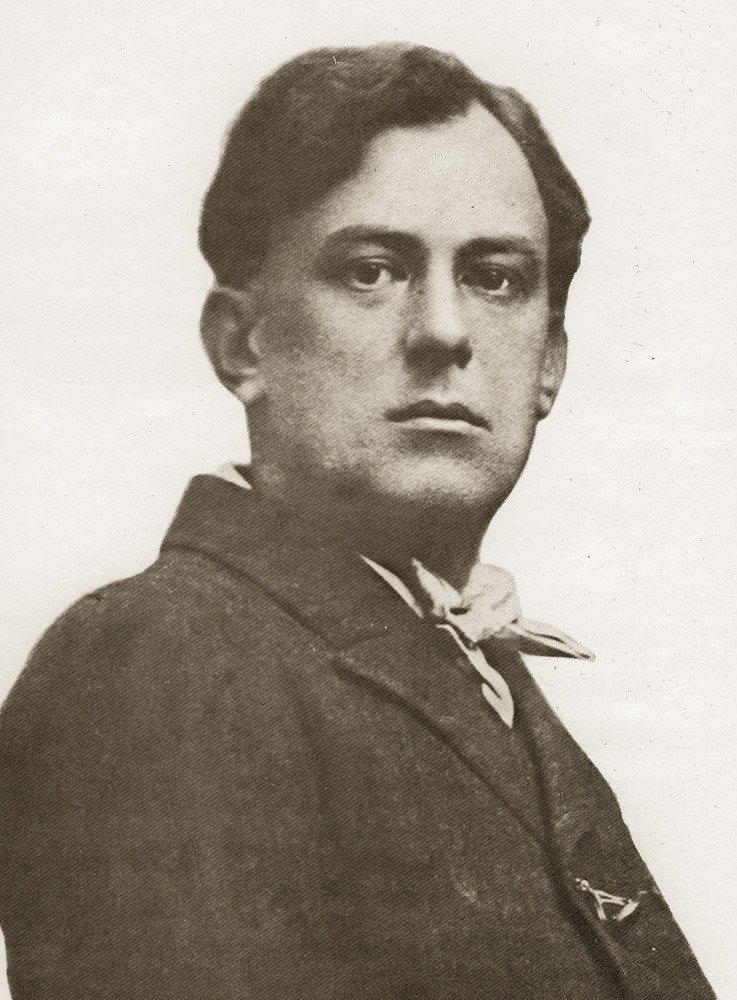
Aleister Crowley (1875–1947) was an English occultist, writer and self-publicist who revelled in his scandalous reputation; in the 1920s, as Encyclopaedia Britannica records, the British popular press denounced him as the “wickedest man in the world”. “Occult elite” videos and Christian anti-occult books like to present him as a high-ranking Freemason, sometimes a “33rd degree” or even a “95th degree” Mason, and then draw the conclusion: if the wickedest man in the world was a top Mason, Freemasonry must be black magic. Both halves of that argument fail.
Was Crowley a top Freemason?
No. The definitive study of his Masonic career was written by Martin P. Starr and published in 1995 in the transactions of Quatuor Coronati Lodge, the London lodge devoted to Masonic research. Its conclusion is in its first lines: “unbeknown to him at the time of joining, all his affiliations were with unrecognized and irregular bodies”.
Crowley’s one Craft lodge was in Paris. In 1904 he joined Anglo-Saxon Lodge No. 343, which had been chartered by the Grande Loge de France, “a body unrecognized by the United Grand Lodge of England”. He was initiated in October 1904 and became a Master Mason that December. The records available to Starr last show him as a member in 1908. In 1912, when he tried to join a lodge in England, the Secretary of Quatuor Coronati Lodge told him “plainly that as far as I am concerned, I should refuse his admission to any English Lodge with which I am connected.” In 1913 Crowley wrote to the United Grand Lodge of England asking to “regularize my position”. The reply has not survived, but, as Starr puts it, it “could not have been helpful”. He was never accepted. To this day the Grand Lodge of British Columbia and Yukon, a regular Grand Lodge, lists him among “fringe Freemasons” and describes him as “a clandestine freemason”, adding that “Crowley had no influence on Freemasonry”.
What about his 33rd and 95th degrees?
Impressive numbers, empty titles. Crowley first claimed a “33rd degree” from a body in Mexico City that the Masonic historian John Hamill described as “a minuscule irregular body”, and which, Starr notes, “granted Crowley no regular masonic standing”. In 1910 an elderly English enthusiast for fringe rites, John Yarker, gave him a 33° of the irregular “Cerneau” Scottish Rite, along with “the 95° of the Rite of Memphis and the 90° of the Rite of Misraim”. Those rites had been condemned as clandestine by several American Grand Lodges in the nineteenth century. A degree numbered 95 from a body that regular Freemasonry does not recognise is like a black belt from a karate school nobody has heard of: the number is large, and it means nothing outside the building.
Crowley’s own magical order, the Ordo Templi Orientis (O.T.O.), which he became involved with in 1912 and later led, is what Starr calls “a non-masonic esoteric society now largely identified with Crowley’s work”. Its German leaders, Theodor Reuss among them, had their own charter for the Rite of Memphis and Misraim from the same John Yarker, and inside the O.T.O., Starr writes, “Crowley claimed for himself an authority unimaginable in Regular Freemasonry”. Whatever it borrowed from Masonic-style degrees, it is not part of Freemasonry. As we explain in What is Freemasonry?, the highest rank in Freemasonry is the third degree, Master Mason; “higher” numbers in additional orders are not superior to it, and fringe orders that use the Masonic name carry no Masonic authority at all.
One man, every Mason?
Suppose, for argument’s sake, that Crowley had been a perfectly regular Freemason. The claim would still fail, because it rests on an old trick: take one notorious person, point out that he belonged to a group, and paint every member of that group with the same brush. Crowley went to Trinity College, Cambridge; nobody concludes that Cambridge teaches black magic. He was raised in a devout Christian family of the Plymouth Brethren; nobody blames the Brethren for his books. What one man does with his own life is his responsibility, not that of every organisation whose door he once walked through.
Freemasonry is judged by what Freemasonry itself teaches and does: belief in a Supreme Being, respect for the law, charity and self-improvement. None of it involves magic, black or otherwise, and the claim that Freemasons worship Satan is answered in Claim #05. The only thing Crowley’s Masonic story really proves is that regular Freemasonry kept turning him away.
Conclusion: Aleister Crowley was not a top Freemason. He was briefly a member of a Paris lodge that the United Grand Lodge of England did not recognise, collected high-numbered degrees from irregular fringe rites, was refused by English Freemasons when he tried to join them, and built his own occult order outside Freemasonry. And even if his Masonic career had been spotless, one man’s beliefs and behaviour are no evidence about the millions of Freemasons who have never heard of him.
Sources:
Martin P. Starr, “Aleister Crowley: Freemason!”, Ars Quatuor Coronatorum vol. 108 (1995), pp. 150–161, reprinted by the Grand Lodge of British Columbia and Yukon: https://freemasonry.bcy.ca/aqc/crowley.html
Grand Lodge of British Columbia and Yukon, “Aleister (Edward Alexander) Crowley” (Masonic biographies: fringe Freemasons): https://freemasonry.bcy.ca/biography/esoterica/crowley_a/crowley_a.html
Encyclopaedia Britannica, “Aleister Crowley” (archived copy): https://web.archive.org/web/20260109095542/https://www.britannica.com/biography/Aleister-Crowley
What is Freemasonry? (this site)