The claim
CLAIM #5:
Freemasons are Evil and they worship Satan?
FALSE
ANSWER:
Freemasons don’t worship Satan, Baphomet or Moloch, and Freemasonry isn’t a religion. The whole case rests on an apron and a creative reading of Genesis — and aprons, as any cook will tell you, are not evil.
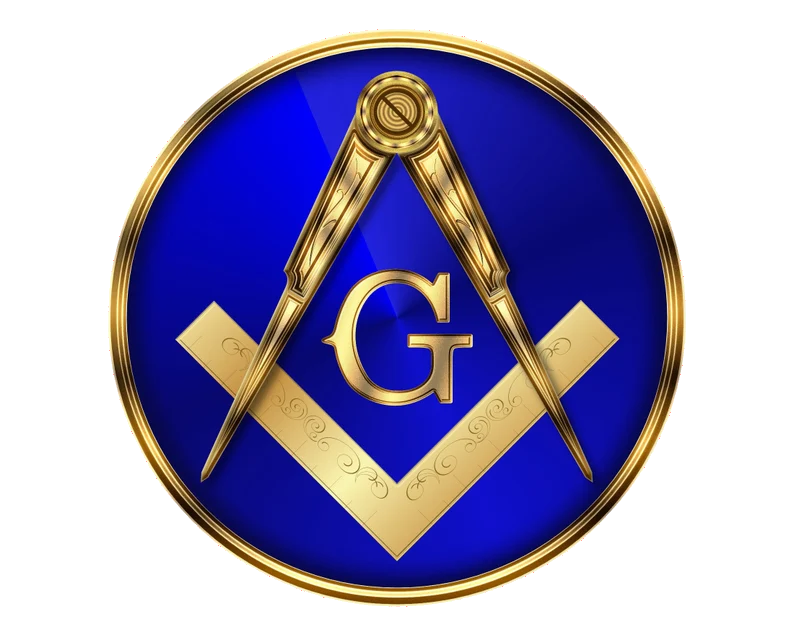
So where does this one come from?
This claim seems to have grown out of a strand of fiery evangelical preaching, and it mixes enthusiasm and fiction in roughly equal parts. It was stitched together from the writings of Leo Taxil and William Guy Carr, plus a creative reading of the Old Testament — in particular the story of Adam and Eve in Genesis, with the spotlight on Genesis 3:7. Pinning down who invented it first is like finding a needle in a historical haystack. Our best guess, after a good deal of digging, puts its genesis (pun intended) somewhere in the 1800s. Genesis 3:7 sits at the centre of it all, not just because it’s a Bible verse, but because of one phrase and one keyword that have sparked a great many imaginations.
To keep things simple — and to meet the people who share this claim on their own ground — we’ll use the 1611 King James Version of the Bible. It’s the Shakespeare of Bible translations: archaic, but charming. If you’d rather read something with fewer ‘thou shalts’, feel free to follow along in the NIV, the ESV or any other translation you like. For the words we’re looking at here, the meaning doesn’t change. They’re like that actor who plays the same role in every film.
A friendly heads-up before we go on: the next section looks closely at the original Hebrew of Genesis, and some of it may challenge readings you grew up with. If that’s not for you today, no hard feelings — but we hope you’ll stay.
One note before we start: on this page, words in square brackets “[ __ ]” give the original Hebrew word behind the English translation. We do this because, in our view, those Hebrew words have no exact English equivalent.
Links are provided throughout so you can read every Bible passage in full and check it for yourself. This is a sensitive subject, and you shouldn’t have to take our word for anything.
It helps to keep the following terms in mind as you read this section. Because none of them translates neatly into English, we’ll leave them in their original Hebrew.
How the Bible translates them:
Whenever you see one of the English words on the left, read it as the original Hebrew word on the right (after the ‘=’ sign). It’s a small way of showing respect to the people who first wrote these texts.
• God = Elohim
• The Most High = Elyon
• Lord = Yahweh
• Eternal = Yahweh
• Spirit = Ruach
• Glory = Kavod
Why bother with the original words? Because it’s the surest way to understand what the ancient texts actually say, and to avoid misunderstandings.
Primary notes:
• Elohim is a plural form; its grammatical singular is Eloah. El is a separate but related word, and it also hints at an entity other than Yahweh.
• Elyon, mentioned in the Bible (and the Tanakh/Torah), appears in one reading to rank ‘higher’ than Yahweh: Elyon ‘assigns’ Yahweh the land of Canaan, while other lands go to 69 other Elohim. Re: Deuteronomy 32:8-9. Note that this is the reading of the Dead Sea Scrolls (4QDeut-j, “sons of God”) and the Greek Septuagint; the later Masoretic Text reads “sons of Israel” instead, and scholars still debate which reading is the original.
http://www.qbible.com/hebrew-old-testament/deuteronomy/32.html
• Ruach is usually translated as ‘spirit’, but that doesn’t quite fit: in several books of the Torah the ruach makes a particular sound and produces flames and smoke. That isn’t what the Oxford dictionary means by ‘spirit’ today (standard Hebrew dictionaries also give ‘wind’ and ‘breath’), so we leave the word untranslated.
• Kavod is usually translated as ‘glory’, but again, in several books of the Torah the kavod makes a particular sound and produces flames and smoke. The word’s root means ‘heavy’, and the reading followed here (Mauro Biglino’s, listed in the sources below) takes it as a ‘heavy military object’. Either way, that isn’t ‘glory’ in today’s Oxford-dictionary sense, so we leave this word untranslated too.
Additional notes:
Nothing on this page, above or below, denies the existence of God. That isn’t in question: the author of this page has never suggested that God doesn’t exist, or that the ancient texts are wrong. Quite the opposite! The point is simply that the clearest way to understand these texts is through their original Hebrew words, which have no exact translation, and which deserve the respect owed to their original authors.
Sources:
The Naked Bible – Mauro Biglino
https://www.amazon.com/Naked-Bible-Truth-famous-history/dp/8894611736
I Profeti Minori – Piergiorgio Beretta & Mauro Biglino (Published by Editore San Paolo)
https://www.amazon.com/I-profeti-minori-Ediz-multilingue/dp/8821566471
The Early History of God – Mark S. Smith
https://www.amazon.com/Early-History-God-Biblical-Resource/dp/080283972X
Yahweh and the Gods and Goddesses of Canaan (The Library of Hebrew Bible / Old Testament Studies) – John Day
https://www.amazon.com/Yahweh-Goddesses-Library-Testament-Studies/dp/0826468306
The Origins of Biblical Monotheism: Israel’s Polytheistic Background and the Ugaritic Texts – Mark S. Smith
https://www.amazon.com/Origins-Biblical-Monotheism-Polytheistic-Background/dp/0195167686
Canaanite Myth and Hebrew Epic: Essays in the History of the Religion of Israel
https://www.amazon.com/Canaanite-Myth-Hebrew-Epic-Religion/dp/0674091760/
The Faces of God: Canaanite Mythology as Hebrew Theology
https://www.amazon.com/Faces-God-Canaanite-Mythology-Theology/dp/0882149946
The story of Adam & Eve in Genesis
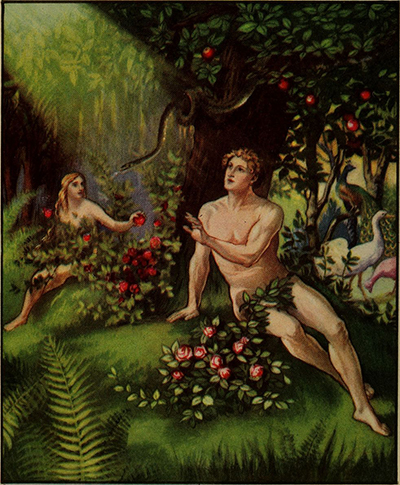
What does Genesis 3 actually say?
Source: https://biblehub.com/genesis/3.htm
“1Now the serpent was more subtil than any beast of the field which the LORD [Yahweh] God [Elohim] had made. And he said unto the woman, Yea, hath God [Elohim] said, Ye shall not eat of every tree of the garden? 2And the woman said unto the serpent, We may eat of the fruit of the trees of the garden: 3But of the fruit of the tree which is in the midst of the garden, God [Elohim] hath said, Ye shall not eat of it, neither shall ye touch it, lest ye die. 4And the serpent said unto the woman, Ye shall not surely die: 5For God [Elohim] doth know that in the day ye eat thereof, then your eyes shall be opened, and ye shall be as gods, knowing good and evil. 6And when the woman saw that the tree was good for food, and that it was pleasant to the eyes, and a tree to be desired to make one wise, she took of the fruit thereof, and did eat, and gave also unto her husband with her; and he did eat. 7And the eyes of them both were opened, and they knew that they were naked; and they sewed fig leaves together, and made themselves apron”
“8And they heard the voice of the LORD [Yahweh] God [Elohim] walking in the garden in the cool of the day: and Adam and his wife hid themselves from the presence of the LORD [Yahweh] God [Elohim] amongst the trees of the garden. 9And the LORD [Yahweh] God [Elohim] called unto Adam, and said unto him, Where art thou? 10And he said, I heard thy voice in the garden, and I was afraid, because I was naked; and I hid myself. 11And he said, Who told thee that thou wast naked? Hast thou eaten of the tree, whereof I commanded thee that thou shouldest not eat? 12And the man said, The woman whom thou gavest to be with me, she gave me of the tree, and I did eat. 13And the LORD [Yahweh] God [Elohim] said unto the woman, What is this that thou hast done? And the woman said, The serpent beguiled me, and I did eat. 14And the LORD [Yahweh] God [Elohim] said unto the serpent, Because thou hast done this, thou art cursed above all cattle, and above every beast of the field; upon thy belly shalt thou go, and dust shalt thou eat all the days of thy life:
The phrase and the keyword that get all the attention are both in Genesis 3:7:
“7And the eyes of them both were opened, and they knew that they were naked; and they sewed fig leaves together, and made themselves aprons.”
Here’s how the story goes, as told by the people who share this claim. It draws a rather imaginative line from the Garden of Eden to the lodge room. The ‘opening of eyes‘ gets a Masonic makeover and becomes ‘receiving of light and knowledge‘ — a well-known Masonic phrase. Then there’s the word ‘Apron‘, which here isn’t something you’d wear to a BBQ: it’s what Freemasons wear to a lodge meeting. Put those two together and you have the whole case. That’s it. That’s the claim.
Let’s add a little common sense. Gaining knowledge isn’t a mystical process reserved for the initiated. It’s as simple as opening a book — revolutionary, we know. And when it comes to Masonic knowledge, you don’t need an apron or a secret handshake to find it. Masonic literature is an open book, quite literally.
Take Albert Gallatin Mackey and Manly P. Hall. They’re the J.K. Rowling and George R.R. Martin of Masonic writing, and their books — along with those of countless other Masonic authors — sit on public shelves, not in some hidden vault. The idea that Masonic knowledge is a hush-hush affair is about as convincing as the tooth fairy.
First, a common mix-up. The tree at the heart of the Eden story isn’t an apple tree, whatever some theologians and painters might have you believe. The ancient Hebrew text never mentions an apple at all; it simply says ‘the fruit’. Genesis actually names two special trees: the tree of the knowledge of good and evil, which is the one Adam and Eve were told not to eat from (Genesis 2:17), and the ‘Tree of Life’ (Genesis 2:9). The Tree of Life is a concept found in civilisations right across the globe, and it gets its own well-deserved spotlight, with all its symbolism and uses, in other sections of this website.
Now the second point. An apron is an everyday item: it covers your modesty, protects your clothes when you cook and shields you at work. Turning it into a symbol of ‘sin’ or ‘evil’ takes a leap worthy of an Olympic long-jumper. It looks like the work of someone with a flair for the dramatic, reaching for anything that might cast Freemasons in a bad light. Seeing Freemasons wear aprons in a lodge meeting is one thing; reading it as a sign of the devil is quite another. Operative masons wore aprons for a very practical reason: hammers, chisels and flying chips of stone. Calling an apron a token of evil tells you a lot more about the theory than about the apron.
If we look closely at the phrases in Genesis 3, a few questions come up:
Why would it be a sin for Adam and Eve to have their eyes ‘opened’? To be clear, this isn’t a literal eye-opening, like waking up from a nap. The passage is about an awakening of knowledge — in the author’s view, quite likely a reference to the pineal gland, the tiny gland deep in the brain that has fascinated everyone from ancient civilisations to modern conspiracy theorists. It’s not about Adam and Eve realising they’d forgotten their sunglasses.
What would it mean for two people to live their whole lives with their eyes closed? Is it that being aware would make people like God?
(This fits the way the Torah treats ignorance.) Here is the verse in question:
Genesis 3:4-5
4“You will not certainly die,” the serpent said to the woman. 5 For God knows that when you eat from it your eyes will be opened, and you will be like God, knowing good and evil.
Why would knowledge be such a thorny issue? It almost sounds as if ignorance is bliss. So let’s dig a little deeper. Were Adam and Eve meant to stay in the dark? Did Yahweh, the Elohim, hold a monopoly on knowledge that he didn’t want to share — the ultimate ‘members only’ club? Were Adam and Eve supposed to stay blissfully unaware, never reaching the same understanding as their creator? It’s a thought-provoking idea: perhaps the pursuit of knowledge was the real apple of discord in this ancient story.
Why would it be a crime to gain knowledge? Does God want everyone to stay in the dark? And how could knowledge make Adam and Eve the same as God, the creator of the universe?
Put another way: how could knowledge make Adam and Eve the same as God, if this God is the creator of the universe? Theologians usually cast the creator as the main character of this passage — but, as we’ll see, the text points somewhere else.
Genesis 3:6-7
6 And when the woman saw that the tree was good for food, and that it was pleasant to the eyes, and a tree to be desired to make one wise, she took of the fruit thereof, and did eat, and gave also unto her husband with her; and he did eat.
7And the eyes of them both were opened, and they knew that they were naked; and they sewed fig leaves together, and made themselves aprons.
Why would it be a problem that Adam and Eve, being completely naked, sewed fig leaves together to make aprons and cover themselves?
And why did the LORD [Yahweh] God [Elohim] tell Adam and Eve that if they ate from the tree they would surely die — when they didn’t?
Who is the serpent? Is it Satan? Or is it someone else, deliberately hidden and obscured? This is where older Mesopotamian texts are worth a look. They were written in Sumerian and Akkadian centuries before the Hebrew texts of the Bible — in some cases more than a thousand years before. In texts such as the Epic of Gilgamesh and the Atrahasis flood story, two gods stand out: Enlil and Enki (also called Ea). Enlil is the angry, jealous god who sends the flood against humanity [often linked with the god Yahweh because of how he behaves], while Enki is the loving god who warns the humans and helps them survive, because the humans were his creation. (The Enuma Elish, often mentioned alongside them, is a Babylonian creation story written in Akkadian, and Enlil barely appears in it.) The closest Mesopotamian parallels to the Garden of Eden itself are myths such as Adapa and Enki and Ninhursag.
There’s another question, too. If this passage is about God — that is, [Lord] Yahweh the [God] Elohim — then it can’t be God the creator of the universe. It must be Yahweh the Elohim: an entity who walks and talks, and who was revered as a god in a specific region of Palestine called Canaan. If it were God the creator, how could Adam and Eve hear the voice and the footsteps of ‘God’ [Elohim] in the garden, rather than, say, a burning bush? How can the creator of the universe take physical human form?
And isn’t the creator of the universe all-knowing? Then why would he need to ask Adam ‘where are you?’ in Genesis 3:8-9? Surely an all-knowing, almighty God would already know where Adam was.
Genesis 3:8-9
8 And they heard the voice of the Lord God walking in the garden in the cool of the day: and Adam and his wife hid themselves from the presence of the Lord God amongst the trees of the garden.
9 And the Lord God called unto Adam, and said unto him, Where art thou?
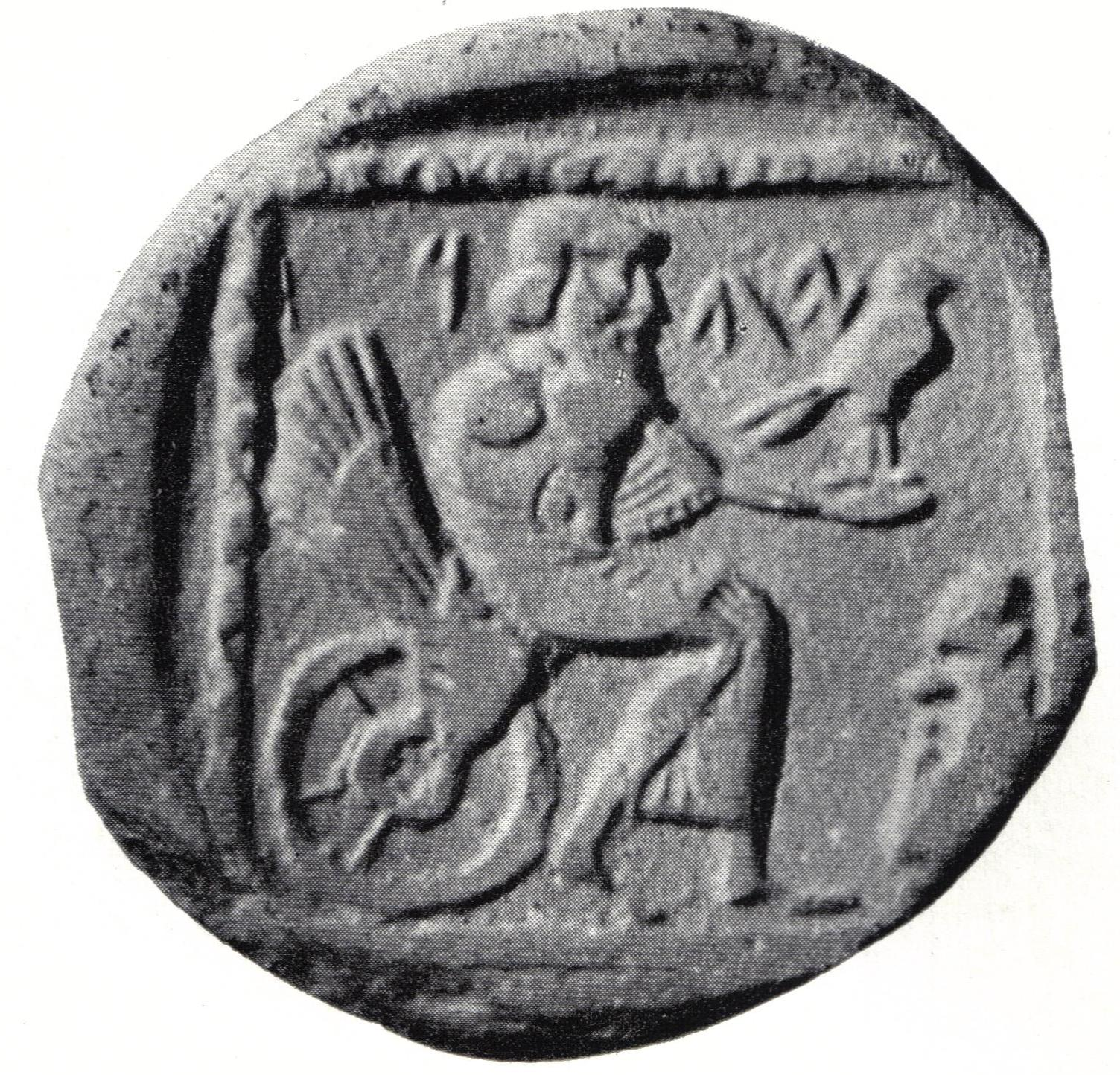
So in the version of the story told by those who share this claim, he (Yahweh — a masculine being, as on the coin shown here) can’t be God the creator of the universe. He must be a man, or an entity that looks like one. The Hebrew text makes it clear that it is speaking about Yahweh, one of the Elohim — one of the 70 children of Elyon. (Some writers suggest that Elyon corresponds to Anu, the sky god of the Mesopotamian texts mentioned above; most scholars, though, link Elyon with the Canaanite god El.)
Sources:
Enuma Elish
https://www.amazon.com.au/Enuma-Elish-Original-Brief-Commentary/dp/1989940390
Epic of Gilgamesh
https://www.amazon.com.au/Epic-Gilgamesh-Andrew-George/dp/014044100X
Does asking questions about different religions — and trying to understand what all of their texts have to teach — make someone evil?
No. Not even slightly.
Seeking the truth and asking questions isn’t just good; it’s what makes us human. It has nothing to do with dabbling in the dark arts. It’s ordinary human curiosity at work. The idea that anyone should be frowned upon for seeking the truth through careful historical research, rather than simply accepting what they’re told, is baffling. Discouraging that kind of curiosity doesn’t protect anyone; it just puts a roadblock on the road to understanding. The pursuit of knowledge and truth deserves to be celebrated, not feared.
The bottom line
Let’s get straight to the point. Freemasonry isn’t a religion, but it happily draws on the teachings of many. Picture a long table of spiritual wisdom with dishes from many faiths, each one offering life lessons and moral guidance. In the Masonic approach, it isn’t about religious exclusivity; it’s about moral inclusivity.
A little research and reflection make it clear: Freemasonry doesn’t draw only on Christianity. Every religion brings something to the table, adding to a shared store of moral, character-building wisdom. That mix is what helps shape a person, fine-tune their moral compass and guide them towards becoming not just a better man, but a more well-rounded human being.
And here’s a little insider tip: you don’t need to be a Freemason to sample this wisdom. Just pick up a copy of ‘A Bridge to Light’ on Amazon. It’s a backstage pass to the Masonic world, no secret handshake required.
https://www.amazon.com/Bridge-Light-Masonic-Ritual-Philosopy-ebook/dp/B09JT4RFC5
Sources:
Bible Study
https://www.biblegateway.com/
God: An Anatomy
https://www.amazon.com.au/God-Anatomy-Francesca-Stavrakopoulou-ebook/dp/B09FDVXKJL
Religious Diversity in Ancient Israel
https://www.amazon.com.au/Religious-Diversity-Ancient-Francesca-Stavrakopoulou/dp/0567032167
Land of Our Fathers: The Roles of Ancestor Veneration in Biblical Land Claims: The Roles of Ancestor Veneration in Biblical Land Claims
https://www.amazon.com.au/Land-Our-Fathers-Ancestor-Veneration/dp/056702881X
King Manasseh and Child Sacrifice: Biblical Distortions of Historical Realities
https://www.amazon.com.au/King-Manasseh-Child-Sacrifice-alttestamentliche-ebook/dp/B07CMDKS82
The Torah: A Mechanical Translation
https://www.amazon.com.au/Torah-Mechanical-Translation-Jeff-Benner/dp/1949756343
The Ancient Hebrew Lexicon of the Bible
https://www.amazon.com.au/Ancient-Hebrew-Lexicon-Bible-Benner/dp/1589397762
Gods of the Bible: A New Interpretation of the Bible Reveals the Oldest Secret in History
https://www.amazon.com.au/Gods-Bible-Interpretation-Reveals-History/dp/8894611752
The Naked Bible: The Truth about the most famous book in history
https://www.amazon.com.au/Naked-Bible-Truth-famous-history/dp/8894611736
Il falso testamento. Creazione, miracoli, patto d’allenza: l’altra verità dietro la Bibbia
https://www.amazon.com.au/falso-testamento-Creazione-miracoli-dallenza/dp/8804681187
Gods, Goddesses, and the Women Who Serve Them
https://www.amazon.com.au/Gods-Goddesses-Women-Serve-Them/dp/080287956X
The History of Ancient Palestine
https://www.amazon.com.au/History-Ancient-Palestine-Gosta-Ahlstrom/dp/0800627709
The Splintered Divine: A Study of Istar, Baal, and Yahweh Divine Names and Divine Multiplicity in the Ancient Near East
https://www.amazon.com.au/Splintered-Divine-Spencer-L-Allen/dp/1614512930