The claim
CLAIM #56:
Freemasons made the Russian Revolution and created Soviet communism?
FALSE
ANSWER:
The Bolsheviks who created Soviet communism treated Freemasonry as an enemy: in 1922 their Communist International ordered every communist to quit the lodges or be expelled for good, and in 1926 the Soviet secret police arrested the members of the small lodges still meeting in Leningrad. An odd way to treat your founders.
According to this claim, the Russian Revolution of 1917 was the work of Freemasons, who put the Bolsheviks in power and made communism their political weapon. It is often bolted onto what the historian Jacob Katz called “the spurious Jewish-Masonic plot”, and it still circulates online. The history of what the communists actually did to Freemasonry tells a very different story.
What did the communists do to Freemasonry?
They turned on it. In 1922 the Fourth Congress of the Bolshevik-led Communist International stated that “The incompatibility between Freemasonry and socialism was recognised by the majority of parties of the Second International”, and ordered the French Communist Party “to cut all ties, in the person of individual members or groups, between the party and Freemasonry”. Any communist still a Mason who had not publicly broken with it by 1 January 1923 “automatically leaves the Communist Party, without the right ever to be readmitted”, and anyone who hid his membership was to be treated as “an enemy agent”. Inside Russia, a handful of small, unrecognised lodges were set up in Petrograd (later Leningrad) in 1921–22. As Moscow’s Garage Museum of Contemporary Art records, the Soviet secret police, the OGPU, arrested their founder together with 21 members of his lodge in January 1926; he was sentenced to five years in a labour camp, and other occultists from the same circles were sent to the prison camp on the Solovetsky Islands.
If Freemasonry created communism, it is the only parent in history to be thrown out of the house by its own child and then hunted down by the police.
But wasn’t Kerensky a Mason?
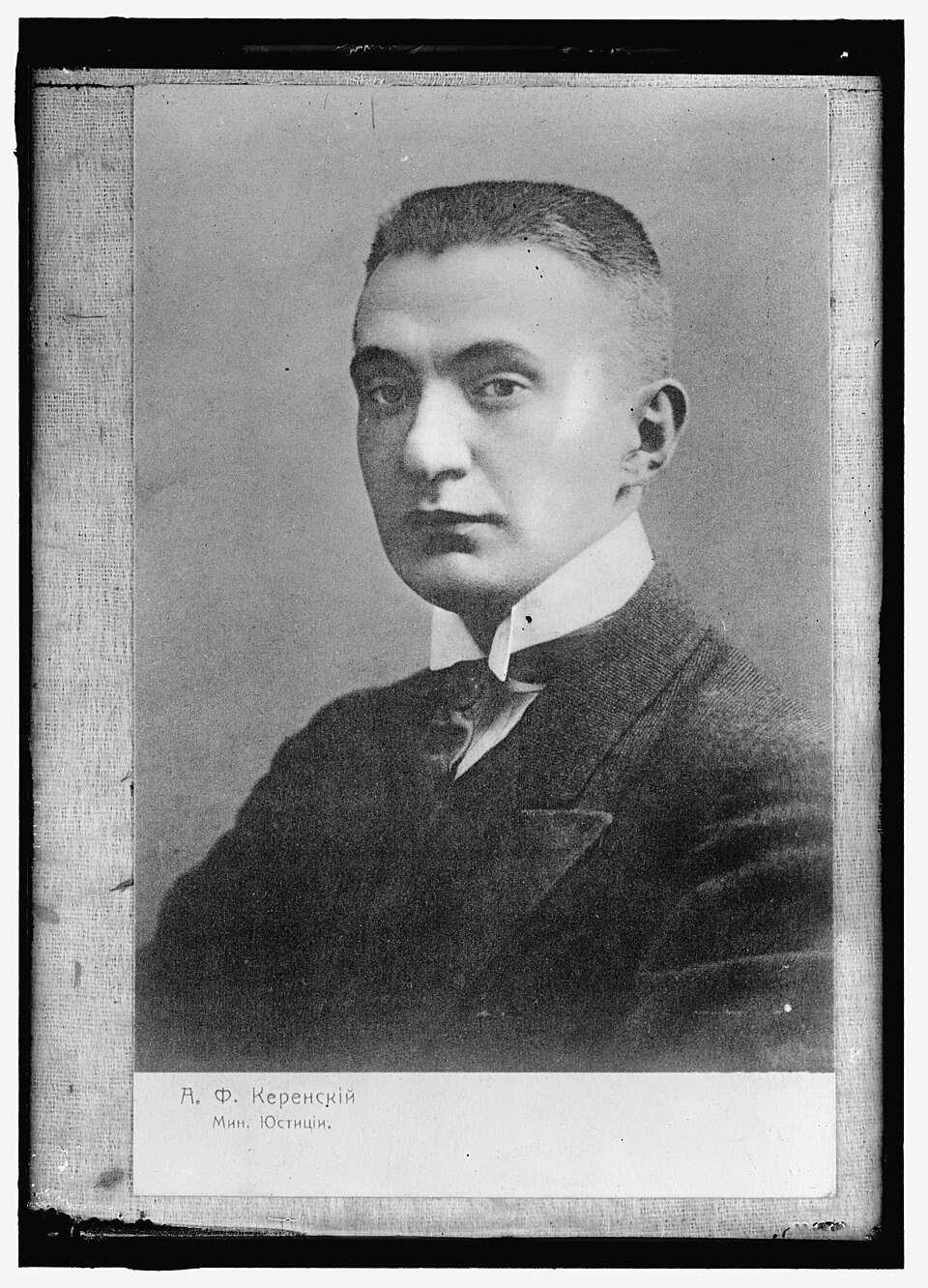
He was, and the full facts are worth stating precisely. Russia had two revolutions in 1917. The first, in February, overthrew the Tsar and set up a Provisional Government; Alexander Kerensky became its Minister of Justice, then Minister of War, and after the July crisis its head. In 1912 Kerensky had joined what the historian Virgil Medlin calls a “resurrected, irregular, Russian Freemasonry”; from the summer of 1916 he was apparently secretary of its national organisation, and Medlin counts four of its members, Kerensky among them, as ministers of the first Provisional Government. The revised edition of Mackey’s Encyclopedia of Freemasonry says these lodges worked “with practically no ritual and having an avowedly political aim in view, namely, that of the overthrow of autocracy”, and that “This organization had no regularity and enjoyed no recognition abroad.” It even repeats the story that the February revolution “is said to have been inspired” from them. “Irregular” is the key word: it means a body that regular Freemasonry does not recognise, and regular Freemasonry forbids political discussion in its lodges.
The second revolution, in October, was the Bolshevik seizure of power. It overthrew Kerensky’s government, and Kerensky spent the rest of his life in exile, from 1940 in New York. So the Masons of 1917, members of an unrecognised political network, were on the losing side of the revolution that created Soviet communism; most of them, Mackey’s Encyclopedia notes, emigrated after it. What Kerensky and his political associates did, they did as politicians, not as agents of the fraternity, and no recognised Grand Lodge planned or approved any of it. Regular Freemasonry charges every new member: “In the State, you are to be a quiet and peaceful subject, true to your government, and just to your country; you are not to countenance disloyalty or rebellion” (see also Claim #07).
So where does the claim come from?
From the same people who persecuted both Masons and communists. Nazi propaganda pushed what the United States Holocaust Memorial Museum calls “Judeo-Bolshevism”, “the claim that Jews were responsible for the spread of communism”, and bundled Freemasons into the same imaginary plot: one Nazi poster declared that “Freemasonry is an international organization beholden to Jewry with the political goal of establishing Jewish domination through world-wide revolution”. The Nazis then dissolved every remaining German lodge in 1935 (see Claim #29). In Spain, General Franco’s regime passed the Law of 1 March 1940 on the repression of Freemasonry and Communism (“Ley de 1 de marzo de 1940 sobre represión de la masonería y del comunismo”), which made membership a crime and set up a special tribunal to try it; since 1937 its officials had been gathering lodge records in Salamanca, in the words of Spain’s national distance-learning university UNED, “con la intención de identificar y sancionar a sus miembros” (“with the intention of identifying and punishing their members”). The idea lives on: the 1988 charter of Hamas claims that the same secret forces “were behind the French Revolution, the Communist revolution and most of the revolutions we heard and hear about”.
Notice the pattern. The communist dictatorships banned Freemasonry, and so did the anti-communist dictatorships. Both extremes saw a fraternity that admits men of every faith and every political opinion, and refuses to take sides, as a threat. That says a great deal about dictatorships, and nothing at all about who made the Russian Revolution.
Conclusion: Freemasons did not make the Russian Revolution or create Soviet communism. The Bolsheviks’ Communist International expelled Masons from its parties in 1922, and the Soviet secret police broke up the little lodges that remained in Leningrad in 1926. Alexander Kerensky and several of his ministers belonged to an irregular, unrecognised political lodge network, but they led the government that the Bolsheviks overthrew, and their politics were their own, not the fraternity’s. The “Masonic-communist” plot was a staple of Nazi and Francoist propaganda, both of which persecuted Freemasons too.
Sources:
Communist International, Fourth Congress (1922), “Political Resolution on the French Question” (Marxists Internet Archive): https://www.marxists.org/history/international/comintern/4th-congress/french-question.htm
Garage Museum of Contemporary Art, Moscow, “Martinists and Freemasons in 1920s Petrograd/Leningrad”: https://garagemca.org/en/exhibition/we-treasure-our-lucid-dreams-the-other-east-and-esoteric-knowledge-in-russian-art-1905-1969/tour/martinists-and-freemasons-in-1920s-petrograd-leningrad
Virgil D. Medlin, “Alexander Fedorovich Kerensky”, Proceedings of the Oklahoma Academy of Science 51 (1971), pp. 127–130: https://ojs.library.okstate.edu/osu/index.php/OAS/article/view/4793/4464
Albert G. Mackey, An Encyclopedia of Freemasonry, revised and enlarged by Robert I. Clegg (1929), article “Russia”
Grand Lodge of Minnesota, Masonic Manual and Monitorial Instructions (1998), p. 27
United Grand Lodge of England, “What is Freemasonry?” (leaflet): https://skirret.com/papers/freemasonry_ugle.html
Jacob Katz, Jews and Freemasons in Europe 1723–1939 (Harvard University Press, 1970)
United States Holocaust Memorial Museum, “Protocols of the Elders of Zion”: https://encyclopedia.ushmm.org/content/en/article/protocols-of-the-elders-of-zion
United States Holocaust Memorial Museum, “Freemasonry under the Nazi Regime”: https://encyclopedia.ushmm.org/content/en/article/freemasonry-under-the-nazi-regime
Boletín Oficial del Estado no. 62 (2 March 1940), “Ley de 1 de marzo de 1940 sobre represión de la masonería y del comunismo”: https://www.boe.es/datos/pdfs/BOE//1940/062/A01537-01539.pdf
UNED, Museo Virtual de Historia de la Masonería, “Documentación masónica generada por el franquismo”: https://www.uned.es/universidad/inicio/unidad/museo-virtual-historia-masoneria/sala-ii-masonologia-la-investigacion-cientifica-en-historia-de-la-masoneria/documentacion-masonica-generada-por-el-franquismo.html
The Avalon Project, Yale Law School, “Hamas Covenant 1988”: https://avalon.law.yale.edu/20th_century/hamas.asp