The claim
CLAIM #55:
Skull and Bones and Bohemian Grove are the secret inner circle of Freemasonry?
FALSE
ANSWER:
Skull and Bones is a Yale student society founded in 1832. The Bohemian Club is a private San Francisco club founded in 1872 by a circle of journalists, artists and writers. Neither is part of Freemasonry, neither answers to it, and Freemasonry has no “inner circle” for them to be.
Lists of “secret societies that run the world” love to put three names side by side: Skull and Bones, Bohemian Grove and the Freemasons. From there it is a short step to the claim that the first two are the real top level of the third, the place where “high-level Masons” and presidents meet to make the actual decisions. Lining up three names in a video does not make them one organisation, so let us look at each in turn.
What is Skull and Bones?
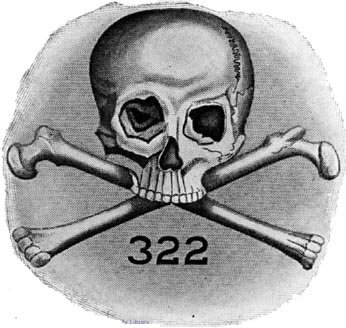
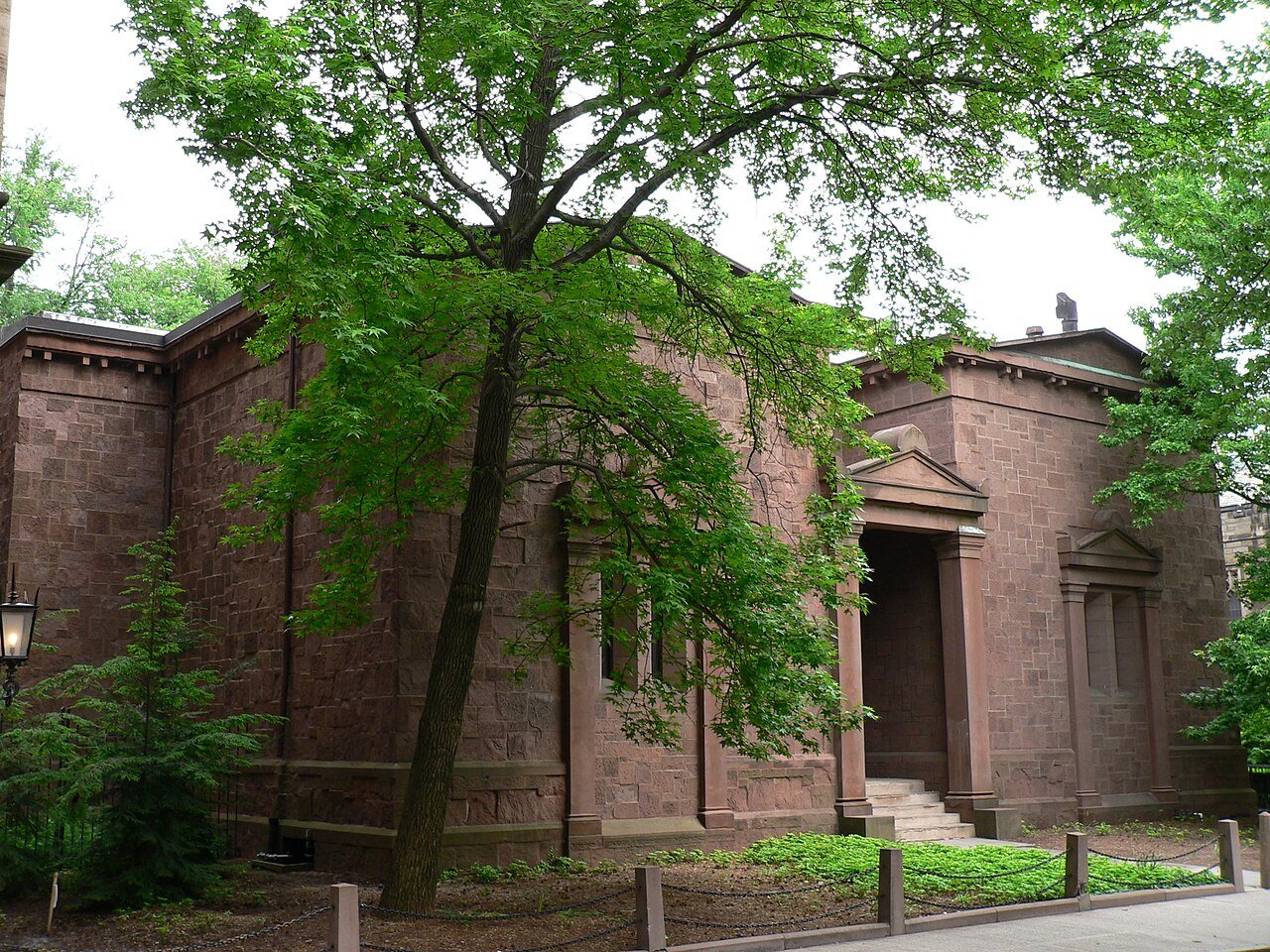
Skull and Bones is a senior society at Yale University. According to the Yale Alumni Magazine, it was founded in 1832, chiefly the idea of a student named William Huntington Russell, who was joined by Alphonso Taft (father of the future president William Howard Taft); Russell, Taft and their four co-founders were all members of Phi Beta Kappa. Each year it invites fifteen Yale juniors to join, and in 1991 its members voted to admit women. It has famous alumni and, since 1856, a clubhouse that began as a forbidding windowless block in what the magazine calls the “Egypto-Doric” style, nicknamed the “Tomb”, which explains most of its legend.
Its emblem is a skull and crossbones with the number 322. Online, that number is sometimes linked to a Masonic lodge in Suffolk, England, called the Lodge of Virtue and Silence. There is a small problem: that lodge, which meets at Hadleigh, is No. 332, not 322, as the UK National Archives catalogue of its records shows. As for the society’s own 322, the Yale Alumni Magazine notes that there are many theories, “the most often cited being that 322 BCE was the year on or near to which Alexander or Demosthenes died”. As for the skull and crossbones, the Grand Lodge of British Columbia and Yukon notes that although the skull and crossbones is a long-standing Masonic emblem of mortality, the skull and crossbones on its own “is not appropriate as an emblem of Freemasonry”, and that the old story of pirates borrowing it from the Masons is one where “History does not support this opinion.”
There is one more theory, popular on Christian prophecy websites: that 322 is a Bible reference. It is not from the Book of Daniel, where Daniel 3:22 simply tells of the furnace flames that killed the men who threw Shadrach, Meshach and Abednego into the fire. The verse meant is Genesis 3:22, where, after Adam and Eve have eaten the forbidden fruit, “YHWH Elohim said, Behold, the man is become as one of us, to know good and evil”. One such website concludes: “So we see the hidden meaning behind the number 322 is found in Genesis 3:22 – Man becoming God.” It is an imaginative reading, but nothing from Yale or from the society itself supports it, and the verse is a warning about Adam’s fall, not a promise. Yale’s own alumni magazine lists the theories about 322, and a Bible verse is not among them.
What really happens at Bohemian Grove?
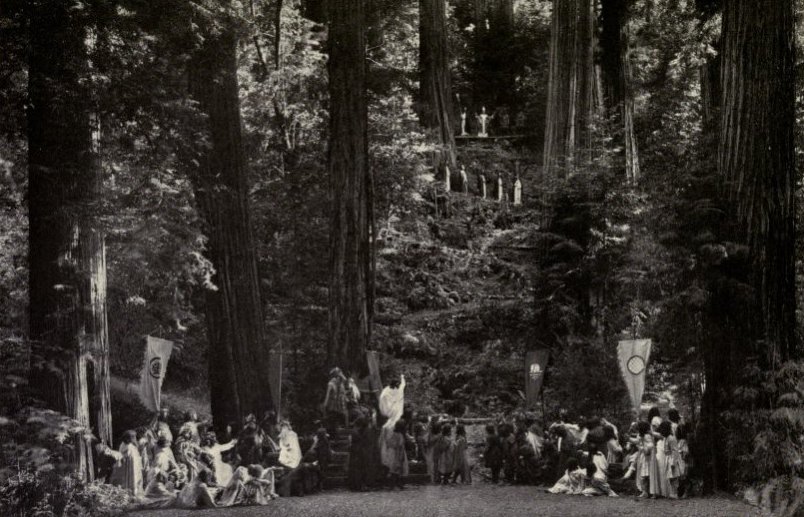
The Bohemian Club was founded in San Francisco in 1872. According to the San Francisco Public Library, which holds a collection of its papers, it began as “an informal association of journalists, artists and writers”, and seventeen of its twenty-four charter members were connected with newspapers or printing; over time it “grew to include elite businessmen and prominent politicians”. Bohemian Grove is the club’s private 2,700-acre campground in the redwoods of Sonoma County, California, on the Russian River, where members and their invited guests gather for two weeks every summer for plays, concerts and outdoor dinners.
The famous ritual is the “Cremation of Care”, first performed at the club’s midsummer gathering of 1881. The club’s own 1908 book The Bohemian Jinks describes it as a mock funeral: Care, “the foul and pestilential demon” of everyday worries, is carried in procession to a pyre and “consigned to the flames”, the band strikes up a quick-step, and fireworks light up the forest. The owl that presides over the Grove is the club’s patron, chosen early in its history as “the bird of wisdom”. About a year before 9/11, the broadcaster Alex Jones slipped into the Grove and secretly filmed the ceremony. The British journalist Jon Ronson, who went in with him, told PBS FRONTLINE in 2020 that Jones became convinced he had seen “an actual human sacrifice, even though it was clearly papier mâché”. It is the Bohemian Club’s own tradition, and there is nothing Masonic about it.
So is there any link to Freemasonry?
Only the one every large group of men shares: some of their members have also been Freemasons, just as some have been Rotarians, golfers, Presbyterians, Quakers, Episcopalians, Roman Catholics, members of the Disciples of Christ or of the Dutch Reformed Church. That is a fact about individuals, not a chain of command between organisations. Skull and Bones and the Bohemian Club have their own founders, their own rules, their own property and their own members; none of them is chartered by a Grand Lodge, and no Grand Lodge answers to them. Freemasonry itself has no “inner circle” above the lodges and Grand Lodges, as we explain in Claim #24, and even its 33rd degree is not a secret board of directors (see Claim #21). For the separate claim that the Grove’s owl is the god Moloch, see Claim #04.
Conclusion: Skull and Bones and Bohemian Grove are not Freemasonry’s inner circle. One is a Yale student society founded in 1832; the other is a San Francisco club founded by journalists, artists and writers in 1872, whose famous ritual is a piece of theatre about leaving your worries behind. Neither is Masonic, the “Masonic lodge 322” turns out to be number 332, and some members belonging to more than one club proves nothing about who runs what.
Sources:
Yale Alumni Magazine, David A. Richards, “The origins of the tomb” (May/June 2015): https://yalealumnimagazine.org/articles/4072
Deseret News (from the Associated Press), “Skull, Bones members to let 6 women in on their secrets” (25 October 1991): https://www.deseret.com/1991/10/25/18948150/skull-bones-members-to-let-6-women-in-on-their-secrets
The National Archives (UK), Discovery: “Ancient Free and Accepted Masons of England: Lodge of Virtue and Silence no 332, Hadleigh”: https://discovery.nationalarchives.gov.uk/details/c/F149355
Grand Lodge of British Columbia and Yukon, “The skull and cross-bones”: https://freemasonry.bcy.ca/symbolism/skull_cross-bones.html
San Francisco Public Library, Finding Aid to the Bohemian Club Collection (BASC 15): https://oac.cdlib.org/findaid/ark:/13030/c84q829w/entire_text/
San Francisco Public Library, Finding aid for the Collection of Bohemian Grove Photographs (SFP 104): https://oac.cdlib.org/findaid/ark:/13030/c8ng4w9j/entire_text/
Porter Garnett, The Bohemian Jinks: A Treatise (San Francisco: Bohemian Club, 1908), pp. 18–19 and 27–28: https://archive.org/details/bohemianjinkstre00garn
PBS FRONTLINE, interview with Jon Ronson (12 March 2020): https://www.pbs.org/wgbh/frontline/interview/jon-ronson/
Sefaria, Genesis 3:22 (Hebrew with English): https://www.sefaria.org/Genesis.3.22?lang=bi
Sefaria, Daniel 3:22 (Hebrew with English): https://www.sefaria.org/Daniel.3.22?lang=bi
BibleGateway, Genesis 3:22 (KJV): https://www.biblegateway.com/passage/?search=Genesis+3%3A22&version=KJV
ATAM, “Mystery of 322” (quoted as an example of the claim): https://atam.org/Mysteryof322.html
G. William Domhoff, “Social Cohesion & the Bohemian Grove: The Power Elite at Summer Camp”, Who Rules America (UC Santa Cruz), archived copy: https://web.archive.org/web/20250101213420/https://whorulesamerica.ucsc.edu/power/bohemian_grove.html
Dwight D. Eisenhower Presidential Library, “Bohemian Club” subject guide: https://www.eisenhowerlibrary.gov/sites/default/files/research/subject-guides/pdf/bohemian-club.pdf
Herbert Hoover Presidential Library, “Years of Compassion 1914-1923”: https://hoover.archives.gov/exhibits/years-compassion-1914-1923
QuakerSpeak, “Was Richard Nixon a Quaker?” (archived copy): https://web.archive.org/web/2024/https://quakerspeak.com/was-richard-nixon-a-quaker/
Presbyterian Historical Society, “Eisenhower: Peace and Presbyterianism”: https://pcusa.org/news-storytelling/blogs/historical-society-blog/eisenhower-peace-and-presbyterianism
Christian History Institute, “Stone-Campbell: Did you know?”: https://christianhistoryinstitute.org/magazine/article/did-you-know-stone-campbell
David Paulsen, “Bush remembered as lifelong Episcopalian with deep ties to his church”, Episcopal News Service, 4 December 2018 (archived copy): https://web.archive.org/web/20191231071107/https://www.episcopalnewsservice.org/2018/12/04/washington-national-cathedral-prepares-to-host-state-funeral-for-george-h-w-bush/
Theodore Roosevelt Center, “Theodore Roosevelt: Dutch Reformed Stalwart in the White House” (Theodore Roosevelt Association Journal, 1991): https://www.theodorerooseveltcenter.org/digital-library/o307840
Crisis Magazine, “William E. Simon Really Strikes It Rich” (1999): https://www.crisismagazine.com/1999/william-e-simon-really-strikes-it-rich
National Catholic Register, “Where His Real Treasure Lies” (interview with William E. Simon): https://www.ncregister.com/interview/where-his-real-treasure-lies