The claim
CLAIM #33:
Freemasons will kill you if you leave or reveal their secrets, and the William Morgan case proves it?
FALSE
ANSWER:
Freemasonry does not kill anyone, and never has a Grand Lodge ordered or excused such a thing. The William Morgan case of 1826 was a kidnapping by individuals, who went to prison for it. Leaving takes a form, not a fight, and the “secrets” are on sale in online bookshops.
Many videos about Freemasonry hint that the speaker is taking a risk just by talking. The hint rests on a common belief: that Masons swear blood oaths, and that anyone who quits or talks is silenced. The proof offered is nearly always the same one, a story from upstate New York almost two hundred years ago. That story deserves to be told properly and precisely, because the full version says the opposite of what the claim needs.
What happened to William Morgan?
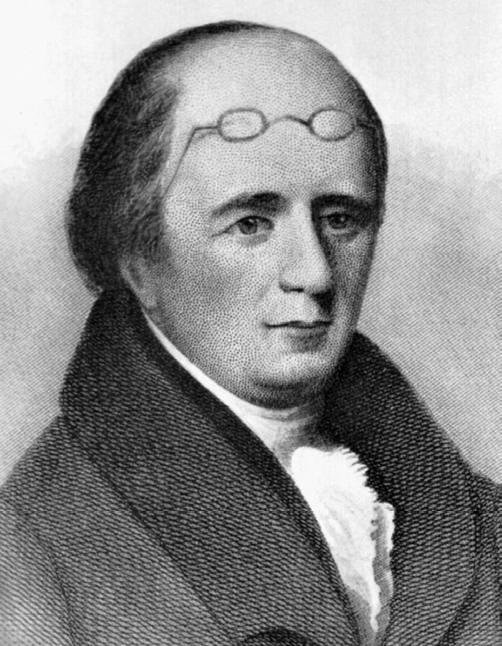
William Morgan lived in Batavia, New York, and in 1826 he announced that he would publish a book exposing Masonic ritual. On 11 September 1826 he was arrested on petty charges, a supposed unpaid loan and a shirt and tie he had allegedly stolen, which could have kept him in a debtors’ prison and away from his printer. Someone also tried to set fire to the print shop of his publisher, David Miller. On the night of 12 September a group of men talked the jailer’s wife into releasing Morgan, took him away by carriage to Fort Niagara, and after that he was never seen again for certain. A body found on the shore of Lake Ontario in 1827 was first claimed as his, but the wife of a missing Canadian, Timothy Monroe, identified the clothes as her husband’s. Sightings of Morgan in other countries were reported and never confirmed.
What became of Morgan has never been proven. Nobody was ever convicted of killing him; the men who went to court were convicted of kidnapping him and of conspiracy. Many stories about his death have been told since, but a story is not a verdict. What is certain is that the kidnapping was a real crime, that the men convicted for it were Freemasons acting on their own account, and that the public outrage it caused ignited a powerful movement against Freemasonry. It even produced America’s first serious third party: the Anti-Masonic Party carried Vermont in the presidential election of 1832.
So doesn’t that prove Masons kill?
No. What a handful of men did in 1826 tells us about those men, not about the fraternity, in the same way that one corrupt policeman does not make the whole police force corrupt. And the details show the fraternity on the other side. The kidnappers were prosecuted, by authorities full of Freemasons. Eli Bruce, the sheriff of Niagara County and himself a Mason, was removed from office and served 28 months in prison for his part in the kidnapping. Three other Masons, Loton Lawson, Nicholas Chesebro and Edward Sawyer, were convicted and served sentences. The Governor of New York, DeWitt Clinton, also a Mason, offered a $1,000 reward for information. Masonic officials disavowed what the kidnappers had done. Many at the time thought the sentences too light; but this is the picture of a crime by a group of individuals, condemned and punished, not of a policy. Freemasonry does not promote or condone any such act: its Charges require every Mason to obey the law of the land, and breaking it is itself a Masonic offence (see Claim #07).
And the book? It was published anyway. David Miller printed it soon after the disappearance, and it became a bestseller precisely because of the scandal. It has been reprinted ever since. If the aim was to keep the secrets secret, it was the most spectacular failure in the history of publishing.
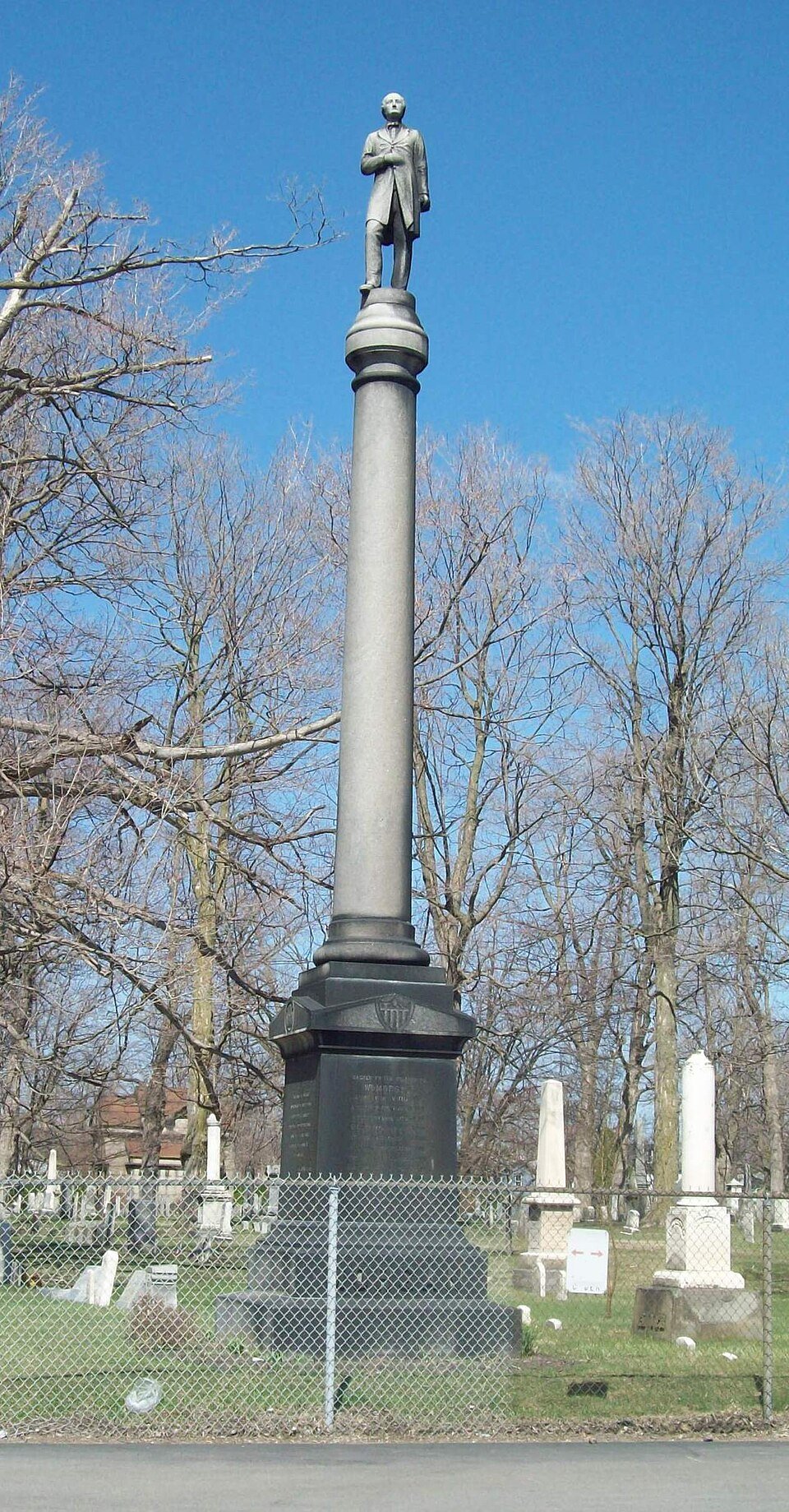
In 1882 the National Christian Association, a group opposed to secret societies, put up a monument to Morgan in Batavia Cemetery. Its inscription says he “was abducted from near this spot in the year 1826, by Freemasons and murdered for revealing the secrets of their order.” The abduction was proven in court; the murder never was. And, with a small irony, it stands over the grave of Timothy Monroe, the man whose body was once mistaken for Morgan’s.
What about the “blood oaths”?
The old Masonic obligations, the promises a candidate makes, did contain traditional symbolic penalties: dramatic phrases inherited from centuries-old ritual. They were never instructions to anyone. In England the matter was debated in Grand Lodge in 1964, when a bishop pointed out that these were phrases “that never have been, and which never could be enforced”, and on 11 June 1986 the United Grand Lodge of England resolved that all references to physical penalties be omitted from the obligations themselves. They survive elsewhere in the ceremonies only as part of their history. The push for the change came, as the Masonic historian Harry Mendoza recorded, from “criticism within the Craft”. And the United Grand Lodge of England states that a Mason’s duty as a citizen must always prevail over any obligation to other Freemasons.
As for the secrets themselves, the United Grand Lodge of England says plainly that they “are concerned with its traditional modes of recognition”, and that “The details of the ceremonies can easily be accessed online”, with “copies of the ceremony books available for purchase on well known online stores.” Exposés have been printed since at least 1730 (see Claim #19), and their authors and publishers have carried on with their lives. A society that murders people for revealing what it sells on the internet would be very busy indeed.
Free to join, free to leave
Freemasonry runs on free will at both ends, which is where the “free” in Freemason comes from in the minds of many Masons. Nobody is meant to be talked into joining. By long tradition Masons do not recruit, and a man who wants to join must ask. As the Grand Lodge of Virginia explains, “we do have a tradition that discourages direct recruitment”, and “no invitations are extended by Masonry”. So any story that begins “I was asked to join, and then they would not let me go” has already gone wrong in its first sentence.
Leaving is just as free. You ask for a demit, the formal word for resigning, and in the words of one Grand Lodge, a member “may voluntarily withdraw from Freemasonry by requesting a demit, which he is entitled to receive.” Men leave lodges every year for every ordinary reason: they move, they get busy, they lose interest. They simply stop being members.
Conclusion: Freemasons do not kill people who leave or talk. William Morgan was kidnapped in 1826 by a group of local men; the four convicted, all Masons, were convicted of kidnapping and conspiracy; what happened to him afterwards has never been proven, and nobody was convicted of his murder. The acts of those individuals were disavowed by Masonic officials and prosecuted by authorities that included Masons, and Morgan’s book was published anyway and has never been out of print. The old symbolic penalties were never enforced and in England were removed from the obligations in 1986, the rituals are on sale online, and anyone who wants to leave simply asks for a demit. The crime of a few men in 1826 is not the policy of a fraternity.
Sources:
https://en.wikipedia.org/wiki/William_Morgan_(anti-Mason)
Harry Mendoza, “The Transfer of the Physical Penalties from the Obligations”, Ars Quatuor Coronatorum vol. 100 (1987): https://freemasonry.bcy.ca/aqc/penalties.html
https://www.ugle.org.uk/discover-freemasonry/frequently-asked-questions
United Grand Lodge of England, “What is Freemasonry?” (leaflet): https://skirret.com/papers/freemasonry_ugle.html
https://freemasonry.bcy.ca/texts/member.html
Grand Lodge of Virginia, “The Question of Solicitation”: https://vma.grandlodgeofvirginia.org/wp-content/uploads/2024/03/n.d.-The-Question-of-Solicitation-GLoVA.pdf