The claim
CLAIM #32:
Freemasonry is a secret religion, so a Christian who becomes a Mason is going to hell?
FALSE
ANSWER:
There is no secret religion in Freemasonry, and no public one either. It has no dogma, no sacraments and no path to salvation, so it has no heaven or hell to hand out to anyone.
Few questions about Freemasonry are asked as often, or as anxiously, as this one. Sermons, books and online videos warn that the lodge is a rival religion with its own god, its own temple and its own hidden path to salvation, and that a Christian who joins has, knowingly or not, left Christ behind. It is a frightening story. It is also built on a misunderstanding of what Freemasonry is.
Is Freemasonry a secret religion?
No. Freemasonry is a fraternity, not a religion, and it is not a substitute for one. As we explain in What is Freemasonry?, it lacks every basic element of a religion: it has no dogma or theology, no wish or means to enforce religious orthodoxy, and no sacraments, and it does not claim to lead anyone to salvation, whether by good works, secret knowledge or any other means. Its secrets are its traditional modes of recognition, the ways members prove to each other that they are Freemasons. They have nothing to do with salvation.
The United Grand Lodge of England says the same in plain words: “Freemasonry is not a religion, nor is it a substitute for religion.” Every candidate must believe in a Supreme Being, and the lodge then expects its members “to continue to follow their own faith”. Religion is in fact one of two subjects, with politics, that may not be discussed in a lodge at all: Freemasonry “does not allow religion to be discussed at its meeting.” A religion that bans the discussion of religion would be a very strange religion indeed.
Even critics accept this. The Methodist Church in Britain, in a long and critical report of 1996, recorded that “Freemasonry maintains that it is in no way a religion offering salvation of any kind.” An organisation that offers no salvation is in no position to take it away.
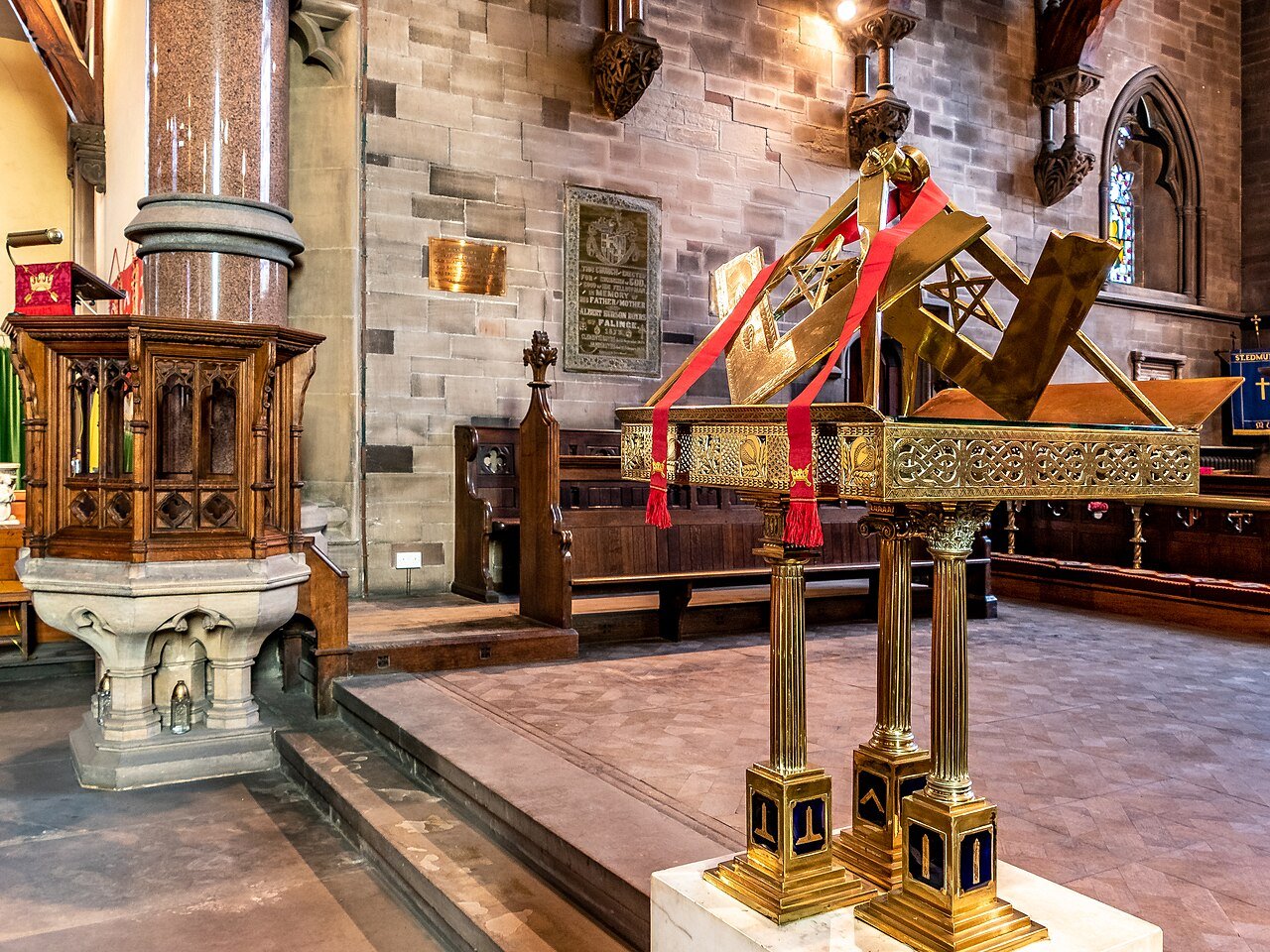
Then why the prayers and the holy book?
Because Freemasons are men of faith who meet together, and men of faith pray. A holy book lies open in every lodge. For most English Freemasons it is the Bible; a Jewish, Muslim or Hindu member makes his promises on the book that is sacred to his own religion. Lodge meetings open and close with prayers, in the same way that a council meeting, a school assembly or a family dinner may begin with grace. None of these is a church service.
The same goes for the phrase “Great Architect of the Universe”. It is a respectful way of referring to God that lets Christians, Jews, Muslims, Hindus, Sikhs and others pray together without offending one another. It is not the name of a separate Masonic god, nor an attempt to merge all gods into one. As the United Grand Lodge of England put it in its 1985 statement on Freemasonry and religion: “There is no Masonic God: a Freemason remains committed to the God of the religion he professes.” Each member brings his own God, and his own faith, with him. The accusation that they worship Satan is answered in Claim #05.
But don’t some churches forbid it?
Some do, and that is their right: every church sets the rules for its own members. The Catholic Church is the best known. In 1983 its Congregation for the Doctrine of the Faith declared that “membership in them remains forbidden. The faithful who enrol in Masonic associations are in a state of grave sin and may not receive Holy Communion”, and the Vatican repeated the ban in 2023. Some Lutheran, Orthodox and other bodies take a similar line. Freemasonry, for its part, has no rule against Catholics: the only religious requirement for joining is a belief in God.
Many churches see it differently. The Methodist Church in Britain voiced real misgivings in 1996, yet concluded: “We have indicated that being a Freemason does not disqualify a person from membership, or the holding of office, within the Methodist Church”, and it recognised “many loyal and sincere Methodists who are Freemasons, whose commitment to Christ is unquestionable”. In the United States, the Southern Baptist Convention studied Freemasonry for a year and in 1993 resolved that “membership in a Masonic Order [should] be a matter of personal conscience.” At the time an estimated 500,000 Southern Baptists were Masons.
Notice what all of these are: decisions by churches about their own members. A church rule is not evidence that Freemasonry is a religion, any more than a club that bans its members from gambling proves that every card game is a casino. Where churches object, it is usually because, as our own pages put it, they confuse secular ritual with religious liturgy.
So where does hell come into it?
It comes from the people sharing the claim, not from the lodges and not from the church documents. None of the church statements quoted on this page says that a Freemason is damned. The leap from “my church disapproves” to “every Christian Mason is going to hell” is made online, not in any of them.
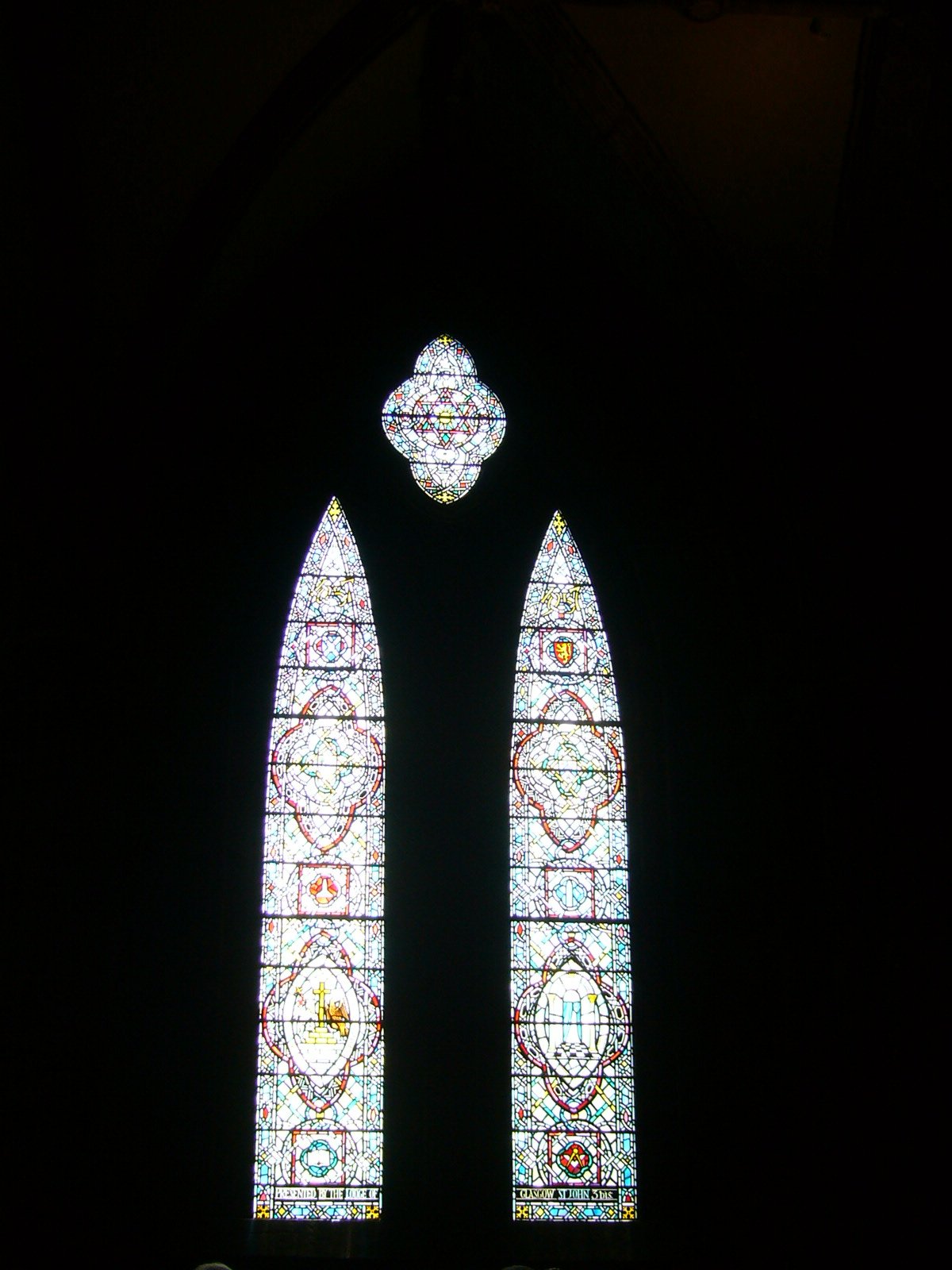
The claim also has to explain away a great deal of church history. Freemasonry has always encouraged its members to be active in their own religion, and Christian Freemasons have given generously to their churches. The Lodge of Glasgow St John presented a window to Glasgow Cathedral, and in Rochdale the Freemason Albert Royds paid for a whole parish church, St Edmund’s, completed in 1873 and so full of Masonic symbols that it is now a Grade I listed building. A “secret rival religion” that pays for church windows and builds parish churches would be doing a very poor job of competing with Christianity.
Conclusion: Freemasonry is not a religion, secret or otherwise. It has no dogma, no sacraments and no doctrine of salvation, it forbids the discussion of religion in its meetings, and it asks every member to follow his own faith. It therefore cannot send anyone to heaven or to hell. Some churches forbid their members to join and others leave it to conscience; that is for each church to decide, and it changes nothing about what Freemasonry is. “Every Christian Mason is going to hell” is not the teaching of the lodge, nor of any church statement quoted here.
Sources:
What is Freemasonry? (this site)
United Grand Lodge of England, Board of General Purposes, “Freemasonry and Religion” (12 June 1985), reproduced at https://la-mason.com/?p=1515
United Grand Lodge of England, “What is Freemasonry?” (leaflet): https://skirret.com/papers/freemasonry_ugle.html
https://www.ugle.org.uk/discover-freemasonry/frequently-asked-questions
Methodist Church in Britain, Guidance to Methodists on Freemasonry (1996): https://media.methodist.org.uk/media/documents/fo-statement-freemasonry-1996_BKj0TuG.pdf
Congregation for the Doctrine of the Faith, Declaration on Masonic Associations (1983): https://www.vatican.va/roman_curia/congregations/cfaith/documents/rc_con_cfaith_doc_19831126_declaration-masonic_en.html
https://www.vaticannews.va/en/vatican-city/news/2023-11/vatican-catholics-still-forbidden-masonic-lodge.html
https://www.christianitytoday.com/1993/07/southern-baptists-clinton-draws-ire-of-sbc/
https://en.wikipedia.org/wiki/Christianity_and_Freemasonry
https://en.wikipedia.org/wiki/St_Edmund%27s_Church,_Rochdale