The claim
CLAIM #20:
The Knights Templar were heretics who were rightly destroyed in 1307, and the ones who escaped went underground and became the Freemasons?
FALSE
ANSWER:
The Templars were not proven heretics: their “confessions” were obtained under torture, they were found innocent outside France, the Pope dissolved the Order without condemning it, and their last Grand Master died declaring it innocent. Whether their tradition lived on inside Freemasonry is one of the great open questions of Masonic history, argued with passion by respected researchers on both sides. Either way, what Freemasons inherited from the Templars is an ideal of faith and chivalry, not a heretical plot.
Few questions about Freemasonry are asked more often than this one, and few are more misunderstood. The claim comes in two parts. The first says the Knights Templar were devil-worshipping heretics who got exactly what they deserved when the King of France arrested them on Friday 13 October 1307. The second says that some of them slipped away, hid among the stonemasons and turned into the Freemasons, so that Freemasonry is really the old Templar “plot” carried on in secret. The first half can be settled from the record. The second half is a far deeper question, and we will give it the space it deserves, including the work of two researchers who have devoted years to it: Freddy Silva and Bro. Timothy Hogan.
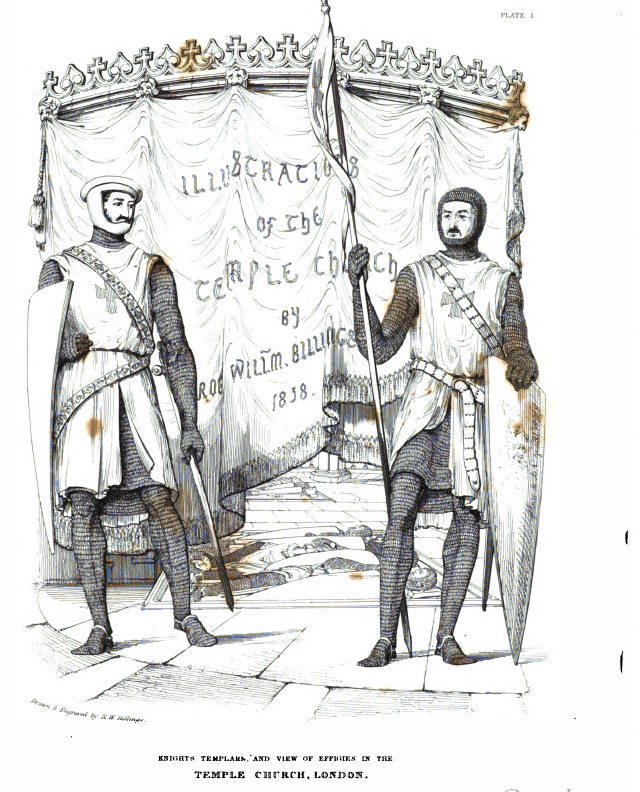
Who were the Templars?
They were a religious order of knights, founded in Jerusalem after the First Crusade to protect Christian pilgrims. The Temple Church in London, which they built, puts it simply: “The Templars were founded in 1118–19 by a knight of Champagne, Hugh of Payns”. Freddy Silva, who has worked in the Templar archives of Portugal, describes the moment the King of Jerusalem gave them quarters on the Temple Mount: “From this moment, thirty knights, including a nucleus of nine, possibly eleven men, took up residence and became forever known as the Knights Templar.” Their headquarters was believed to stand on the site of King Solomon’s Temple, and so they became known, in the Temple Church’s words, as the “fellow soldiers of Christ and of the Temple of Solomon in Jerusalem”.
Silva shows how closely the young Order was bound to Bernard of Clairvaux, the great Cistercian abbot: “Not only were many of the key figures of the Knights Templar connected through family ties to the Cistercian Order, most of them also were handpicked by Bernard de Clairvaux himself.” At the Council of Troyes in January 1128 they received their Rule; Silva writes that the document “was drafted, then edited by Bernard”, and that “by January 14, 1128, the Order of the Knights Templar gained official recognition from Rome.” In 1139 Pope Innocent II issued the bull Omne datum optimum, which, in Silva’s words, “asserted the knights owe no allegiance to any secular order or ecclesiastical authority other than the pope himself”. The Order grew rich and powerful across Europe and built preceptories and round churches. Their London church still stands: “The Temple Church was consecrated in honour of the Blessed Virgin Mary by Patriarch Heraclius of Jerusalem on 2 or 10 February (Candlemas) 1185.”
Portugal: the first Templar nation
Silva’s great contribution is to show how deeply the Templars shaped one European country from its very birth. His book First Templar Nation opens with a charter of 1125 granting land in Portugal to the Templars, which he finds extraordinary “because the year is 1125 and no members of the Knights Templar are known to exist outside Jerusalem”. In 1128 Queen Teresa gave them the castle of Soure, and on 24 June of that year, as Silva puts it, “the battle of São Mamede established the de facto independence of Portugal.” The young prince who won it, Afonso Henriques, wrote to the Templars in a charter: “because within your Brotherhood and in all your works I am a Brother.” Silva sums him up as “monarch, Templar brother, creator of Europe’s first independent nation-state”.
In 1160 the Templar Master Gualdim Pais laid the cornerstone of the round church at Tomar, which became the Order’s headquarters in Portugal. UNESCO, which lists the Convent of Christ at Tomar as a World Heritage Site, confirms: “It belonged to the Order of the Templars and was founded in 1160 by Gualdim Pais, grand master of the Knights Templar.” Silva is honest about the limits of what can be proved after so many centuries: “Realistically, all this is circumstantial. Considerable obstacles stand in the way of definitive proof, since the Templars hid much of their written records during the organized persecution of the Order in 1307.” Much of what survived, he adds, was lost “when the National Archive in Lisbon burned down following a catastrophic earthquake in 1755.”
Were they really heretics?
Their fall was sudden. Secret orders went out across France to “arrest all the Templars on the same day (13 October, 1307)”, on the command of King Philip IV, who had his own reasons for wanting them gone (we follow the money in Claim #01). Encyclopaedia Britannica describes what came next: Philip “had many of its members tortured to secure false confessions.” The charges, including the idol later called Baphomet, rested on those confessions, and Britannica’s verdict on them is blunt: “The charges, now recognized to be without foundation”. The Catholic Encyclopedia, hardly a friend of secret societies, agrees on the method: torture “was pitilessly employed”. Men who later took their confessions back were treated as relapsed heretics, and “fifty-four Templars who had recanted after having confessed were condemned as relapsed and publicly burned on 12 May, 1310.” Even Bro. Timothy Hogan, who holds that the Order survived, begins from the same grim fact: “And then they were tortured for seven years.”
Outside France the story looked very different. Britannica records that “Templars in countries other than France were found innocent of the charges”, and that “a church council in 1311 voted overwhelmingly against suppression”. In Portugal, Silva writes, King Dinis had the charges examined, and “Predictably, the archbishop found no wrongdoing, and the king exonerated the Templars.” The Vatican’s own archives hold a further witness. In September 2001 the Vatican archives researcher Barbara Frale identified a forgotten parchment, since published in the Vatican Secret Archives’ facsimile edition Processus contra Templarios. It contains “the original absolution deed granted by the vicar cardinals to the Great Master of the Temple, Jacques de Molay and the high templar dignitaries at Chinon castle”, in the summer of 1308. As the Associated Press reported, “the parchment shows that Clement initially absolved the Templar leaders of heresy, though he did find them guilty of immorality, and that he planned to reform the order.” (Bro. Hogan, for his part, doubts the parchment is genuine.)
When Pope Clement V ended the Order at the Council of Vienne on 22 March 1312, the words of his bull Vox in excelso were chosen with care. He wrote that the confessions “render the order very suspect”, and that the scandal had made it useless to the Church; but he closed it “not by definitive sentence, but by apostolic provision or ordinance”. The Catholic Encyclopedia sums it up: “he decreed the dissolution, not the condemnation of the order”, and its property “was turned over to the rival Order of Hospitallers”. In other words, the Church closed the Order down, but never pronounced it guilty of heresy.
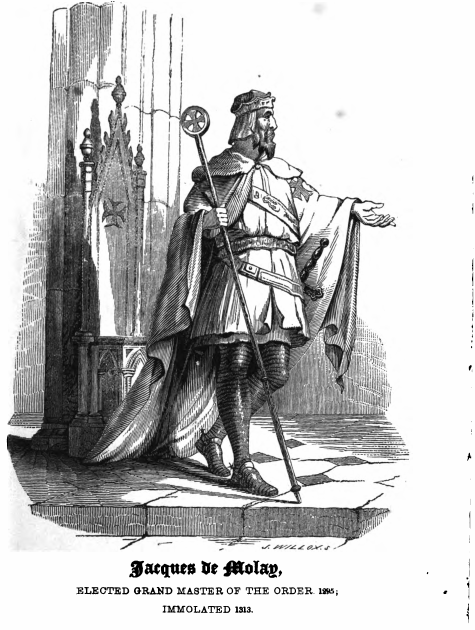
The last word belongs to the last Grand Master, Jacques de Molay. In March 1314 a platform was built before Notre-Dame in Paris, where his sentence was to be read and he was expected to show repentance in public. He did the opposite: he “proclaimed the innocence of the Templars and the falsity of his own alleged confessions”. He knew what it would cost him. Britannica records that “Molay again retracted his confession, and as a final punishment he was burned as a relapsed heretic by Philip IV’s officers the same afternoon”. As the Catholic Encyclopedia says, “This brave death deeply impressed the people.” That is not how a guilty man behaves. As for Baphomet, we take that story apart in Claim #17.
Where did the Templars go?
Here the record and the researchers begin to part company, and both deserve a hearing. One survival is beyond dispute, and it happened in Portugal. The papal bull Ad providam of 2 May 1312, which gave the Templars’ property to the Hospitallers, made a striking exception for “the illustrious kings of Castile, Aragon, Portugal and Majorca”. King Dinis kept the Portuguese Templar lands under his crown, and in 1319, as the New Catholic Encyclopedia records, a new order was “established March 14, 1319, by John XXII, at the request of King Diniz of Portugal. The order received all the Portuguese properties of the suppressed Order of the templars.” This was the Order of Christ, which in time made its home in the Templars’ own castle at Tomar.
Silva goes further and holds that the men themselves passed into the new order: King Dinis “had rebranded the Knights Templar as the Order of Christ, all former Templars were now members of this Order, and all their former holdings and funds were transferred intact.” His verdict is memorable: “In a manner of speaking, the Knights Templar died and were raised from the dead.” Under Prince Henry the Navigator, governor of the Order of Christ from 1417, “The distinctive red cross of the Order of Christ was painted on the sails of Portuguese caravelas”.
Silva also tells of a Templar fleet that slipped out of La Rochelle on the eve of the arrests: “Eighteen ships filled up with fleeing Templars at La Rochelle while other knights made their way down the Seine”. He believes it divided, part sailing for Portugal and part for Scotland, where he writes that “many persecuted French Templars were given safe harbor by King Robert the Bruce”. With the same honesty he notes that the ships “disappeared from all documented history”, and that the famous account of treasure carts leaving the Paris Temple “was obtained under torture and may have been a red herring.” Bro. Hogan tells the same story of the vanished fleet: “the fleet disappears along with all the wealth of the Grand Commandery of Paris.”
Did the survivors become the Freemasons?
This is the heart of the matter, and Freemasons themselves have argued it for nearly three hundred years. Bro. Timothy Hogan, a Past Master, a Knight Templar and today Grand Master of the Order of the Temple of Secret Initiates, puts the question clearly in The Alchemical Keys to Masonic Ritual (2007): “There are two prevailing schools of thought as to where Freemasonry came from: one is that it came directly from the Knights Templar after their suppression in 1307, and the other is that it came from the cathedral builders of the Middle Ages.” His own answer is that the two meet: “So whether we are looking at cathedral builders or Orders of Knighthood as Freemasonry’s origins, both theories lead to the same source- the Knights Templar.”
In The 32 Secret Paths of Solomon (2009) Hogan explains how he sees the bridge: in the Holy Land the Templars “were exposed to a number of different esoteric sciences and disciplines which they had not encountered before”, and “By the time the Knights Templar were suppressed, the cathedral age of construction ended, and the symbolism and ideas had to be taken underground. It is here that we likely find the Connection with Freemasonry.” The history page of his Order states the tradition in full: “The Knights Templar were persecuted, suppressed and forced underground in 1307.” The survivors “secretly merged into other knighthood orders of the time, and assumed the guise as Stone masons as well”, and “The tradition would later come out of hiding and reappear through Freemasonry and Rosicrucianism.” Freddy Silva reaches the same view from Portugal and Scotland, writing of “how Freemasonry is the progeny of the Knights Templar”.
Notice what neither researcher says. Neither claims the Templars were heretics, and neither describes Freemasonry as a plot. For Hogan the Templar mission is spiritual: in his words, “The Templar of today has the same mission as the Templar from 900 years ago, in that as Templars we are to seek out, preserve, protect, and integrate the sacred teachings from the Primordial Tradition, wherever they may manifest.” And both are careful to call their reading a likelihood, not a proven fact: Hogan writes “likely”, and after writing that the Templars “gave birth to the Masonic system as we know it today”, he adds: “Or at least, such is the legend perpetuated by Pike”. Silva admits that “An absence of paperwork then bridges the history” between the fourteenth and eighteenth centuries.
What the documents show
That absence of paperwork is exactly where historians have to stop. The first person on record to tie the Craft to the Templars was a Freemason, more than four hundred years after the arrests. On 21 March 1737 the Chevalier Ramsay gave a famous speech in Paris tracing the Craft to the knights of the Crusades, and the American Masonic scholar Albert Mackey names him plainly: “The Chevalier Ramsay was the real author of the doctrine of the Templar origin of Freemasonry”. Britannica agrees on the timing: “In the 18th century the Freemasons claimed to have received in a secret line of succession esoteric knowledge that the Templars had possessed.” In Germany, the Baron von Hund’s Rite of Strict Observance, introduced in 1754, taught “that every true Freemason is a Knight Templar.”
Masons tested these stories too. In 1782 the great Masonic congress at Wilhelmsbad looked into the question and declared that “Modern Freemasons are not only not the true successors of the Knights Templar”, and Mackey concluded that “the Bruce and Bannockburn Legend of Scottish Templarism is to be deemed a pure myth, without the slightest historical element to sustain it”. The “Charter of Larmenius”, which tells of an unbroken line of Grand Masters after de Molay and which Bro. Hogan’s Order accepts as genuine, Mackey’s Encyclopedia calls “the forgery of that document so well known as the Charter of Larmenius”. Of the tale of the knights who hid in Scotland, Mackey wrote: “Without a particle of historical evidence for its support, it has nevertheless exerted a powerful influence on the Masonic organization of even the present day.”
Scotland’s own guardians of its heritage say the same. The Rosslyn Chapel Trust records that the chapel was “Founded in 1446 as a family chapel” by Sir William St Clair, and its Masonic link is a later one: in the seventeenth century “Sir William Sinclair of Rosslyn is granted the charters from the Masons of Scotland”. The Templars’ Scottish lands, Historic Environment Scotland notes, passed to the Hospitallers after the suppression, “including Balantrodoch (or Temple)”, and it warns that the Hospitaller preceptory at Torphichen “has become confusingly associated with both Templar and Masonic myths, due to modern-day misunderstanding of medieval history.” Most striking of all is the verdict of the Masonic Knights Templar themselves. The Grand Encampment of Knights Templar of the United States writes: “all we know is that when Templary emerged in the early 1700’s it was a part of Freemasonry.” And it ends its own history with these words, in capitals: “THERE IS NO PROOF OF DIRECT CONNECTION BETWEEN THE ANCIENT ORDER AND THE MODERN ORDER KNOWN TO DAY AS THE KNIGHTS TEMPLAR.”
So why are there Masonic Knights Templar?
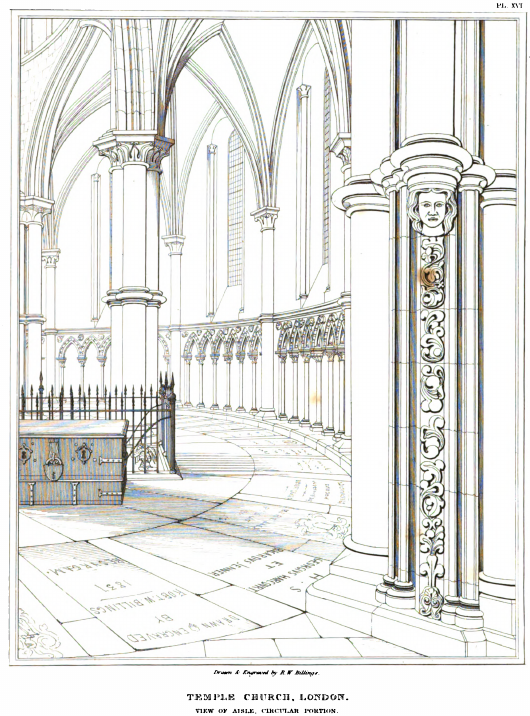
Because Freemasons admire them. The Masonic Knights Templar are Christian orders, open to Freemasons, that take the old Order’s ideals of faith, courage and chivalry as their own. They are documented from the eighteenth century. In England, the Great Priory notes that “The earliest reference to modern Masonic Knight Templar activity in England can be found in the minutes of the Chapter of Friendship (Royal Arch) in Portsmouth, dated 1778”; at Bristol, “The earliest record preserved by this Preceptory is an authentic and important document dated December 20, 1780”; and in 1791 the Knights Templar of that city asked the well-known Brother Thomas Dunckerley to be their Grand Master, after which he established the Grand Conclave in London. In America the Grand Encampment records that “The first date of record for the conferring of the Order of the Temple in the North American continent is August 28, 1769”, and its founding delegates “met in New York on June 20 and 21, 1816”.
Even the badge of the American Templars carries “a metal star of nine points, in allusion to the nine founders of the Temple Order”. That is honour paid to a memory. Whether that memory also carries a hidden thread back to 1307, as Bro. Hogan and Freddy Silva believe, or was revived by Freemasons in the eighteenth century, as the documents suggest, each reader can weigh for himself. When Albert Pike asked who knew where the Templar degree first came from, his answer was honest: “No man on earth.” You can read more about the Order today on our page The Order of Knights Templar, and about the whole story in our History.
Conclusion: The Knights Templar were not proven heretics. Their confessions were taken under torture, they were found innocent outside France, the Pope dissolved the Order without condemning it, the Chinon parchment shows its leaders absolved of heresy, and Jacques de Molay died proclaiming its innocence. In Portugal the Order lived on openly as the Order of Christ. Whether its survivors also passed their tradition into Freemasonry is a question that respected researchers such as Freddy Silva and Bro. Timothy Hogan answer yes, while the Masonic Templar bodies themselves say there is no proof of a direct connection. What no honest reading supports is the claim that Freemasonry is a heretical Templar plot: what Freemasons have taken from the Templars is an ideal of faith, courage and chivalry.
Sources:
Freddy Silva, First Templar Nation: How Eleven Knights Created a New Country and a Refuge for the Grail (Inner Traditions, 2017)
Timothy Hogan, The Alchemical Keys to Masonic Ritual (2007); The 32 Secret Paths of Solomon: A New Examination of the Qabbalah in Freemasonry (2009)
Templar Collegia (Order of the Temple of Secret Initiates), “History”: https://www.templarcollegia.org/history
Travis Simpkins, review of Timothy Hogan, The Way of the Templar (2015): https://www.tsimpkins.com/2017/08/the-way-of-templar-by-timothy-hogan.html
“The Why Files” Basement #003 with Tim Hogan, transcript: https://singjupost.com/the-why-files-w-tim-hogan-on-templars-atlantis-and-the-ark-of-the-covenant-transcript
Charles Moeller, “Knights Templars”, The Catholic Encyclopedia, vol. 14 (1912): https://www.newadvent.org/cathen/14493a.htm
Encyclopaedia Britannica, “Templars” and “Jacques de Molay” (archived copies): https://web.archive.org/web/20250108144605/https://www.britannica.com/topic/Templars; https://web.archive.org/web/20250223025823/https://www.britannica.com/biography/Jacques-de-Molay
Council of Vienne, Vox in excelso (22 March 1312) and Ad providam (2 May 1312), English translation (Decrees of the Ecumenical Councils): https://moodle2.units.it/pluginfile.php/320815/mod_resource/content/1/Concilio%20Vienne%2C%201311%20%28inglese%29.pdf
Scrinium, Processus contra Templarios (Vatican Secret Archives facsimile edition): https://www.scrinium.org/en-us/Commission/Vatican-Secret-Archives/processus-contra-templarios-2
Associated Press, “Long-lost text lifts cloud from Knights Templar”, 12 October 2007: https://www.nbcnews.com/id/wbna21267691
J. F. O’Callaghan, “Order of Christ”, New Catholic Encyclopedia: https://www.encyclopedia.com/religion/encyclopedias-almanacs-transcripts-and-maps/order-christ
UNESCO World Heritage Centre, “Convent of Christ in Tomar” (archived copy): https://web.archive.org/web/20241219110437/https://whc.unesco.org/en/list/265
The Temple Church, London, “The 12th Century – 1119–87”: https://www.templechurch.com/history/the-12th-century-1119-87/
Grand Encampment of Knights Templar of the U.S.A., “Origin of the Knights Templar”: https://usagekt.org/origin/; “Heritage”: https://usagekt.org/heritage/
Great Priory of England and Wales, Mark Masons’ Hall, “Knights Templar” (archived copy): https://web.archive.org/web/20251216031004/https://markmasonshall.org/orders/kt
Rosslyn Chapel Trust, “History” and “Timeline”: https://www.rosslynchapel.com/about/history/; https://www.rosslynchapel.com/about/rosslyn-chapel-timeline/
Historic Environment Scotland, Statement of Significance: Torphichen Preceptory: https://app-hes-pubs-prod-neu-01.azurewebsites.net/api/file/f71198a9-db8d-4bc1-84aa-b05200e457d8
Albert G. Mackey, The History of Freemasonry, vol. I, ch. XXVIII “Freemasonry and the Crusades” and ch. XXIX “The Story of the Scottish Templars”
Albert G. Mackey, Encyclopedia of Freemasonry (revised edition): “Addresses, Masonic” (Ramsay’s oration), “Strict Observance, Rite of”, “Temple, Order of the”, “Baldwyn Encampment”, “Baldrick”
Emmanuel Rebold, A General History of Freemasonry in Europe, tr. J. Fletcher Brennan (1872), on the Congress of Wilhelmsbad, 1782
Albert Pike, Masonic Origines (1887)
R. W. Billings, Architectural Illustrations and Account of the Temple Church, London (1838); Statutes of the Religious and Military Order of the Temple (Edinburgh, 1843)
History (this site)