The claim
CLAIM #17:
Freemasons Kiss the Buttox Of Baphomet In A Lodge Meeting Or Initiation?
FALSE
ANSWER:
No Freemason has ever kissed Baphomet, at either end. There is no Baphomet in any lodge, no idol of any kind, and the “kiss” comes from medieval torture chambers and witch-hunters’ pamphlets, not from Masonic ritual.
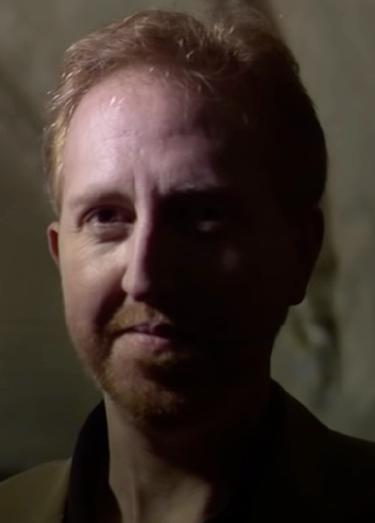
Freemasons do not kiss Baphomet, and there is no statue, picture or reference to Baphomet in any lodge, anywhere. That should be the end of it. But because this particular claim has been repeated on television, it is worth explaining where it came from, and why it has nothing to do with Freemasonry.
The version that circulates online comes from the British author Philip Gardiner, in the first episode of a television documentary series, Freemasonry Revealed (at approximately 26:53 to 27:58). Gardiner presents himself as a best-selling author and as an initiate of an order with links to the Templars. His books on secret societies have not impressed researchers: the American writer Jason Colavito, who reviewed one of them in detail, pointed out that, contrary to Gardiner, “Masons do not use serpent imagery”, and called him “an uncritical copier of other people’s mistakes”. The “kiss” is a good example, because it is one of the oldest mistakes there is.
A kiss invented in a torture chamber
The story begins, like so many of these claims, on Friday 13 October 1307, when King Philip IV of France had the Knights Templar arrested across his kingdom (see Claim #01 for why he wanted rid of them). The charges were drawn up to shock. Among them, new members were said to have been required to deny Christ, spit on the Cross, and give the brother receiving them three “obscene kisses”, on the lower spine, the navel and the mouth. They were also accused of worshipping an idol in the form of a bearded head.
Notice two things. First, even the accusation did not involve Baphomet’s backside: the “kisses” were supposedly given to a fellow knight. Second, the confessions were extracted under torture, and the King’s own inquisitors could never make the story stand up:
- None of the supposed idols was ever produced. Not one.
- In 1308 Pope Clement V absolved the Templars he questioned, including their Grand Master, Jacques de Molay. The record of that absolution, the Chinon Parchment, was rediscovered in the Vatican Archives in 2001.
- Where the accused were not tortured, the charges tended to collapse. King Edward II of England wrote that he was “unable to credit the horrible charges against the Knights Templar who everywhere bear a good name in England”. The kings of Portugal and Aragon found no fault of heresy, blasphemy or immorality, and an inquiry at Trier in Germany acquitted them.
- In March 1314, Jacques de Molay and Geoffroi de Charney took back their confessions, declaring that the Order was innocent and that their only guilt was in having confessed, under duress, to things they had not done. They were burned at the stake for it.
As Mackey’s Encyclopedia of Freemasonry puts it, the whole case rested on “the Articles of Accusation, themselves devoid of proof”.
The witch-hunters’ favourite accusation
The idea of kissing the Devil’s rear end did not even start with the Templars. Medieval and early modern writers had a name for it: the osculum infame, or “kiss of shame”. It was the stock accusation against anyone branded a heretic or a witch. The Cathars were accused of kissing the backside of a cat, and the “kiss of shame” turns up in nearly every recorded account of a witches’ Sabbath, most of them confessions extracted under torture. A Scottish pamphlet of 1592 on the North Berwick witch trials, Newes from Scotland, claimed that the Devil ordered the accused, as a penance, “that they should kisse his buttockes”.
In other words, this is a centuries-old insult that has been aimed at almost every group that the powerful of the day wanted to destroy. It tells you about the accusers, not about the accused.
And where does Baphomet come in?
Baphomet was never a Masonic figure. The name first appears in 1098, in a letter written during the First Crusade, as an Old French corruption of the name “Mahomet”. It surfaced again in some of the Templars’ forced confessions, and was then revived in 1818 by the Austrian orientalist Joseph von Hammer-Purgstall, in an essay widely seen as an attempt to discredit the Templar-themed degrees of Freemasonry, and with them Freemasonry as a whole. The goat-headed figure everyone pictures today was drawn in the 1850s by the French occultist Éliphas Lévi for his book Dogme et Rituel de la Haute Magie. It was the hoaxer Léo Taxil who later borrowed Lévi’s drawing to decorate his anti-Masonic fiction, a hoax he publicly confessed to in 1897 (the full story is in Claim #01).
Nor are today’s Freemasons the Templars’ secret heirs. Some Masonic orders took the Templars’ name and symbols in the eighteenth century, in the same way that a school might name a house after a famous figure. The theory that the medieval Templars survived inside Freemasonry has been rejected by both Freemasons and historians.
The only kiss in a Masonic initiation
There is, in fact, a kiss in many Masonic initiations, and it is about as far from the Devil as you can get. After taking his obligation, the new Brother is asked to seal his promise by kissing the holy book on which he took it. The ritual has been printed openly since at least 1833:
“I will thank you to seal it with your lips on the volume of the sacred law.”
Richard Carlile, Manual of Freemasonry (1833)
For most Freemasons in English-speaking countries that book is the Bible; a Brother of another faith uses the sacred book of his own religion. So yes, Freemasons kiss something at their initiation. It is the Holy Book.
Conclusion: The “kiss of Baphomet” is a mash-up of three old slanders: torture-made charges against the Templars in 1307, the witch-hunters’ “kiss of shame”, and a nineteenth-century occult drawing that a confessed hoaxer pinned on Freemasonry. None of them has anything to do with what happens in a lodge. The only thing a new Freemason kisses is the Volume of the Sacred Law.
Sources:
https://en.wikipedia.org/wiki/Trials_of_the_Knights_Templar
https://en.wikipedia.org/wiki/Osculum_infame
https://en.wikipedia.org/wiki/Baphomet
https://en.wikipedia.org/wiki/Knights_Templar
https://www.jasoncolavito.com/blog/reviewing-philip-gardiners-secret-societies-part-2
Mackey’s Encyclopedia of Freemasonry, “Baphomet”
Richard Carlile, Manual of Freemasonry (London, 1833)
Freemasonry Revealed, episode 1 (documentary), approx. 26:53–27:58