


The Master Architect, often called the Grand Master Architect, is the twelfth degree of the Ancient and Accepted Scottish Rite. After three degrees taken up with crime and punishment, the Lodge of Perfection here moves to the architect’s drawing board. The tools of design become symbols of a well-ordered life, and the degree’s question is personal: how far is each of us in charge of the kind of person we become?
The degree at a glance
- Body: Lodge of Perfection (4th to 14th degrees), Southern Jurisdiction, USA
- Degree: 12th, Master Architect (Grand Master Architect in Pike’s Morals and Dogma and in many other jurisdictions)
- Other jurisdictions: the Northern Masonic Jurisdiction’s 12th degree is Master of Mercy
- Setting: a lodge hung with crimson flames, lit by three great lights in the East, West and South, with columns of the five orders of architecture behind the presiding officer
- Pike’s lecture: Morals and Dogma, chapter XII, “Grand Master Architect”
Albert Mackey called this “strictly a scientific degree”, comparable to the Fellow Craft degree in Craft Masonry, because it links Masonry with architecture and the liberal arts. In Pike’s revision the science remains, but only as allegory. Rex Hutchens stresses that no candidate needs any real knowledge of geometry or mathematics, because every instrument in the degree is there for what it teaches.
The lesson
The legend is brief. After Hiram’s death, the work on the Temple was entrusted to a group of overseers. Adoniram, who had shown more knowledge and skill than the rest, was then appointed chief architect and Hiram’s successor. According to Masonic tradition, he was the first to receive this degree. The point of the story is that the ablest, wisest and best should be the ones who lead. Hutchens adds a political reading in keeping with the earlier degrees: Hiram here represents the chief executive of a free government.
Hutchens is also frank about history. None of these legends took place in Solomon’s time. He describes them as symbolic and allegorical, and notes that Freemasonry itself began in the early seventeenth century. The degree asks its members to look for the meaning beneath the story, and directs them to Pike’s longer discussion of what the figure of Hiram may stand for.
At its heart the degree marks a turning point. Hutchens says the crimson flames on the hangings show the zeal needed to pursue wisdom, and remind the candidate that he is leaving the realm of morality for that of philosophy. Pike’s lecture accordingly moves away from duty and towards the dignity of human nature and the powers of the soul. Its argument is that each person has far greater capacities than the world gives them credit for, and that our circumstances shape us less than the way we choose to meet them.
A practice that becomes prominent here is circumambulation, the ceremonial walk around the altar. Hutchens traces it to ancient purification rites that imitated the apparent course of the sun. In the Scottish Rite it represents a renewal of virtue through doing one’s duty.
Duties of the degree
The single duty given in A Bridge to Light is to seek wisdom through knowledge. The lessons that go with it come largely from the Wisdom literature of the Bible:
- wisdom is a gift from God and should be preferred to riches;
- wisdom and knowledge bring honour, discretion and understanding;
- wisdom teaches the knowledge of God and opens the way to immortality.
Each of the architect’s instruments turns this duty into a rule of conduct. Following Hutchens’s explanation:
- the compasses show that a human life is only a point at the centre of eternity, while the circle of God’s attributes has no limit;
- the parallel ruler calls for consistency, firmness and an even temper;
- the protractor stands for a person who is upright, sincere, frank, moderate and punctual;
- the plain scale is a reminder to live for others as well as ourselves, giving family, friends, neighbours and country their fair share;
- the sector teaches us to multiply good deeds, share what we can spare, and draw something good out of misfortune;
- the slide rule urges us to tackle the great questions of existence and to share what we learn freely.
Symbols and regalia
The apron is white, lined and bordered with blue and fringed with gold. A protractor is embroidered on the flap, and a plain scale, a sector and a pair of compasses are arranged in a triangle on the body. The blue and white are meant to recall the Craft or Symbolic Lodge, the foundation on which all the higher degrees are built.
The cordon is a broad blue watered ribbon, worn from the left shoulder to the right hip. It reverses the direction of the black cordons of the Elu degrees.
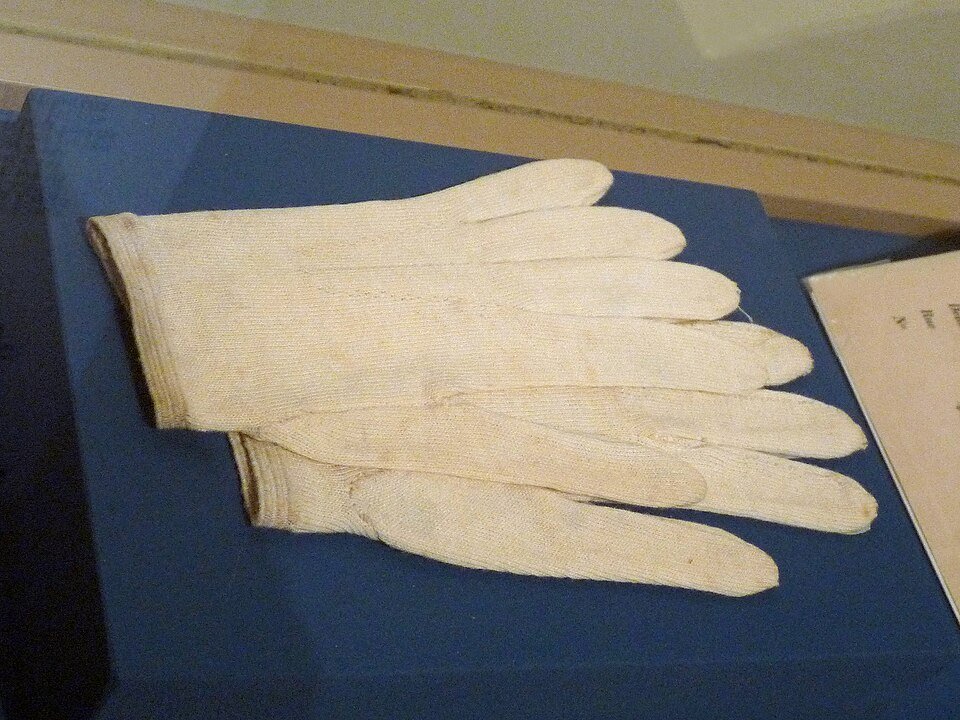
The jewel is a seven-sided gold medal. On one face, each angle holds a five-pointed star inside a semicircle, and the centre bears an equilateral triangle formed from arcs of circles. The other face shows the five orders of architecture (Tuscan, Doric, Ionic, Corinthian and Composite), each marked with its initial, together with the sector, slide rule, three kinds of compasses, plain scale and parallel ruler. Two Phoenician letters also appear between the columns. The gloves pictured are plain white Masonic gloves; A Bridge to Light describes no special gloves for this degree.

The five columns have a second meaning. Hutchens explains that they stand for the five divisions of the Scottish Rite: the Tuscan for the three Craft degrees, the Doric for the Ineffable degrees (4th to 14th), the Ionic for the Second Temple degrees (15th and 16th), the Corinthian for the “New Law” degrees (17th and 18th), and the Composite for the chivalric and philosophical degrees (19th to 32nd). The lodge also shows the North Star and the Great Bear, which never set in northern skies and so stand for God and for faith, and Venus, the morning star, for the coming dawn of perfection. The Seal of Solomon, two interlaced triangles, one white and one black, appears here for the first time as a hint of the principle of balance taught in later degrees.
Reflections
A Bridge to Light asks a single question of this degree: are you in control of your life? Pike’s lecture opens with an invitation, “Let us begin to rise from earth toward the Stars,” and then makes the case that the answer can be yes:
“Life is what we make it, and the world is what we make it.”
Albert Pike, Morals and Dogma, 12th degree
He insists that no one has ever fallen so low that they lack, “by God’s gift, the power to rise.” In a later lecture Pike describes the ideal of the degree as doing what is right “because it is right, and therefore ought to be done”, rather than for reward or applause. A good architect works to a plan, and the degree suggests that a good life is built in the same way.
Please view the video on the left, for a more detailed explanation of the 12th° Degree.
Sources:
Rex R. Hutchens, A Bridge to Light: The Revised Standard Pike Ritual, 4th ed., edited by Arturo de Hoyos (Washington, D.C.: The Supreme Council, 33°, S.J., 2010), chapter “The 12th Degree – Master Architect”. Purchase ‘A Bridge To Light‘ by Rex R. Hutchens
Albert Pike, Morals and Dogma of the Ancient and Accepted Scottish Rite of Freemasonry (1871), chapter XII “Grand Master Architect”; also chapter XIV. Purchase ‘Morals & Dogma‘ by Albert Pike.
Albert G. Mackey, Encyclopedia of Freemasonry, entry “Grand Master Architect”
Scottish Rite, Northern Masonic Jurisdiction, “Degrees”: scottishritenmj.org
Wikipedia, “Scottish Rite” (table of degree names by jurisdiction)