The claim
CLAIM #53:
Obelisks like the Washington Monument are phallic “Baal” idols put up by Freemasons for their pagan worship?
FALSE
ANSWER:
The Washington Monument was paid for by the American public and finished by the US government, and the most famous obelisk in Europe was put up by a Pope, with a cross on top. Sometimes a tall stone is just a tall stone.
“Occult architecture” videos love an obelisk. The Washington Monument, the obelisk in St Peter’s Square in Rome, and the stone needles in parks and cemeteries all over the world are said to be Masonic monuments to an ancient pagan god, usually Baal or Osiris, and a crude fertility symbol to boot. The idea is not new: as far back as 1887 an American anti-Masonic book was published under the title The Master’s Carpet, or Masonry and Baal-Worship Identical. But who actually built these obelisks, and why?
What is an obelisk, really?
An Egyptian invention, and a solar one. Encyclopaedia Britannica describes obelisks as pillars “originally erected in pairs at the entrances of ancient Egyptian temples”, carved with “religious dedications, usually to the sun god”, and the oldest surviving one stands at Heliopolis, “where once stood a temple to Re”. Albert Mackey’s Encyclopedia of Freemasonry quotes the Roman writer Pliny: the kings of Egypt “consecrated them unto the sun, whom they honored as a god; and, indeed, some resemblance they carry of sunbeams.” Other peoples, Britannica adds, including the Phoenicians and the Canaanites, later made obelisks “after Egyptian models”, and Roman emperors carried many of them off to Rome. The shape has been copied for monuments ever since. As for its meaning to Masons, Mackey says it plainly: “in Masonic, as in Christian iconography, the obelisk is a symbol of the resurrection.” That is a long way from a Baal idol.
Who built the Washington Monument?
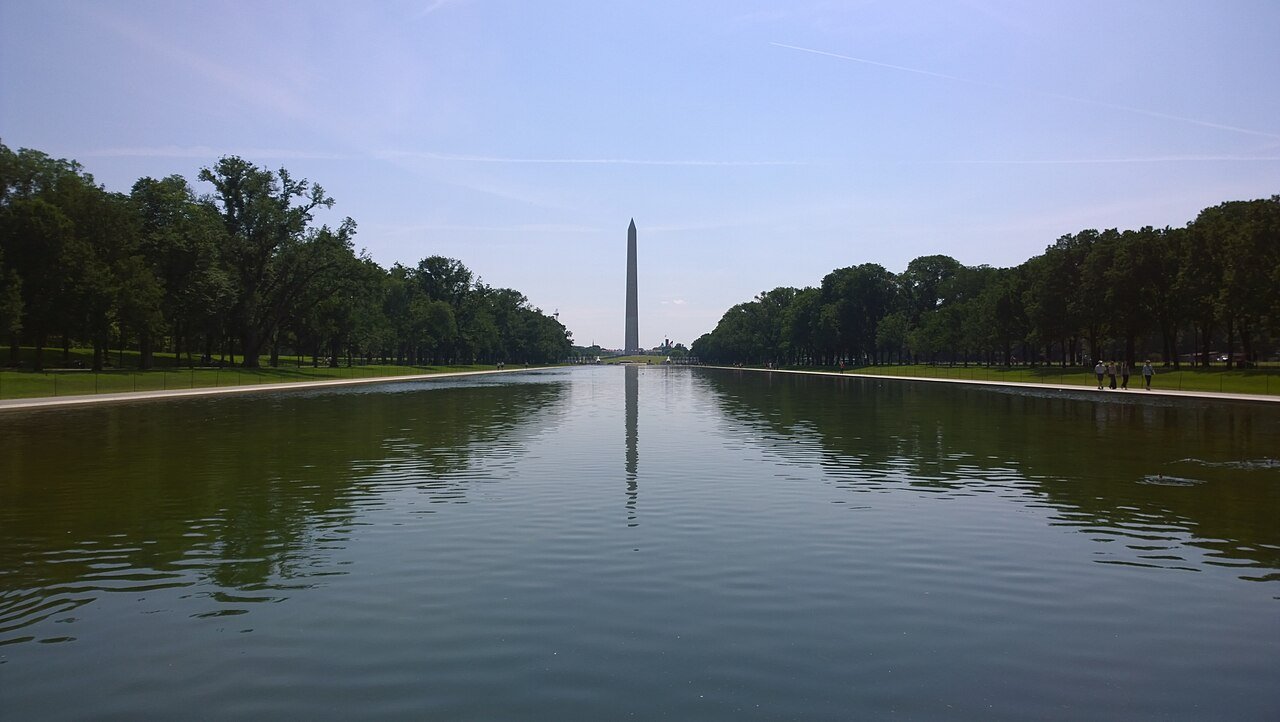
The American public, and then the American government. The Washington National Monument Society was founded by Chief Justice John Marshall and former President James Madison, among others, to raise money from ordinary citizens; at first, donations were limited to one dollar per person per year. The design it chose, by the architect Robert Mills, was an obelisk surrounded by a grand colonnade. When the money ran short in 1848, the Society told Mills to build only the obelisk for now.
The cornerstone was laid on 4 July 1848, with President James K. Polk presiding and members of Congress present, including a young Abraham Lincoln. And yes, Freemasons were there. According to the US National Archives, “Representatives of the Masons conducted a brief ceremony, placing on the cornerstone oil, wine, and corn, symbolic of peace and prosperity.” “After all,” the Archives adds, “Washington himself had been a Mason.” Later, when states, cities, organisations and foreign countries began sending inscribed memorial stones to be set inside the monument, Masonic bodies sent them too; the Archives says the Masons “proved the most generous contributors”, with some 21 of their stones still in place. That is a gift from admirers of Washington, alongside stones from businesses and governments, and even one donated by Pope Pius IX. It is not ownership, and it is not worship. The money ran out in 1854, cattle grazed on the site during the Civil War, and in 1876 Congress voted $2 million to finish the job on condition that the monument became federal property. Engineers under Thomas Lincoln Casey completed it, and the capstone was set on 6 December 1884.
And the obelisk at the Vatican?
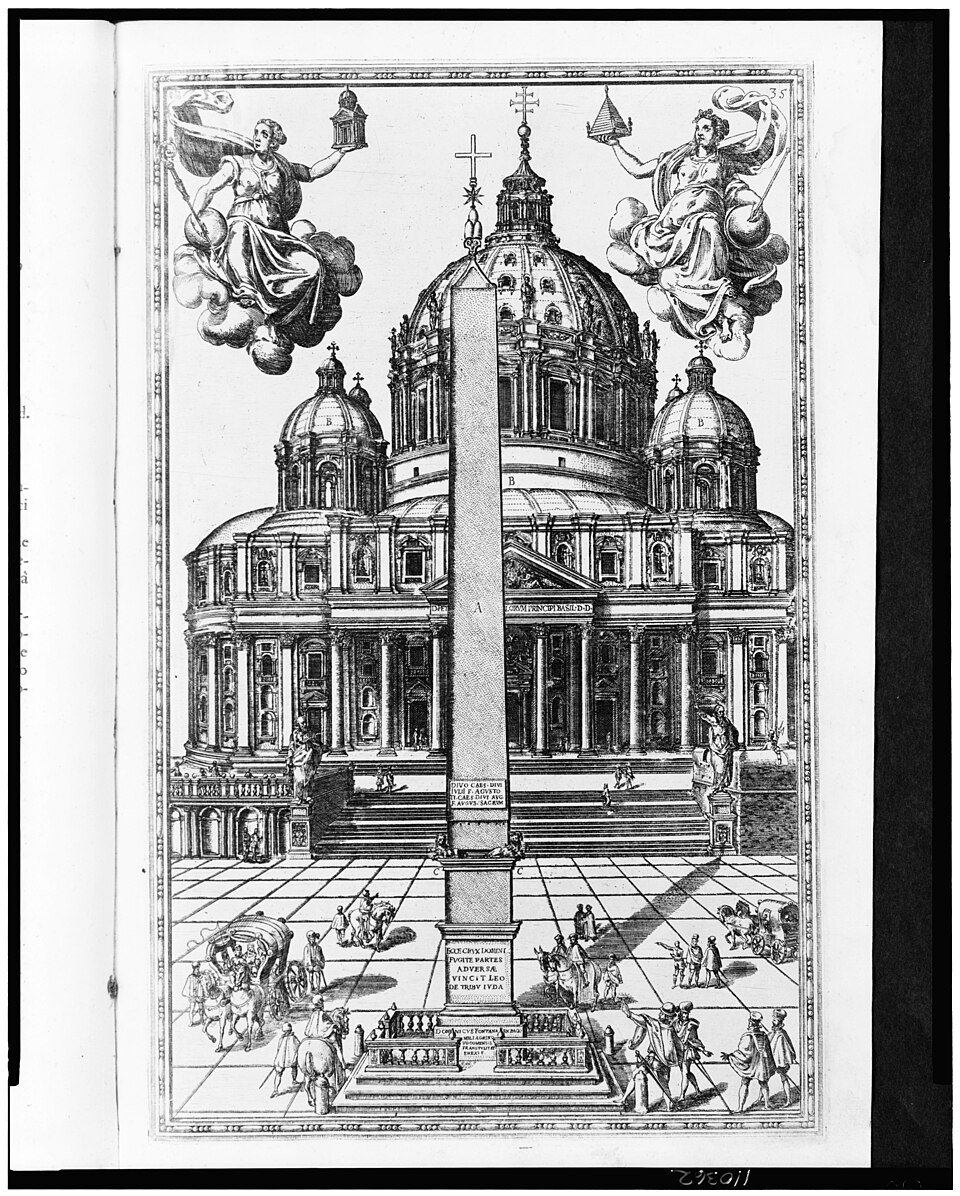
This is the one the videos most often pair with Washington, and its history is the clearest answer to the whole claim. The Vatican’s own account says its origins are uncertain: Pliny tells of an obelisk set up at Heliopolis in Egypt, and the emperor Caligula brought it to Rome to adorn his circus, on ground where Vatican City now stands. In 1586 Pope Sixtus V had it moved to the centre of St Peter’s Square, and it was raised there on 10 September that year. It was a feat of engineering by the architect Domenico Fontana: “It took 907 men, 75 horses and 44 winches to erect the obelisk”, the Vatican records. The Pope replaced the bronze ball on its top with a cross, and its base says why. One inscription says the obelisk had been “once dedicated to the impious cult of pagan gods”; another, in the Vatican’s translation, that Sixtus V “consecrated the Vatican obelisk, purged of filthy superstition, more justly and auspiciously to the invincible Cross”.
The first Grand Lodge of Freemasons was not founded until 1717, in London, more than 130 years later. The Pope’s inscriptions turn a pagan monument into a Christian one, the very opposite of what the claim alleges. If a Pope could take a pagan obelisk and dedicate it to the Cross, then the shape of a monument plainly tells you nothing about the beliefs of the people who put it up.
So why the “phallic” talk?
Because almost any tall object can be described that way if you are determined enough, and because a shocking interpretation travels faster online than a building history. To be fair, the idea is not only the critics’ invention. In the nineteenth century some writers on ancient religion speculated about it, and one of them was a Mason: Albert Pike, in Morals and Dogma (1871), wrote of the ancient mystery rites that the obelisk at the tomb of a dying god was the “inoffensive substitute” of the phallus, raised as an “emblem of resurrection”. That is one author’s theory about ancient Greek and Egyptian rites, in a book that also says the obelisks “were erected in honor of the Sun”. It is not a Masonic act of worship, and it tells us nothing about who built the Washington Monument. The same habit of reading sex into ordinary symbols is behind the claim about the letter G that we answer in Claim #19, and the wider idea that Washington’s street plan hides occult shapes is looked at in Claim #38. A church spire, a lighthouse and a factory chimney are not fertility idols either.
Conclusion: Obelisks are ancient Egyptian sun monuments whose shape has been copied for monuments ever since. The Washington Monument was raised by public subscription and finished by the US government, and the Freemasons’ part was a short cornerstone ceremony in 1848 with oil, wine and corn as symbols of peace and prosperity, plus memorial stones of the kind many other donors also gave. The obelisk in St Peter’s Square was moved there by a Pope in 1586 and topped with a cross, long before the first Grand Lodge existed. Neither is a Masonic idol of Baal.
Sources:
John Lockwood, “The Men—and the Women—Who Built the Washington Monument”, Prologue (US National Archives), Spring 2016: https://www.archives.gov/publications/prologue/2016/spring/monument
US National Park Service, “Washington Monument Construction Timeline”: https://www.nps.gov/wamo/learn/historyculture/monumentconstruction.htm
Encyclopaedia Britannica, “Obelisk”: https://www.britannica.com/technology/obelisk (archived copy: https://web.archive.org/web/20261017200733/https://www.britannica.com/technology/obelisk)
Vatican City State, “The Obelisk”: https://www.vatican.va/content/vatican/en/ra/obelisco.html
Vatican City State, “The Obelisk: more information” (inscriptions): https://www.vatican.va/content/vatican/en/ra/obelisco/altre-informazioni.html
Turismo Roma (City of Rome), “The Vatican Obelisk”: https://www.turismoroma.it/en/places/vatican-obelisk
Albert G. Mackey, Encyclopedia of Freemasonry (revised edition), “Obelisk”
Albert Pike, Morals and Dogma (1871), pp. 393, 460
Fred L. Pick and G. Norman Knight, The Pocket History of Freemasonry (1953), ch. V “The Grand Lodge Period, 1717–50”