The claim
CLAIM #44:
Freemasons hate women, ban them for ever, and keep their wives in the dark about what goes on in the lodge?
FALSE
ANSWER:
Women have been Freemasons for well over a century, in their own Grand Lodges and in mixed lodges that male Freemasons helped to found. As for the wives, the ceremonies are on sale online. A husband who “keeps her in the dark” is just not very chatty.
The picture behind this claim is a familiar one: a men-only club that despises women, keeps them out for some sinister ritual reason, and sends its members home sworn to silence, leaving their wives to wonder what on earth goes on. It is repeated in articles, in books warning wives about their husbands’ lodge, and in a steady stream of online videos. Every part of it falls apart once you look at the facts.
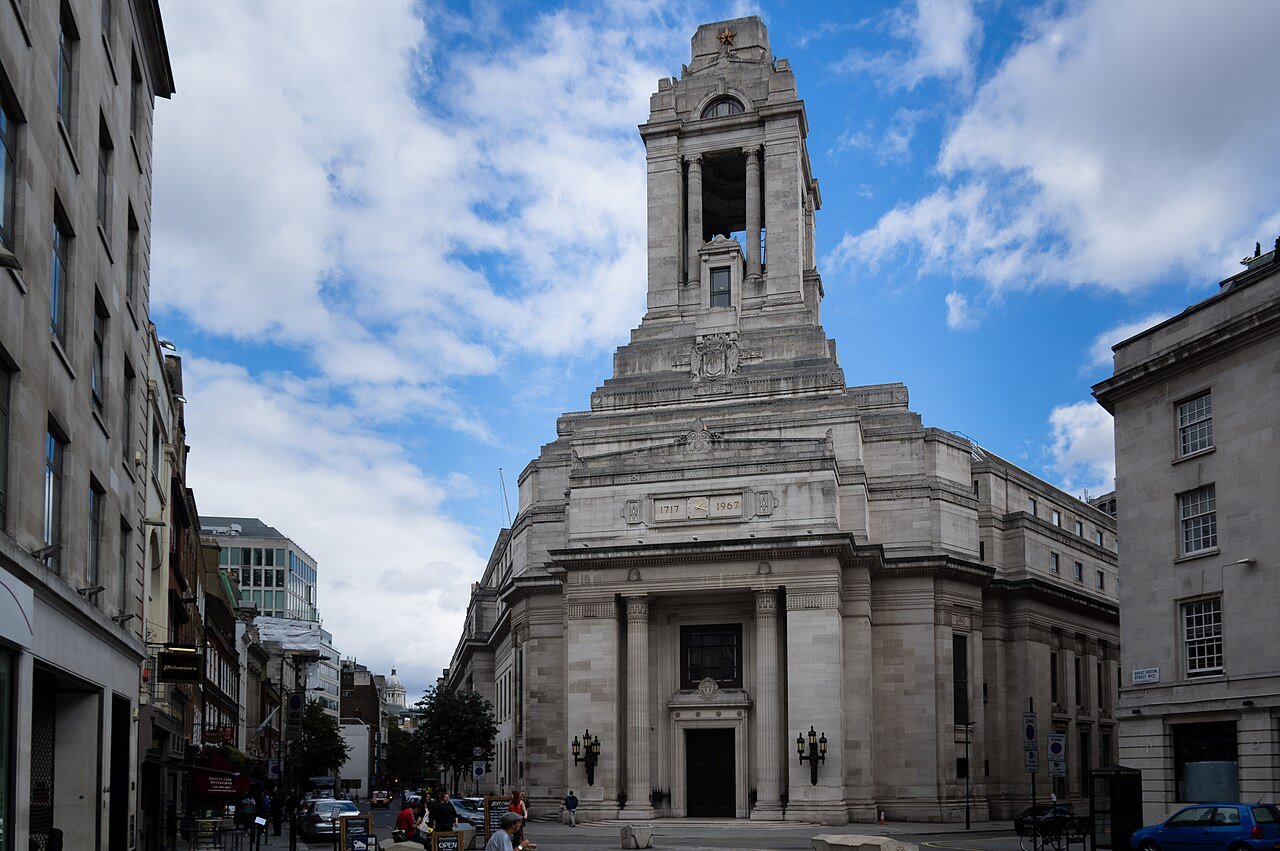
Are women banned from Freemasonry?
No. In the words of the United Grand Lodge of England, “Women Freemasons have been meeting across the country for more than 100 years.” Britain has two Grand Lodges for women. The older of the two, now called the Order of Women Freemasons, was constituted in 1908 (it admitted men as well at first, and has been for women only since 1935) and today has about 4,000 members in more than 300 lodges; the Honourable Fraternity of Ancient Freemasons was founded in 1913 and has about 800 members. UGLE points out that they “both follow exactly the same ceremonies and wear the same regalia as male Freemasons”.
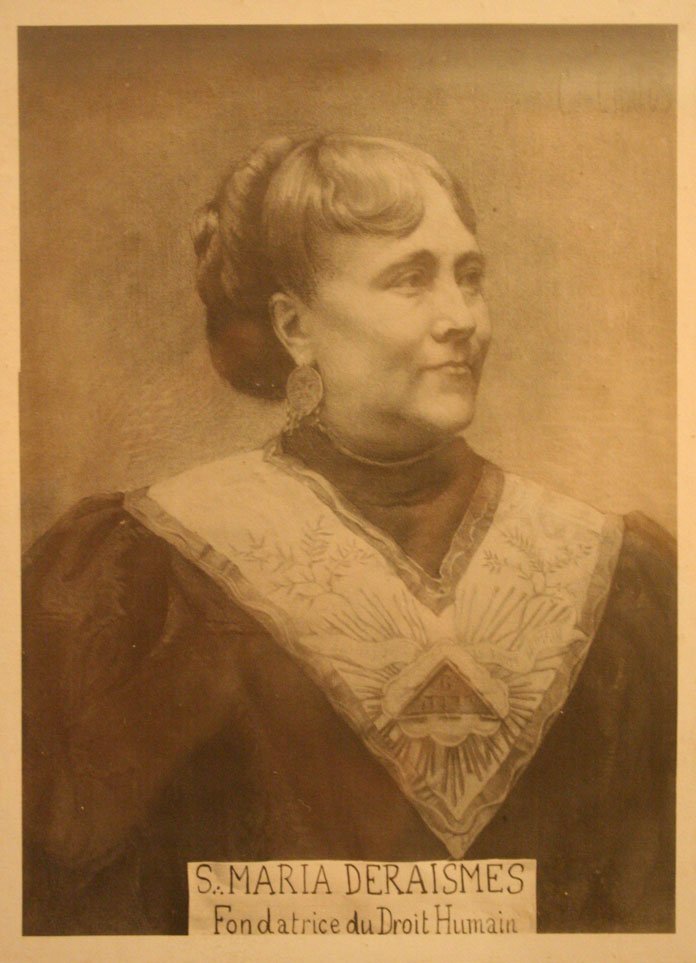
There is also mixed Freemasonry, for men and women together, and men helped to create it. On 14 January 1882 the lodge Les Libres Penseurs at Le Pecq, near Paris, initiated the writer and campaigner Maria Deraismes. Le Droit Humain’s own history records that this “caused considerable turmoil in French Masonry”: the lodge was suspended by its governing body, the Scottish Symbolic Grand Lodge, until Maria Deraismes distanced herself from its work. Eleven years later, on 4 April 1893, with the help of Dr Georges Martin, a politician and Freemason who had brought about her initiation, she created in Paris the first mixed lodge, the start of what is now the International Order of Freemasonry for Men and Women, Le Droit Humain. Annie Besant brought it to Britain in 1902, and it soon reached Australia: in 1911 seven male Master Masons applied for a warrant to open Australia’s first mixed lodge, Victorian Lodge No. 150 in Melbourne. A brotherhood that hated women would hardly have gone to such trouble to share Freemasonry with them.
Which orders are there for women?
Plenty, and they have their own pages on this site. Within the wider Masonic family, these orders are for women; the first three also admit Master Masons, who meet with the women as equals:
 Order of the Eastern Star: open to women and to Master Masons, who meet together in Chapters; founded in 1850.
 Order of the Amaranth: for Master Masons and the women of their families, who meet together as equals.
 White Shrine of Jerusalem: for women related to a Master Mason, and also open to Master Masons.
 Social Order of Beauceant: for the wives, widows, mothers, daughters, sisters and granddaughters of Knights Templar.
 Daughters of the Nile: for women aged 18 or over related to a Shriner, a Master Mason or a Daughter of the Nile.
 Ladies of the Oriental Shrine of North America: for women aged 18 or over, founded in 1890 alongside the Shriners.
 International Order of the Rainbow for Girls: for girls and young women; a Masonic relative is not required.
 Job’s Daughters International: for girls and young women aged about 10 to 20, founded in 1920.
Besides these, the women’s Grand Lodges and mixed Freemasonry described above work the Masonic degrees themselves; the orders in this list are separate bodies of the Masonic family, each with its own ceremonies.
Then why are most lodges men only?
Tradition and choice, not contempt. Freemasonry grew out of the lodges of working stonemasons, a trade of men, and it was organised at a time when women’s place in society was very different from today. The Constitutions of 1723 made the rule explicit: members must be “good and true men, …. no bondmen, no women”. Albert Mackey’s Encyclopedia of Freemasonry, a standard Masonic reference, is just as plain about the reason: a woman is not admitted “not because we deem her unworthy or unfaithful, or incapable, as has been foolishly supposed, of keeping a secret”, but because Freemasonry kept the rules of the working masons it grew out of. Most men’s Grand Lodges, including the United Grand Lodge of England, still admit men only, and the women’s Grand Lodges admit women only. UGLE explains it simply: “These two groups only admit women because that is the choice of their memberships. Both of the women’s organisations, and ourselves, prefer to practice our Freemasonry in single sex environments.”
Preferring to meet in a single-sex group is no more a sign of hatred than a women’s choir, a girls’ school or a men’s shed. And the relationship is friendly: UGLE “regularly hires its facilities out for meetings of the two women’s Lodges due to our mutual respect and close relations”, and it has set up a Council for Freemasonry with the two women’s Grand Lodges to work together on the principles they share. There are, in short, plenty of doors open to a woman who wants to become a Freemason. We explain the different orders in What is Freemasonry?
Do Masons keep their wives in the dark?
There is very little dark to keep anyone in. In the words of the United Grand Lodge of England, Freemasonry “is not a secret society, since all members are free to acknowledge their membership”, and members are encouraged to talk openly about it. Its rules and aims are public. UGLE also notes that “The details of the ceremonies can easily be accessed online”, and that copies of the ceremony books are “available for purchase on well known online stores”. A curious wife can read far more about her husband’s lodge than he could ever tell her over dinner. As UGLE puts it, “The secrets of Freemasonry are concerned with its traditional modes of recognition.”
Far from coming before his family, Freemasonry tells a member the opposite. UGLE’s own summary says a Freemason should do his duty first to his God “(by whatever name he is known)”, and then, “without detriment to his family and those dependent on him”, to his neighbour, and a member is expected to give his time and money only so far as it does not harm his family life. Many families are involved directly: the Order of the Eastern Star is open to Master Masons and to women related to Master Masons by birth, marriage or adoption (see Claim #28).
Conclusion: Freemasons do not hate women, and women are not banned from Freemasonry. Women’s Freemasonry in Britain goes back to 1908 and its Grand Lodges work the same ceremonies as the men’s, mixed lodges were founded with the help of male Freemasons in Paris in 1893 and in Melbourne in 1911, and the United Grand Lodge of England hosts women’s lodges in its own headquarters. Most men’s lodges remain men only by choice and tradition, just as the women’s lodges remain women only. And no wife needs to be kept in the dark: the ceremonies can be bought online, and a Freemason’s first duties are to his faith and his family.
Sources:
https://www.ugle.org.uk/become-freemason/women-freemasons
https://www.ugle.org.uk/discover-freemasonry/frequently-asked-questions
United Grand Lodge of England, “What is Freemasonry?” (leaflet): https://skirret.com/papers/freemasonry_ugle.html
Le Droit Humain (International Order of Freemasonry for Men and Women), history: https://web.archive.org/web/20260609023531/https://ledroithumain.international/le-droit-humain-history/?lang=en
Le Droit Humain Australian Federation, history: https://freemasonryformenandwomen.org.au/sites/freemasonry/media/pdf/ldh-history.pdf
General Grand Chapter of the Order of the Eastern Star, membership: https://easternstar.org/join/
C. W. Leadbeater, Glimpses of Masonic History (1926), chapter “The Co-Masonic Order”
Albert G. Mackey, Encyclopedia of Freemasonry, entry “Woman”
What is Freemasonry? (this site)