The claim
CLAIM #43:
Freemasons murdered Mozart for revealing their secrets in The Magic Flute?
FALSE
ANSWER:
Mozart was a proud Freemason who wrote a cantata for his own lodge’s new temple a few weeks before he died. He died of an illness that was killing other young men in Vienna that winter, not of his brothers’ poison.
Wolfgang Amadeus Mozart died in Vienna on 5 December 1791, aged 35, a little over two months after the first performance of his opera The Magic Flute. The opera is full of symbolism that many people have linked to Freemasonry, and so a story grew: Mozart had given away the secrets of the lodge on stage, and his fellow Masons poisoned him for it. The tale has been told in books and is still repeated in “secret history” videos. Let us look at what is actually known.
Was Mozart really a Freemason?
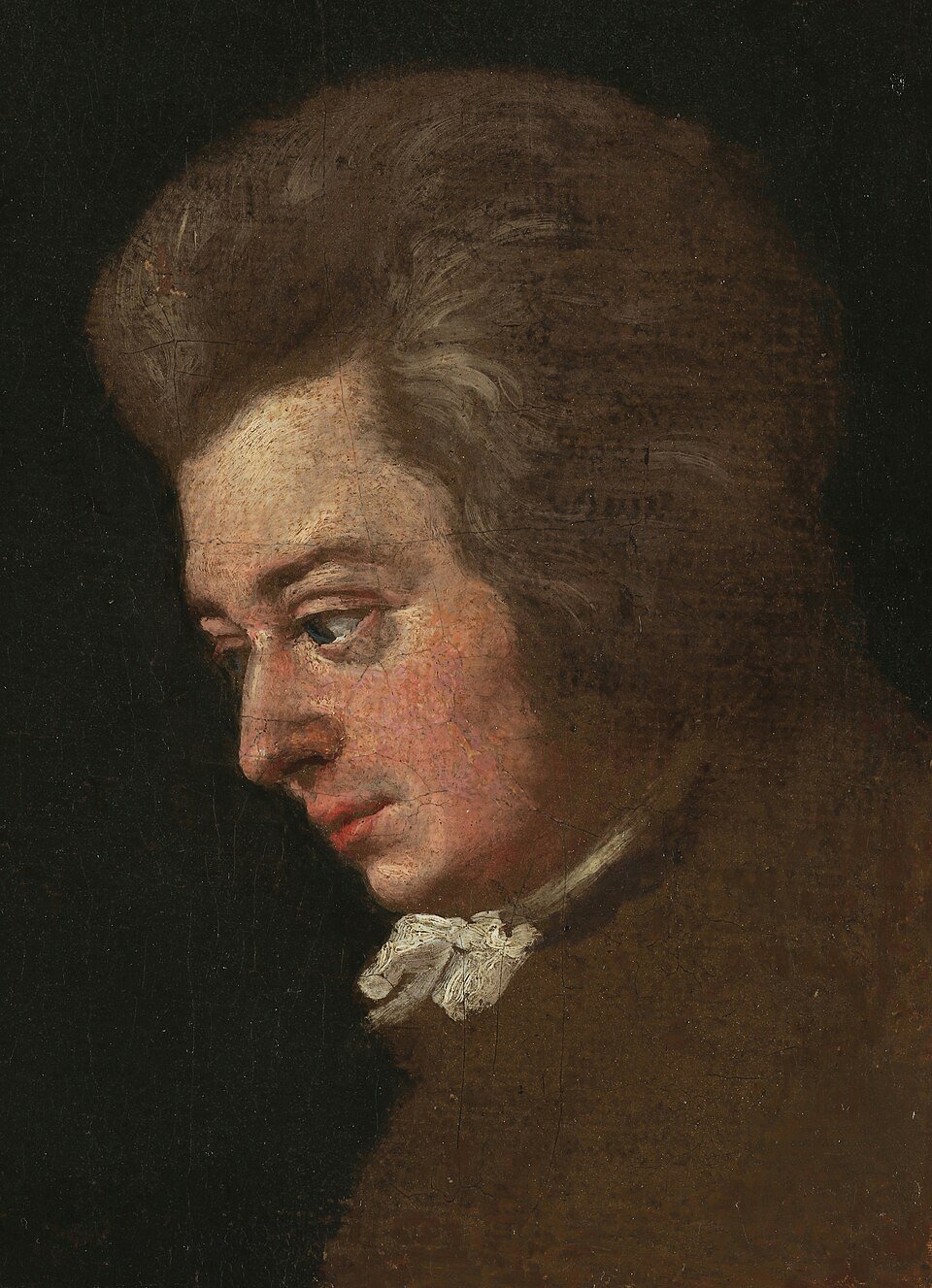
Yes, and happily so. According to Albert Mackey’s Encyclopedia of Freemasonry, he was initiated in 1784 into the Vienna lodge “Zur Wohltätigkeit” (“Beneficence”), and after the Emperor’s decree of 1 December 1785 merged the Vienna lodges, he belonged to the lodge “Zur gekrönten Hoffnung” (“Crowned Hope”). The Magic Flute, whose words were written by his fellow Mason Emanuel Schikaneder, is full of Masonic symbolism, most obviously the number three, as the Encyclopaedia Britannica points out: three boys, three ladies, three slaves and three chords at the start of the overture. But an opera that uses the themes and symbolism of the Craft, its trials, its light and its brotherhood, is not the same thing as an opera that gives away its secrets. Composers, painters and writers have drawn on Masonic imagery for centuries.
And the timeline does not fit the tale. The Magic Flute opened at the Theater auf der Wieden near Vienna on 30 September 1791. Seven weeks later his Little Masonic Cantata (K. 623), written for the consecration of a new temple for his own lodge, was first performed at “Zur gekrönten Hoffnung” on 17 November 1791 (the date in the Mozarteum’s official Köchel catalogue), and Mackey records that Mozart conducted it himself. It was the last finished work he ever conducted. That is not the behaviour of a man at war with his lodge, nor of a lodge plotting against him.
Where did the poison story start?
Partly with Mozart himself, and it is only fair to say so. Seriously ill that autumn, and depressed, he told his wife Constanze during a drive in the Prater park, according to the first biography of him, published by Franz Niemetschek in 1798 with Constanze’s help: “I feel it too strongly, I shall not last much longer: someone has certainly given me poison! I cannot free myself from this thought.” (Our translation of: “gewiß, man hat mir Gift gegeben!”) Constanze, Niemetschek writes, could hardly comfort him or show him how groundless his gloomy ideas were. Then he rallied enough to finish a small cantata, and its good performance and warm applause “gave his spirit new vigour”, before he sank again. The best-known poisoning rumour after his death blamed his rival Antonio Salieri, and it inspired a story by Pushkin and an opera by Rimsky-Korsakov. As the Encyclopaedia Britannica puts it, “There is also no foundation for the belief that Salieri tried to poison Mozart.”
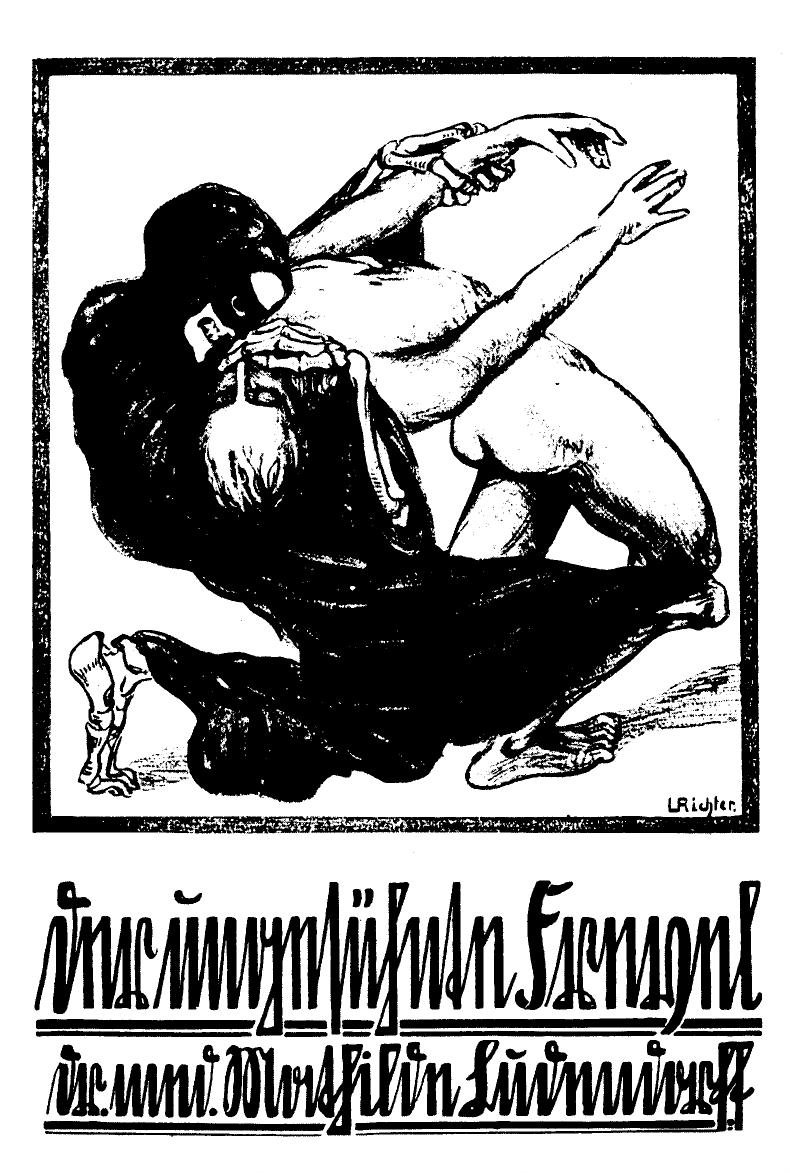
The Masonic version came much later, from Germany. After the First World War, General Erich Ludendorff waged what Mackey calls a “violent Anti-Masonic campaign”, built on the claim that “The secret of Freemasonry is always the Jew”, and his wife Mathilde, whose worldview the German Historical Museum describes as racist and antisemitic, joined him. She wrote Der ungesühnte Frevel an Luther, Lessing, Mozart und Schiller (“The Unatoned Crime against Luther, Lessing, Mozart and Schiller”), accusing the Freemasons over the deaths of these four famous Germans. By 1936 the Ludendorffs’ own Munich publishing house was printing its 52,000th to 55,000th copies, and the United States Holocaust Memorial Museum keeps that 1936 edition in its collection of Nazi propaganda literature. After the Second World War a denazification tribunal classed Mathilde Ludendorff as a “major offender” (reduced on appeal to “offender”); she was still voicing antisemitic views at the hearing. The book has not gone away: a German facsimile reprint of 2003 still claims in its preface that the “murder” of Schiller and Mozart “can be considered proven”. That is the pedigree of this story: not a lodge record, but a propaganda tract.
So what did Mozart die of?
Nobody can be completely certain after more than two centuries, but the best evidence points to a common infection, not to poison. In 2009 a team of researchers published in the Annals of Internal Medicine an analysis of Vienna’s official register of deaths: 5,011 adults who died in the winters of 1790-91, 1791-92 and 1792-93. According to eyewitnesses, the hallmark of Mozart’s last illness was severe swelling (oedema). The researchers found that “Deaths from edema were markedly increased among younger men in the weeks surrounding Mozart’s death compared with the previous and following years”, noted that this small epidemic “may have originated in the military hospital”, and concluded that their analysis “is consistent with Mozart’s last illness and death being due to a streptococcal infection leading to an acute nephritic syndrome”.
In plain English: a streptococcal infection, the same family of germs behind strep throat and scarlet fever, was going around Vienna that winter. In some people it is followed, a week or two later, by a serious inflammation of the kidneys that makes the body swell. The infection spreads from person to person; the kidney complication itself does not. It is the explanation that best fits both the eyewitness accounts and the city’s death register, and it needs no poison and no lodge.
Conclusion: Freemasons did not murder Mozart. He was a devoted member of his lodge and conducted a cantata for its new temple seven weeks after The Magic Flute opened. The poison idea began with his own fears while he was ill, which eased when he briefly recovered; the Masonic version was pushed by the antisemitic Ludendorffs, whose book now sits in the Holocaust Museum’s collection of Nazi propaganda. The best medical evidence points to a streptococcal infection that was killing other young men in Vienna that winter.
Sources:
https://kv.mozarteum.at/en/work/laut-verkunde-unsre-freude-cantata-for-soloists-male-voice-choir-and-orchestra-7321
https://www.gutenberg.org/ebooks/29474
https://web.archive.org/web/20261109111242/https://www.britannica.com/topic/The-Magic-Flute
https://web.archive.org/web/20261028101459/https://www.britannica.com/biography/Antonio-Salieri
https://collections.ushmm.org/search/catalog/bib220248
https://www.dhm.de/lemo/biografie/mathilde-ludendorff
https://pubmed.ncbi.nlm.nih.gov/19687494/
Albert G. Mackey, Encyclopedia of Freemasonry, entries “Mozart” and “Ludendorff and Freemasonry”
R. H. Zegers, A. Weigl, A. Steptoe, “The death of Wolfgang Amadeus Mozart: an epidemiologic perspective”, Annals of Internal Medicine 2009;151(4):274-8