The claim
CLAIM #42:
Freemasons secretly run the Catholic Church, and the Pope himself is a Mason?
FALSE
ANSWER:
The Catholic Church has forbidden its members to become Freemasons since 1738, and the Vatican said so again as recently as 2023, with the Pope’s approval. If the Masons are running the Church, they are doing a remarkably poor job of it.
This claim mostly circulates among Catholics, and it comes in several flavours. Freemasons infiltrated the Vatican; they wrote the reforms of the Second Vatican Council and the new form of the Mass; and one Pope or another, most recently Pope Francis, was secretly “one of them”, as supposedly proved by a “Masonic handshake” caught on camera. It is the mirror image of another claim on this site, that the Jesuits secretly took over Freemasonry (Claim #25). Both cannot be true. As it happens, neither is.
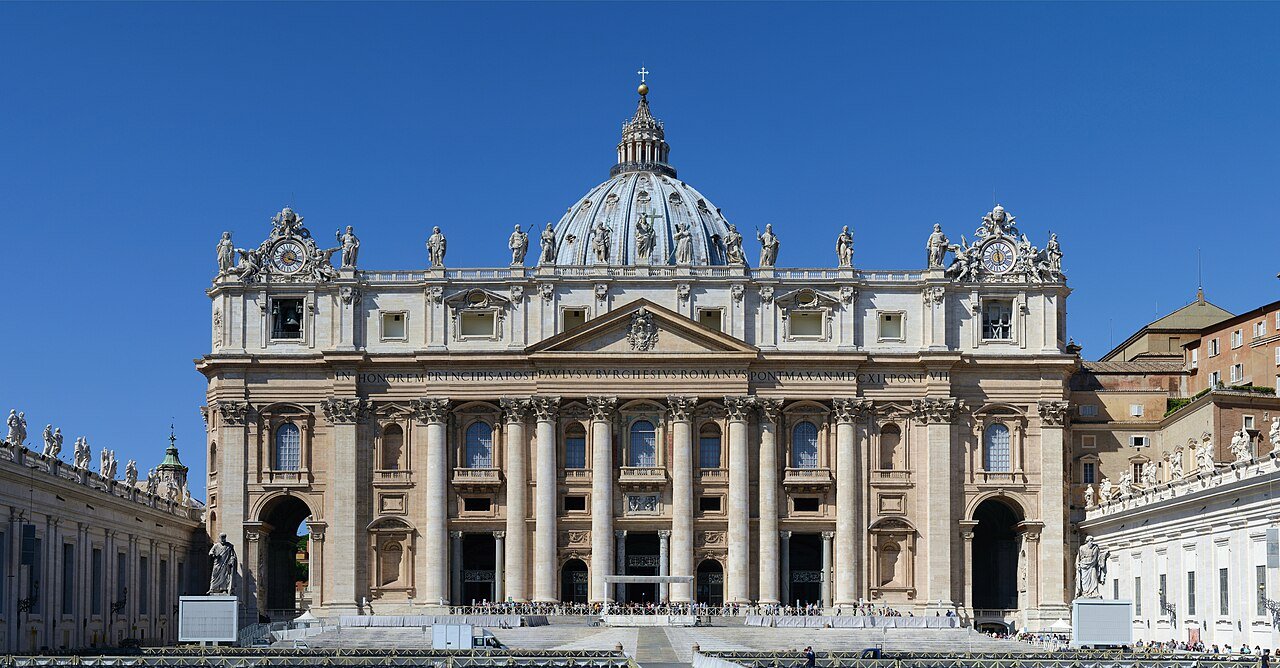
What do the popes actually say about Freemasonry?
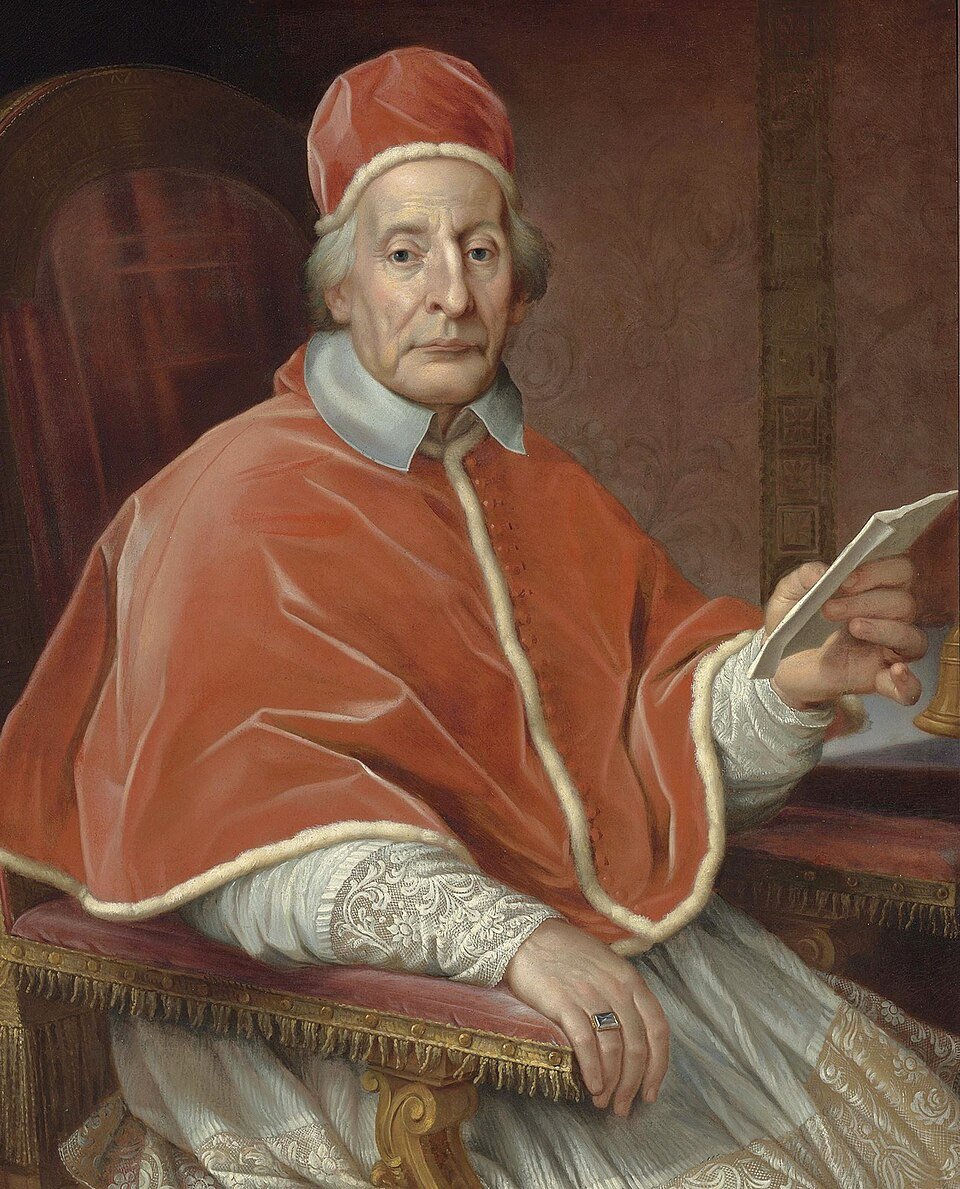
They say “no”, and they have been saying it for nearly three hundred years. In 1738 Pope Clement XII issued In eminenti apostolatus, the first Church ban on Masonic membership. Pope after pope repeated it: Albert Mackey’s Encyclopedia of Freemasonry lists papal bulls and edicts against the Craft from Benedict XIV in 1751 to Leo XIII, whose encyclical Humanum genus of 1884 is the best known. From 1917 until the new Code of 1983, Church law (canon 2335) laid down excommunication for Catholics who joined a lodge, and the Vatican’s 1983 declaration notes that the old Code named Masonic associations expressly.
The modern position was set out in 1983 by the Congregation for the Doctrine of the Faith, then led by Cardinal Joseph Ratzinger (later Pope Benedict XVI), and approved by Pope John Paul II: “membership in them remains forbidden. The faithful who enrol in Masonic associations are in a state of grave sin and may not receive Holy Communion.” In November 2023, answering a question from the bishops of the Philippines, the Vatican confirmed it once more, in a document approved by Pope Francis: “active membership in Freemasonry by a member of the faithful is prohibited”, and the same measures “also apply to any clerics enrolled in Freemasonry.”
So the claim asks us to believe that a secret Masonic Pope personally approved a document reminding the world’s Catholics, and his own clergy, that they may not become Masons. That would be a very odd way to run a takeover.
Wasn’t the new Mass written by a Mason?
This is the most persistent version, and it centres on one man: Archbishop Annibale Bugnini, who led the reform of the Catholic liturgy after Vatican II and was suddenly removed from his post in 1975. According to Bugnini’s own memoirs, as summarised by the priest Brian Harrison in AD2000 in 1989, the claim that he was a Freemason first appeared in the Italian press in late November 1975. Bugnini had already written to Pope Paul VI on 22 October 1975, denying any involvement with Freemasonry. When rumours spread in 1976 that over a hundred Vatican officials were Masons, the Vatican newspaper L’Osservatore Romano issued a blanket denial on 10 October 1976: “Not one, we say, not one of the accused Vatican prelates has ever had anything to do with Freemasonry.”
The case against him still rests on second-hand accounts: an unnamed cardinal, a dossier said to have been shown to the Pope, and a story about a briefcase left behind in a meeting room. Some writers still argue it, but in nearly fifty years the accusation has not been proved, and Bugnini denied it in writing to the Pope himself. An unproven rumour about one archbishop is certainly not evidence that Freemasons run the Church.
What about P2 and the Vatican bank?
Here there is a real scandal, and we will not pretend otherwise. In Italy, a lodge called Propaganda Due (“P2”), headed by Licio Gelli, was linked to many of the country’s scandals, and, as the Encyclopaedia Britannica notes, “the scandal also involved the Vatican.” But look at the dates. Italy’s own Masonic governing body dissolved P2 in 1976; Italian authorities found Gelli’s papers and membership list in 1981; and an Italian law of 25 January 1982 formally dissolved the “Loggia P2”. P2 was a rogue group already cut off from regular Freemasonry, and its story is told in Claim #07. What individuals in a disowned lodge did is not evidence against Freemasonry, which had already expelled them, and it is a very long way from Masons running the Church.
And the “Masonic handshake” videos?
Popes shake thousands of hands a year, and every one of them is photographed. Freeze enough frames and some fingers will land in a position that a video narrator can call “Masonic”. No video of this kind has ever been backed by a lodge record, a witness or a single document. A photograph of two men shaking hands shows two men shaking hands. We look at the wider habit of reading secret signals into ordinary gestures in Claim #22.
Conclusion: Freemasons do not run the Catholic Church, and there is no evidence that any Pope has been a Freemason. On the contrary, the popes have banned Catholic membership of lodges since 1738, and the ban was reaffirmed in 2023 with Pope Francis’s approval. The accusation against Archbishop Bugnini has never been proved (he denied it in writing to the Pope), and the P2 scandal involved a lodge that regular Freemasonry had already disowned. The Church and the lodges disagree, openly and on the record. That is the opposite of a secret alliance.
Sources:
https://www.vaticannews.va/en/vatican-city/news/2023-11/vatican-catholics-still-forbidden-masonic-lodge.html
https://www.vatican.va/roman_curia/congregations/cfaith/documents/rc_con_cfaith_doc_19831126_declaration-masonic_en.html
https://www.papalencyclicals.net/clem12/c12inemengl.htm
https://www.vatican.va/content/leo-xiii/en/encyclicals/documents/hf_l-xiii_enc_18840420_humanum-genus.html
https://web.archive.org/web/20260415215352/http://www.ad2000.com.au/articles/1989/aug1989p18_635.html
https://web.archive.org/web/20200809234351/https://www.britannica.com/biography/Licio-Gelli
https://web.archive.org/web/20251111082330/https://www.normattiva.it/uri-res/N2Ls?urn:nir:stato:legge:1982-01-25;17
Albert G. Mackey, Encyclopedia of Freemasonry, entry “Bull, Papal”