The claim
CLAIM #40:
Freemasons control Hollywood and the music industry, and you can spot their hidden symbols in logos, album covers and music videos?
FALSE
ANSWER:
An eye, a triangle and a chequered floor are not a membership card. Not one of these videos has ever produced a lodge, a minute book or a contract showing Freemasons running a studio or a record label.
Pause any music video at the right frame and someone, somewhere, will circle it in red. A hand held over one eye, a pyramid on a stage set, a black-and-white floor, a star tattoo: each becomes “proof” that the singer has been initiated and that Freemasons (usually alongside the Illuminati) pull the strings of Hollywood and the record industry. Whole websites and thousands of YouTube and TikTok channels are devoted to this “symbolism” hunt.
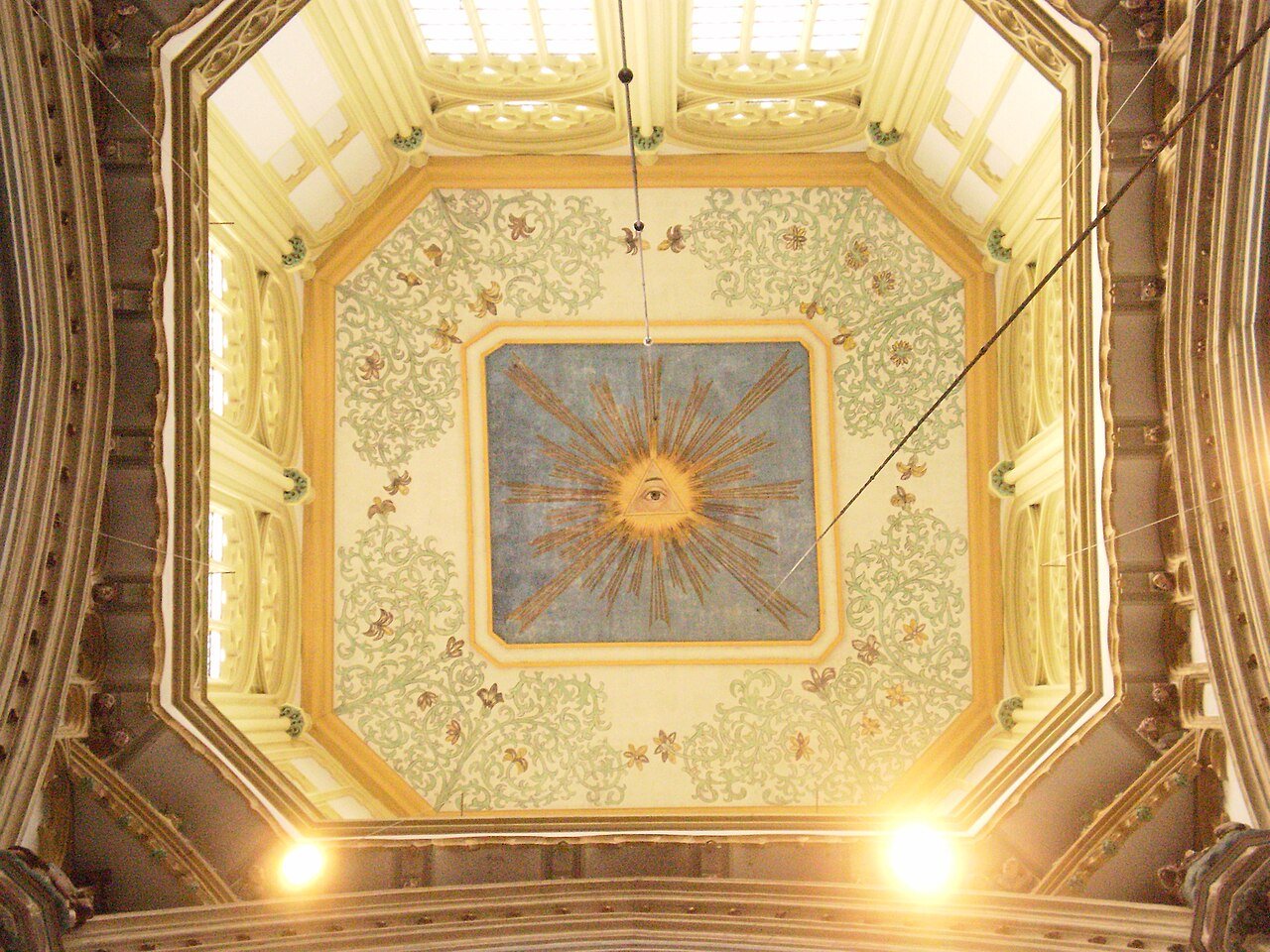
Isn’t the all-seeing eye a Masonic symbol?
Freemasons do use it, but they did not invent it and they do not own it. People were treating the eye as a sacred symbol thousands of years before Christianity. At Tell Brak in north-eastern Syria, one of the earliest cities of the Middle East, archaeologists dug up hundreds of small stone figures with huge staring eyes, so many that the building they came from is known as the “Eye Temple”. The British Museum dates them to about 3300–3000 BC, more than 5,000 years ago, and thinks they were left as offerings representing worshippers or gods.
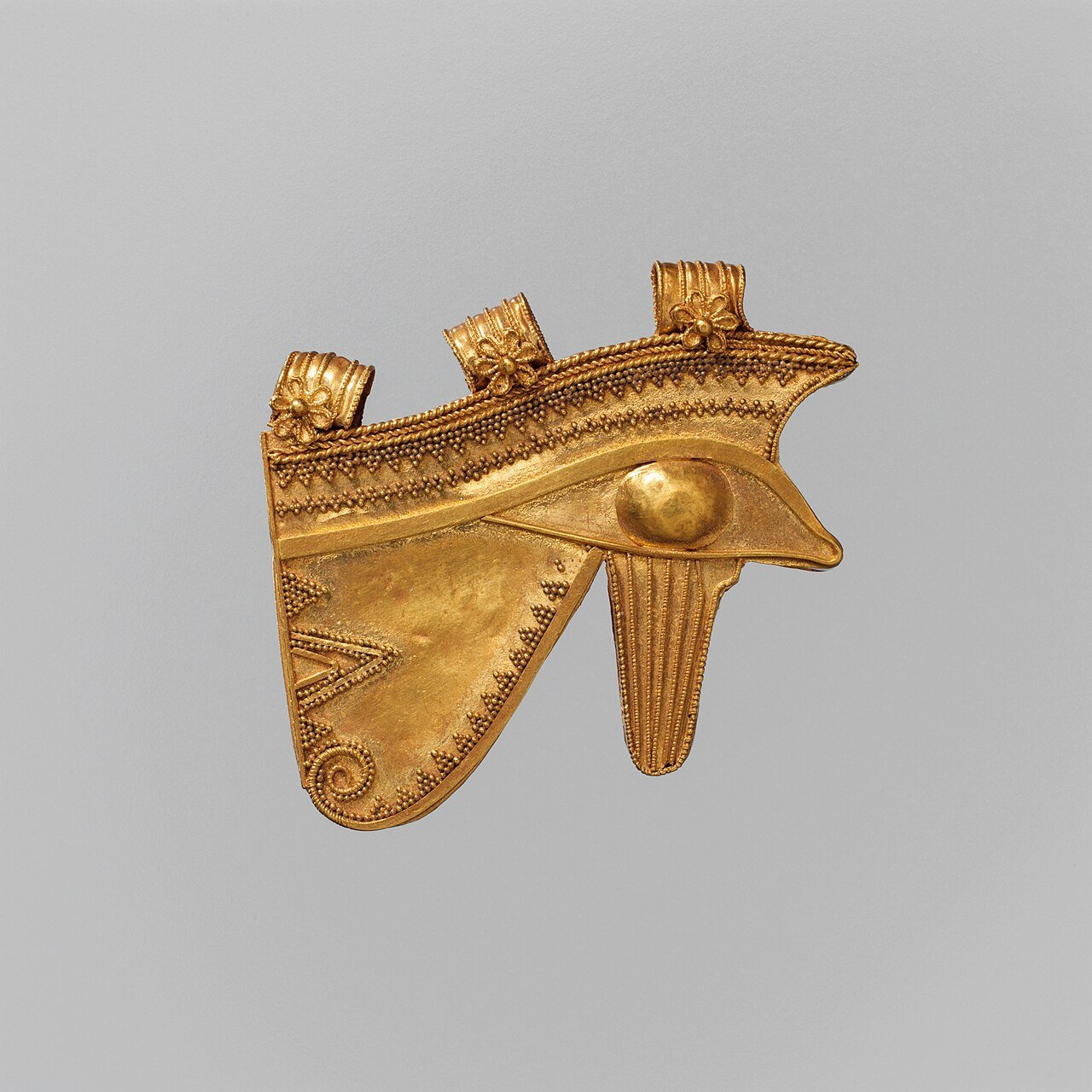
In ancient Egypt the eye was one of the best-known religious symbols of all. The falcon god Horus was said to have the sun and the moon for his two eyes, and the figure of his restored eye, the wedjat, “became a powerful amulet”, as the Encyclopaedia Britannica puts it. Eye of Horus amulets were already being placed on mummies in the Old Kingdom, the age of the pyramids, more than 4,000 years ago, and Egyptians went on making them for over two thousand years. Masonic writers say the same: Greg Stewart’s introduction What is Freemasonry? notes that “Imagery of an all-seeing eye can be traced back to Egyptian mythology and the Eye of Horus”. The Hebrew Bible speaks the same language: “The eyes of the Lord are upon the righteous” (Psalm 34:15). Even Albert Mackey’s Encyclopedia of Freemasonry, a standard Masonic reference, says the All-Seeing Eye was “borrowed by the Freemasons from the nations of antiquity”, naming the Hebrews and the Egyptians.
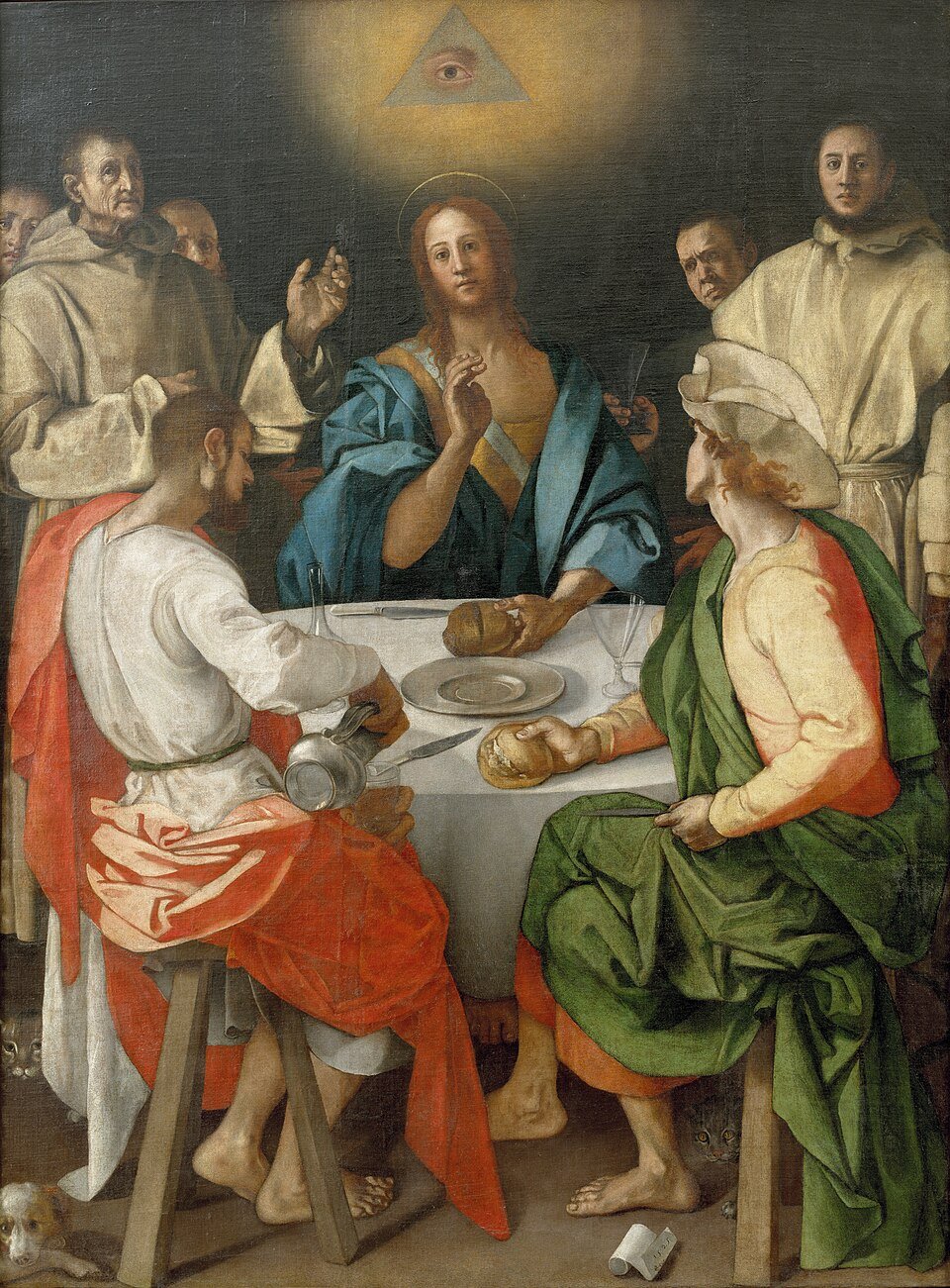
The version most people picture today, an eye inside a triangle, is a much later chapter of the same story. In Christian art of the late Renaissance the eye inside a triangle stood for God and the Holy Trinity. Pontormo’s Supper at Emmaus in Florence shows one above the head of Christ. The Uffizi, which owns the painting, calls it “a symbol of God the Father within the trinity triangle” and explains that it was painted in after the artist’s death in 1552, to hide a three-faced figure of the Trinity that the Counter-Reformation had prohibited. The eye in a triangle is still painted on church ceilings and altarpieces today. Freemasons were already putting it on their aprons in the 18th century: aprons in the Museum of Freemasonry in London are dated to about 1770–1790. By 1808 Thomas Smith Webb’s Freemason’s Monitor, the standard American handbook, listed the All-Seeing Eye among its emblems as a reminder that nothing we think, say or do is hidden from the Great Architect of the Universe.
So when a pop video shows an eye in a triangle, the most you can say is that a set designer used one of the oldest religious images in the world. If an eye on the ceiling proved Masonic control, half the churches of Europe would have a great deal of explaining to do. Pyramids, triangles, compasses, stars and chequered floors are in the same position: they are shapes that designers have used for thousands of years because they look good. The same goes for the eye and pyramid on the dollar bill, which we look at in Claim #35.
What about the “diamond” hand sign?
This is the favourite example, and it has the most ordinary explanation of all. The rapper Jay-Z, whose fans make the “Roc diamond” with their hands at concerts, explained in 2023 on CBS Mornings where it came from. In the late 1990s his label, Roc-A-Fella, was promoting an R&B group:
“When we first started, we had this group called Christión,” Jay said. “When you sell 10 million, you go diamond. We believed in them so heavy it was like, ‘This group is going to sell 10 million records!’ So we start putting the diamond up for Christión. That’s how it all came about, and then we started playing with it, and then we started doing it at shows, then the whole crowd started doing it.”
Jay-Z, CBS Mornings, reported by Complex, 27 October 2023
A diamond for a record that sells ten million copies. In 2018 he even filed to trademark it, which is not something people usually do with a secret sign. The Grand Lodge of British Columbia and Yukon, which keeps a page on this very rumour, notes drily that “The all-seeing eye, of course, is not uniquely masonic, nor is the image of clasped hands”. Hand gestures in photos are a whole genre of this claim; see also Claim #22.
Are there Freemasons in show business?
Yes, and they have never hidden it. In London, Chelsea Lodge No. 3098 was founded in 1905 for Freemasons working in the entertainment industry. The comic actor Peter Sellers, later famous as Inspector Clouseau in The Pink Panther, was initiated there on 16 July 1948, in the same lodge as his father, a variety performer. The United Grand Lodge of England publishes that fact on its own website.
That is exactly how membership of a lodge looks in the real world: a group of actors, musicians and stagehands who meet, dine and raise money for charity, with their names on record. It is a long way from controlling an industry. A lodge has no say over who gets a film role or a record deal, owns no studios and signs no artists. Entertainers join lodges for the same reasons as plumbers and accountants do, and plenty of plumbers and accountants have never been offered a recording contract.
Why do the symbols keep turning up?
Partly because the human brain is built to find patterns, and if you search ten thousand music videos for triangles, you will find triangles. Partly because the rumour itself sells: mystery and “forbidden” imagery get attention, and some artists and designers happily use occult-looking styles precisely because people will talk about them. None of this tells you who owns a record label. Film studios and record labels are companies whose owners are a matter of public record, and no Grand Lodge appears among them. The idea that Freemasons and the long-dead Bavarian Illuminati are one and the same is answered in Claim #26.
Conclusion: The “symbols” offered as proof are ordinary images, most of them ancient: the eye was a sacred symbol in Mesopotamia and Egypt thousands of years before Christianity, and a Christian symbol of the Trinity long before lodges adopted it officially, and the famous “diamond” hand sign was invented to cheer on an R&B group’s record sales. Some entertainers have been Freemasons, openly, in lodges whose members are on record. But no one has ever shown that Freemasonry controls a single film studio or record label. Circling a triangle in a music video is not evidence.
Sources:
https://www.complex.com/music/a/markelibert/jay-z-details-origin-of-roc-diamond-hand-symbol
https://freemasonry.bcy.ca/fiction/hiphop/jay-z/index.html
https://www.ugle.org.uk/discover-freemasonry/famous-freemasons
https://artsandculture.google.com/asset/alabaster-eye-idols/ewGThwCQaT9LuQ
https://www.uffizi.it/en/artworks/pontormo-supper-emmaus
https://www.britannica.com/topic/Horus
Albert G. Mackey, Encyclopedia of Freemasonry, entry “All-Seeing Eye”
Greg Stewart, What is Freemasonry? (freemasoninformation.com)
https://museumdata.uk/objects/e2bf24cb-6e99-3a64-82cf-88fabb8c267a
https://archive.org/details/freemasonsmonit00webbgoog
https://en.wikipedia.org/wiki/Eye_of_Horus