The claim
CLAIM #35:
The eye and pyramid on the US dollar bill are a Masonic mark, proof that Freemasons own America?
FALSE
ANSWER:
The eye and pyramid come from the Great Seal of 1782, designed by men who were not Freemasons, using a Christian symbol that Masons only adopted years later. The pyramid has never been a Masonic symbol at all.
Turn over a one-dollar bill and there it is: an unfinished pyramid, an eye in a glowing triangle, and a Latin motto that is often said to mean “New World Order”. To many people online, this is the Freemasons signing their work, a secret brand stamped on the world’s best-known currency. It is one of the most shared “proofs” in all anti-Masonic material. It is also one of the easiest to check, because the design of the Great Seal is among the best-documented pieces of American history.
Who designed the eye and pyramid?
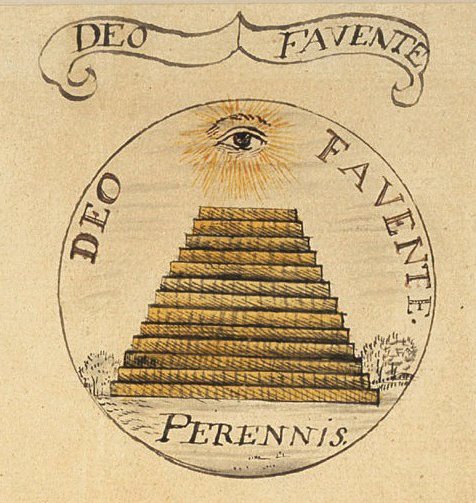
The images on the back of the dollar are the reverse side of the Great Seal of the United States. According to the US National Archives, it took Congress three committees and six years to agree a design. The first committee, appointed on 4 July 1776, was Benjamin Franklin, Thomas Jefferson and John Adams, and the eye was probably suggested to it by its artistic consultant, Pierre Eugène du Simitière. In May 1782 the third committee asked William Barton, “a Philadelphia student of heraldry”, to help, and his design put “a 13-step unfinished pyramid topped with the Eye of Providence” on the reverse. The secretary of Congress, Charles Thomson, finished the job and added the mottoes.
Were these men Freemasons? The long-running Great Seal history site greatseal.com sums it up: “only four men actually contributed elements to the final design. And they were not Freemasons.” Thomson and Adams were definitely not Masons; there is no record that Barton or Du Simitière ever were. The only Mason on any of the committees was Franklin, and his ideas for the seal were not used. Thomson’s own explanation, sent to Congress with the design, was simple: “The pyramid signifies Strength and Duration: The Eye over it & the Motto allude to the many signal interpositions of providence in favour of the American cause.” Its thirteen courses stand for the thirteen original states.
But isn’t the all-seeing eye Masonic?
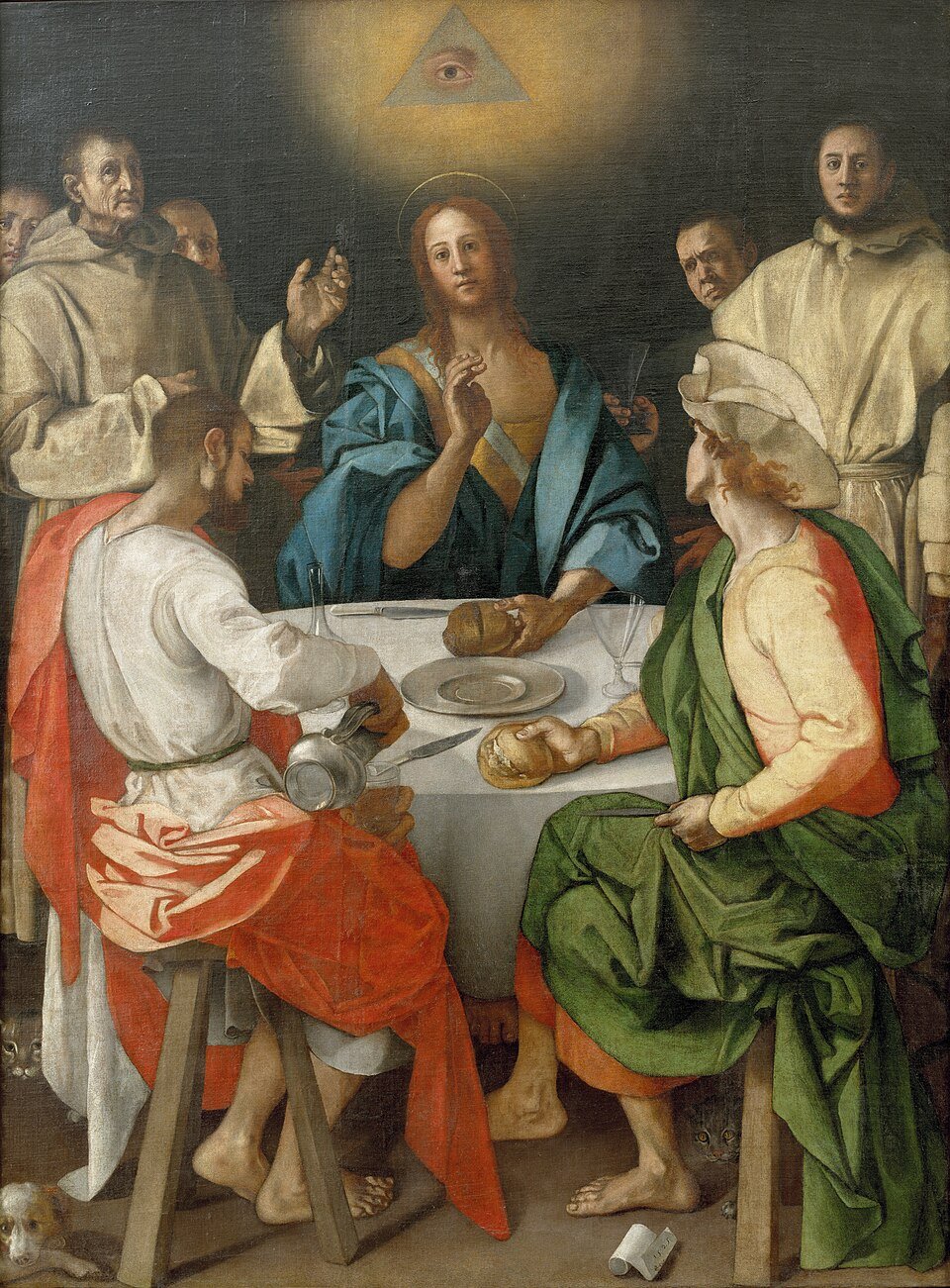
Freemasons do use an all-seeing eye today, as a reminder that God sees every thought and deed. But they did not invent it, and they were not using it officially when the seal was made. The eye of God in a triangle is a Christian symbol of the Holy Trinity and of divine providence: Pontormo painted it above Christ in his Supper at Emmaus in 1525, and it is still used in church architecture today. When the seal was designed, it was simply “a conventional symbol for God’s benevolent oversight”. The eye became a standard part of Masonic imagery only in 1797, with Thomas Smith Webb’s Freemason’s Monitor, after Congress had adopted the seal in 1782.
The Masonic historian S. Brent Morris put it plainly: “A pyramid, whether incomplete or finished, however, has never been a Masonic symbol… The combining of the eye of providence overlooking an unfinished pyramid is a uniquely American, not Masonic, icon”.
Doesn’t the motto say “New World Order”?
No. The motto is Novus Ordo Seclorum, adapted by Charles Thomson from the Roman poet Virgil. It means “a new order of the ages”, and Thomson explained that it marked “the beginning of the new American Era”, dated by the Roman numerals for 1776 at the base of the pyramid. The other motto, Annuit Cœptis, says that Providence has approved our undertakings. Read properly, the reverse of the seal is a prayer for a new republic, not a plan for world government. (More on that phrase in Claim #16.)
How did it get onto the dollar?
Both sides of the seal have appeared on the one-dollar bill since 1935. The two men responsible, Henry A. Wallace and President Franklin D. Roosevelt, were both Freemasons, and they liked the seal’s symbolism. But they were acting as officials of the United States government, putting the nation’s own seal on the nation’s own money. No Grand Lodge asked for it, approved it or had anything to do with it. Two members admiring a national symbol do not make it a Masonic one, any more than a Rotarian President would make the bald eagle a Rotary emblem. The question of the “Masonic” Founding Fathers is covered in Claim #37.
Conclusion: The eye and pyramid on the dollar bill are not a Masonic mark. They are the reverse of the Great Seal, designed in 1776-1782 by men who were not Freemasons, using the eye of providence, a Christian symbol centuries older than Freemasonry’s use of it, above a pyramid that has never been a Masonic symbol. Masons adopted the eye officially only in 1797, the motto means “a new order of the ages”, and the 1935 decision to put the seal on the dollar was a government decision, not a Masonic one.
Sources:
https://visit.archives.gov/whats-on/explore-exhibits/great-seal-united-states
https://greatseal.com/mythamerica/notmasonic.html
S. Brent Morris, “The Eye in the Pyramid”, Masonic Service Association (1995)
https://en.wikipedia.org/wiki/Eye_of_Providence
https://en.wikipedia.org/wiki/Great_Seal_of_the_United_States
https://en.wikipedia.org/wiki/Novus_ordo_seclorum