The claim
CLAIM #51:
Sir Francis Bacon, a Freemason, secretly edited the King James Bible in 1611 and hid Masonic marks in it?
FALSE
ANSWER:
The King James Bible was translated by 47 named scholars, and Francis Bacon was not one of them. There is no record of Bacon in any Masonic lodge either. The claim is, in the words of the Australian fact-checkers who examined it, “a case of too much Bacon”.
A meme that has done the rounds in Australia shows a Bible with a square and compasses on the cover and the caption: “Did you know Sir Francis Bacon was the editor of the King James Bible printed in 1611 and he was a Freemason.” Below it is a quotation attributed to the Canadian writer and mystic Manly P. Hall: “The first edition of the King James Bible, which was edited by Francis Bacon and prepared under Masonic supervision, bears more Mason’s (sic) marks than the Cathedral of Strasburg (sic).” AAP FactCheck found one version shared by multiple users in Australia and an older one shared more than 1,000 times. The implication is clear: if a Mason wrote the most famous English Bible, the Bible itself is a Masonic product.
Who really translated the King James Bible?
We know, in unusual detail. The work began in 1604 under the supervision of the Archbishop of Canterbury, Richard Bancroft, whom Encyclopaedia Britannica compares to “a modern editor”. The translating itself, Britannica says, “was done by a committee of 47 scholars and clergymen”, organised in six companies: two at Westminster, two at Cambridge and two at Oxford. Their names are on record, and Bacon’s is not among them. The 1611 edition carries 7,342 marginal notes by the translators and a long preface in which they describe their own work. And much of the wording was older still: the King James Bible partly relied, as AAP notes, on William Tyndale’s English translation of 1526, revised several times in between. As the King James Bible scholar David Norton told AAP FactCheck, it was “a continuous writing process from essentially 1525 to 1611”, and the people who credit Bacon “are quite unaware of just how much evidence there is and what the real process of the making of the text was.”
Bacon was a real and brilliant figure: a lawyer, philosopher and courtier who served King James as solicitor general and attorney general. The Bacon scholar David Simpson told AAP that several of the translators “were personally known to Bacon”, and he was fair about it: “Could he have offered a suggestion or two during the process of translation and final approval? Of course. But I am not aware of any evidence that he played an active role.”
Where did the story come from?
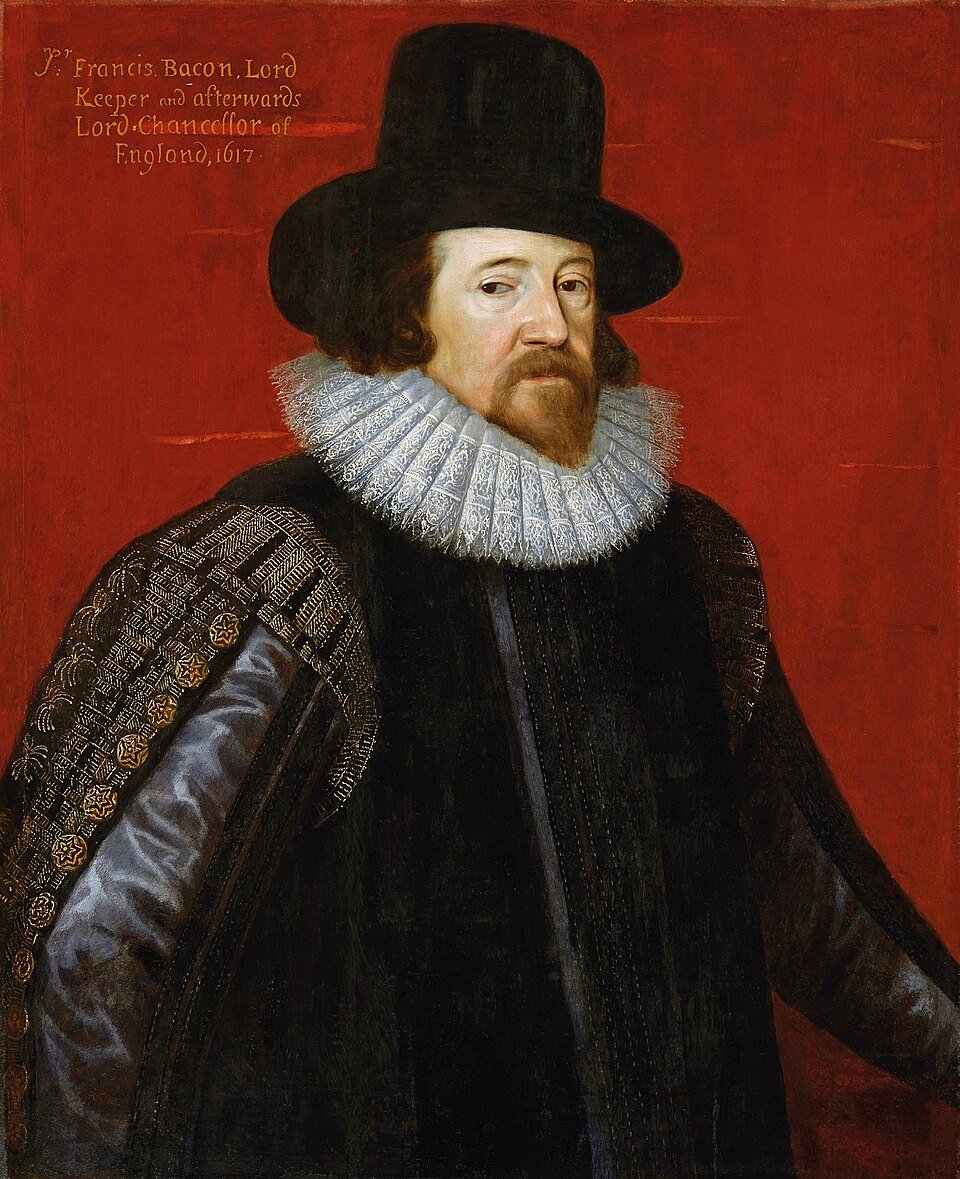
Not from 1611. AAP traced the idea to a 1905 book, The Mystery of Francis Bacon by William T. Smedley, which also argued that Bacon wrote Shakespeare’s plays. Smedley admitted the problem himself: “Is it not strange that there is no mention of any connection of Francis Bacon with this work?” He took the silence of the records as a clue rather than an answer, and he described the contents of his own book, in its preface, as “extravagant theories”. In a lecture published in 1929, Manly P. Hall repeated the idea and added the “Masonic supervision” and the “Mason’s marks”, again without evidence. That one sentence is the only mention of the Bible in the lecture, and it is the sentence now on the meme.
So the “Masonic Bible” story is the work of two writers, around three centuries after the event, building speculation upon speculation. Dr Simpson put the idea “almost on a par with his supposed authorship of Shakespeare’s plays”. Even Albert Mackey’s Encyclopedia of Freemasonry, which reports an old theory by the writer Nicolai that Bacon’s utopian story New Atlantis helped inspire early Freemasonry, calls it “only a theory”, and it never says that Bacon was a Mason or touched the Bible. None of that turns speculation into evidence, and no Grand Lodge has ever claimed that Freemasonry had anything to do with the King James Bible.
Was Bacon a Freemason?
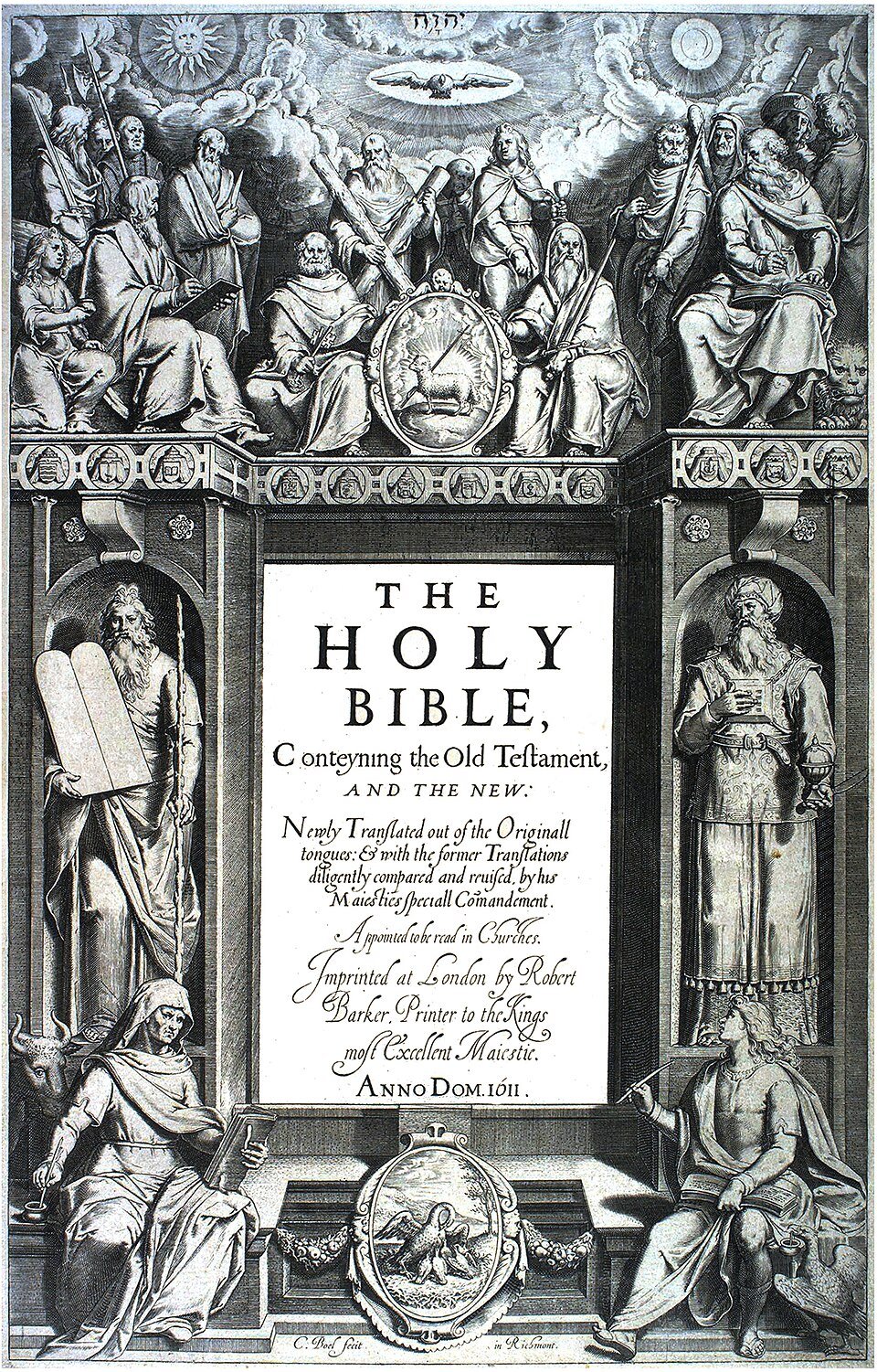
There is no record that he was. Bacon died on 9 April 1626. One of the earliest references to Freemasonry known in England is the diary of the antiquary Elias Ashmole, who wrote on 16 October 1646, as the Masonic historians Pick and Knight quote it: “I was made a Freemason at Warrington in Lancashire”. That is twenty years after Bacon’s death, and we know of no lodge record, before or after, that places Bacon in a lodge. As for the square and compasses on the cover of the Bible in the meme, compare the real thing: the title page of the 1611 first edition, shown above, is crowded with apostles, the four evangelists, Moses and Aaron, and there is no square and compasses anywhere on it.
Conclusion: Francis Bacon did not edit the King James Bible, and there is no evidence that he was ever a Freemason. The translation was the work of 47 named scholars in six committees, building on Tyndale’s earlier work, and Bacon’s name is not on the list. The idea began with a 1905 book whose author called his own theories “extravagant”, and a lecture published in 1929 that offered no evidence. Bacon died twenty years before one of the earliest records of Freemasonry in England. The only thing Masonic about the meme is the cover in the picture.
Sources:
https://www.aap.com.au/factcheck/conspiracy-over-who-edited-king-james-bible-a-case-of-too-much-bacon/
Encyclopaedia Britannica, Adam Augustyn, “Who Wrote the King James Bible?”: https://www.britannica.com/story/who-wrote-the-king-james-bible (archived copy: https://web.archive.org/web/20251108103426/https://www.britannica.com/story/who-wrote-the-king-james-bible)
The King’s Bible, “The King James Bible Translators” (the six companies): http://thekingsbible.com/Library/KJVTranslators
David Simpson, “Francis Bacon”, Internet Encyclopedia of Philosophy: https://iep.utm.edu/bacon/
Albert G. Mackey, Encyclopedia of Freemasonry (revised edition), “Bacon, Francis”
Fred L. Pick and G. Norman Knight, The Pocket History of Freemasonry (1953), ch. IV “Pre-Grand Lodge Freemasonry” (Elias Ashmole)