The claim
CLAIM #23:
Altiyan Childs claims that Freemasons are Illuminati and murder people in his 5 hour video?
FALSE
ANSWER:
Freemasons are not the Illuminati, which ceased to exist in 1785, and Freemasonry does not murder people. Five hours of video does not make a claim true; it only makes it long.
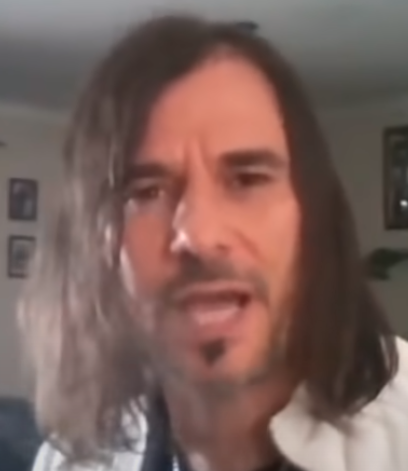
Altiyan Childs is an Australian singer-songwriter who won the second season of The X Factor Australia in 2010. On 15 April 2021 he released a five-hour video on YouTube about Freemasonry. In it he said that he had been a Freemason and was breaking his Masonic oaths to make the presentation, and he concluded that international Freemasonry is “organised Satanism” in disguise. Along the way, the video presents Freemasons as one and the same as the Illuminati, and as people who will kill to protect their secrets.
The video was shared widely online, and many viewers took its length as a sign of its depth. It is worth remembering that a long video is not the same thing as evidence. Taking his main claims in turn:
Freemasons are the Illuminati?
The Illuminati were a real society, but a short-lived one. The Order of the Illuminati was founded in Bavaria in 1776 by a university professor, Adam Weishaupt, and was banned by the Bavarian government in 1785. There is no evidence that it survived. The idea that it lived on in secret, hiding inside Freemasonry, was invented in 1797 by two writers who wanted someone to blame for the French Revolution, and it has been recycled ever since. We tell that story in full in Claim #16.
Freemasonry, by contrast, is not hidden at all. Its Grand Lodges have public headquarters, published rules, websites and open days, and its members are free to say that they are Freemasons. It is not the Illuminati, and it is not a front for anything.
Freemasons murder people?
This accusation usually rests on the old “penalties” that once formed part of the promises, or obligations, a candidate makes. Those obligations are promises about conduct: to help those in need, not to defraud anyone, and to keep the Masonic modes of recognition private. The penalties attached to them were symbolic phrases inherited from centuries-old ritual, and they were never instructions to harm anybody. Because they sounded violent to modern ears, they were removed from the obligations in England altogether, and in the United States they are explained as purely symbolic. Nothing in any Masonic obligation overrides a member’s legal or religious duties.
There is also a simple test of the claim. Masonic rituals have been published by people breaking their oaths since at least 1730, as we noted in Claim #19. Exposés have been printed, sold, broadcast and posted online for nearly three centuries, and the people who wrote them carried on with their lives. Mr Childs himself announced to the world, on camera, that he was breaking his oaths.
Was Altiyan Childs ever a Freemason?
There is a more basic problem with those “broken oaths”: there is no record of Mr Childs ever having been made a Freemason. Membership is not a matter of opinion. Every Grand Lodge keeps a register of its members, and a lodge can confirm whether a man was ever initiated and to which degree. Yet we are not aware of Mr Childs ever naming the lodge that initiated him, producing a certificate, or offering any other evidence that he was ever a member. A man who was never initiated has no Masonic oaths to break.
Freemasons have a word for someone in this position: a cowan. As the nineteenth-century Masonic author Albert Mackey explained, a cowan is an outsider, someone never initiated, who pries into Masonic matters and claims a knowledge of the Craft he was never given. Mr Childs is not the first to present himself as a former insider. Victor M. Ramos made the same claim, backed by certificates that turned out to be fakes (see Claim #21). In both cases the “former Freemason” story is what gives the accusations their apparent authority, and in both cases it does not stand up. What Mr Childs says about life inside a lodge should be read for what it is: the account of a man who was never in one.
What about William Morgan?
To be complete and honest, there is one case that is always raised. In 1826 William Morgan, of Batavia in New York State, announced that he would publish a book exposing Masonic ritual. He was arrested on trumped-up charges, disappeared soon afterwards, and was believed to have been kidnapped and killed by a group of local Masons. His fate has never been established, and a body once buried as his was identified by another family as their own missing relative.
Whatever happened to Morgan, it was a crime by individuals, nearly two hundred years ago, and Masonic officials at the time disavowed the kidnappers. Like the Italian “P2” lodge described in Claim #07, it is the exception that the accusers return to precisely because there is nothing else to point to. One case from 1826 does not show that Freemasons “murder people”; if anything, the public outcry it caused shows how far outside the normal it was.
Organised Satanism?
The video’s conclusion, that Freemasonry is Satanism in disguise, is the oldest accusation of all, and it has been answered repeatedly on this site: in Claim #01 (the Léo Taxil hoax that started it), Claim #06 (the Albert Pike “Lucifer” quotation) and Claim #18. A fraternity that requires every member to believe in God and keeps the Bible open at every meeting is a strange place to look for Satanists.
Conclusion: Freemasons are not the Illuminati, which disappeared in 1785, and Freemasonry does not murder people. Like Victor M. Ramos before him, Mr Childs presents himself as a former Freemason, but there is no record that he was ever initiated. The old symbolic penalties were never instructions to harm anyone and have been removed or explained as symbolic, Masonic rituals have been exposed in print for three hundred years without consequence, and the one historical case always cited, from 1826, was a crime by individuals that Freemasonry itself condemned. A five-hour video does not change any of that.